
Turkey has issued a new counter-NAVTEX disputing Cyprus’s maritime jurisdiction over planned surveys for a subsea data cable in the Eastern Mediterranean. The move came only hours after a similar notice challenging the authority of a Greek navigational station.
The Cypriot NAVTEX being challenged
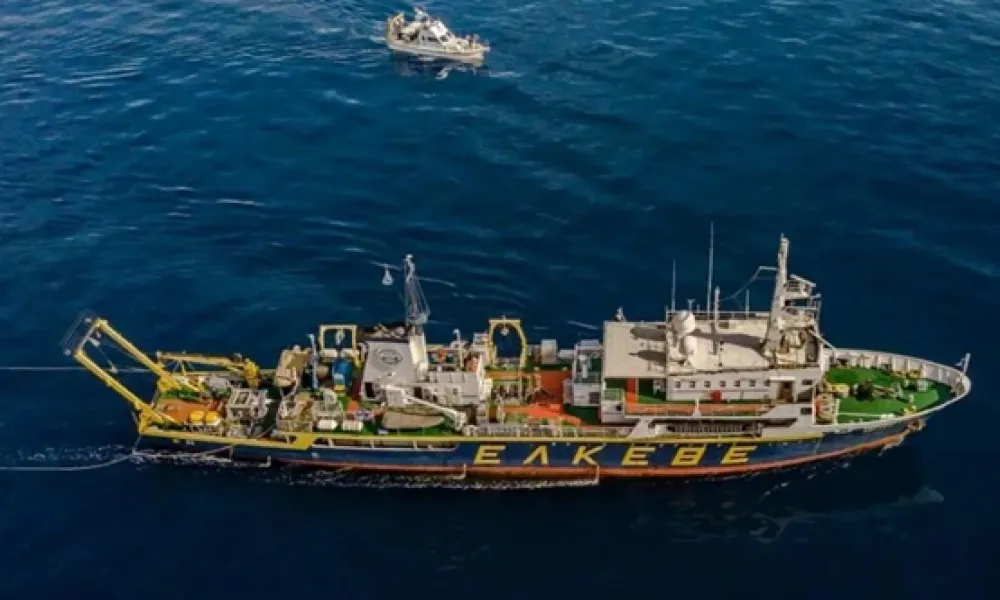
Through official counter-NAVTEX 1020/26, Ankara targets Cypriot NAVTEX MA37-302/26. The Cypriot notice concerns surveys by the vessel S/V KOBI RUEGG from 21 October to 2 November for the East to Med Corridor (EMC) subsea data cable project.
Turkey’s continental shelf claim
In its notice, Turkey claims the survey area lies within the Turkish continental shelf. It states that the outer limits of this shelf were notified to the United Nations in letter A/74/757 of 18 March 2020.
Dispute over the issuing station
Turkey also describes the station that issued the Cypriot NAVTEX as lacking authority, arguing that the area falls within the Turkish NAVTEX service area.
Ankara’s position on the Republic of Cyprus
Ankara also restates its long-standing positions on the Cyprus issue, claiming that the “Cyprus” referred to in the Cypriot NAVTEX is not the same as the state founded in 1960.
According to the Turkish text, use of the name “Cyprus” does not imply recognition of the Republic of Cyprus by Turkey. Nor, it says, does it affect Turkey’s rights and obligations under the 1960 Treaties of Guarantee and Establishment.
The Turkish side further describes as void what it calls attempts by the Republic of Cyprus to legitimise illegal claims through NAVTEX notices. It states that these claims “have not been and will not be accepted by Turkey”.
The counter-NAVTEX will remain in force until 3 November 2026.
Earlier move against Greece
The new Turkish notice follows a counter-NAVTEX issued by Ankara over the multinational exercise “EUNOMIA 2026” south of Kastellorizo, in which it disputed the authority of the Greek station in Heraklion.
Within a few hours, Turkey has therefore made two separate interventions in the Eastern Mediterranean, challenging both Greek and Cypriot authority to issue navigational notices.
Subsea cable projects in focus
The moves come as surveys for subsea cables in the Eastern Mediterranean return to the spotlight, both for data transmission through the EMC and for the Greece-Cyprus electricity interconnection through the GSI.