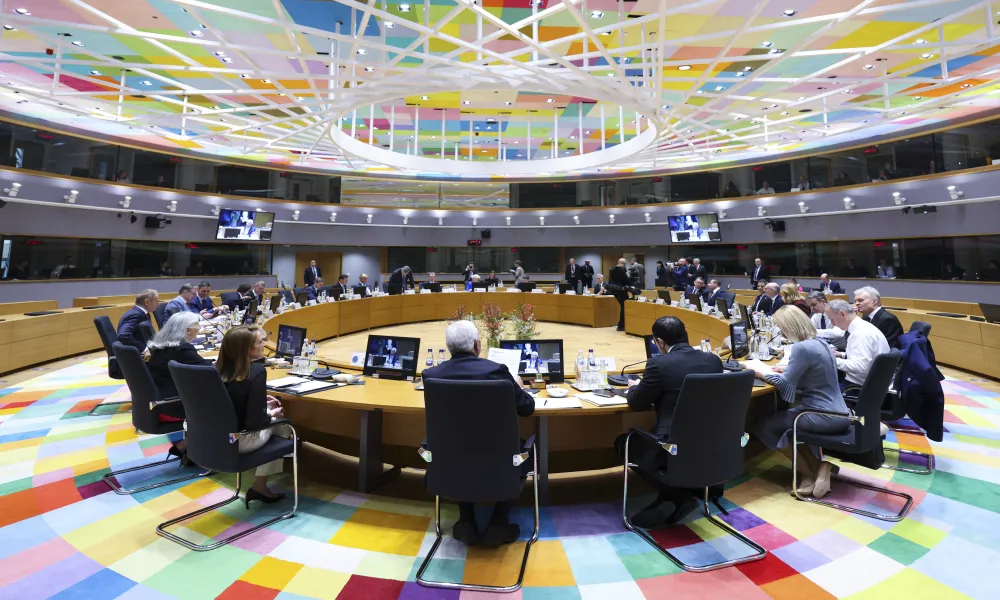

An extraordinary EU summit in Brussels ended late on Thursday 26 November without agreement on the Multiannual Financial Framework (MFF) for 2028–2034.
European leaders referred the long-term budget to the regular European Council on 17 and 18 December. They also referred the final decisions on a new loan to Ukraine and on the new leadership of the European Central Bank.
"We did not reach an agreement"
European Council President António Costa had asked leaders to focus on three issues:
- the overall size of the budget
- how resources are divided between spending headings
- a balanced package of new own resources
At a press conference after the meeting, he described the discussion in the plenary and in working groups as "very interesting". But he admitted from the outset that "we did not reach an agreement".
Disagreement over the size of the budget
As Mr Costa described it, on the overall size:
- some member states asked for new cuts
- the majority opposed further reductions
- some even proposed reversing cuts already made, mainly to Cohesion Policy
On dividing resources between priorities, a large majority of member states asked that funding for agriculture and cohesion not be squeezed. On new own resources, he said only that work will continue.
The negotiating box Mr Costa has put on the table provides for a total budget of about €1.78 trillion. The European Commission's original proposal was almost €2 trillion, which means cuts of more than €200 billion.
The leaders are split into two camps:
- Seven net contributors, Germany, Austria, Belgium, Denmark, Finland, the Netherlands and Sweden, are pushing for a smaller budget.
- The group of 17 "Friends of Cohesion" opposes new cuts to Cohesion and the Common Agricultural Policy.
German Chancellor Friedrich Merz insisted that the final agreement must reduce the size of the budget further. He has linked Berlin's position on the MFF to all 27 member states taking part in financing Ukraine.
Von der Leyen sees progress on new revenue
European Commission President Ursula von der Leyen saw progress on own resources. She noted that a digital services tax has broad support and that there are "good prospects" for a solid package of new revenue.
She pointed out, however, that the two previous negotiating boxes had already brought significant cuts. She called on leaders to stay true to the priorities they have agreed together in recent years, because "at every European Council we have asked for more European action".
On timing, she said much work remains. An agreement is needed so that EU funds can flow from the first day of the new MFF, 1 January 2028.
A new €45bn loan for Ukraine
On Ukraine, Mr Costa said 24 member states supported the Commission's proposal for a new loan to Kyiv.
- Bulgaria will take part only in the non-military part, with a focus on areas where the Bulgarian national minority lives.
- Hungary, Slovakia and Czechia are staying out. They had also secured an exemption from the €90 billion loan for 2026 and 2027, agreed in December 2025.
The issue will return in December, he said.
The proposal, presented on 18 November, would create a Ukraine Coordinated Support Instrument, with a loan of up to €45 billion for 2027, financed by borrowing on the markets. Of the total:
- up to €25 billion is for military support
- €20 billion is for budget support linked to reforms
It is a limited-recourse loan: Ukraine will repay the principal only when it receives war reparations from Russia.
Ms von der Leyen welcomed the "broad support" for the proposal and said completing the process is now in the Council's hands. The EU's strategy, she said, is to give Ukraine every means to negotiate from a position of strength, which starts with predictable financial and military support.
Change at the top of the ECB
The summit was the last attended by ECB President Christine Lagarde, who is stepping down early on 7 February 2027.
Mr Costa said leaders had the opportunity to praise "her very good work". Ms von der Leyen thanked her for "everything she has done for Europe and the euro".
The European Council received the Council's recommendation to appoint Spain's Pablo Hernández de Cos as ECB President. It also received the recommendation to appoint France's Laurence Boone and Germany's Markus Brunnermeier as members of the Executive Board.
Leaders decided to begin consultations with the European Parliament and the ECB Governing Council on the three names. A final decision is expected at the December summit.
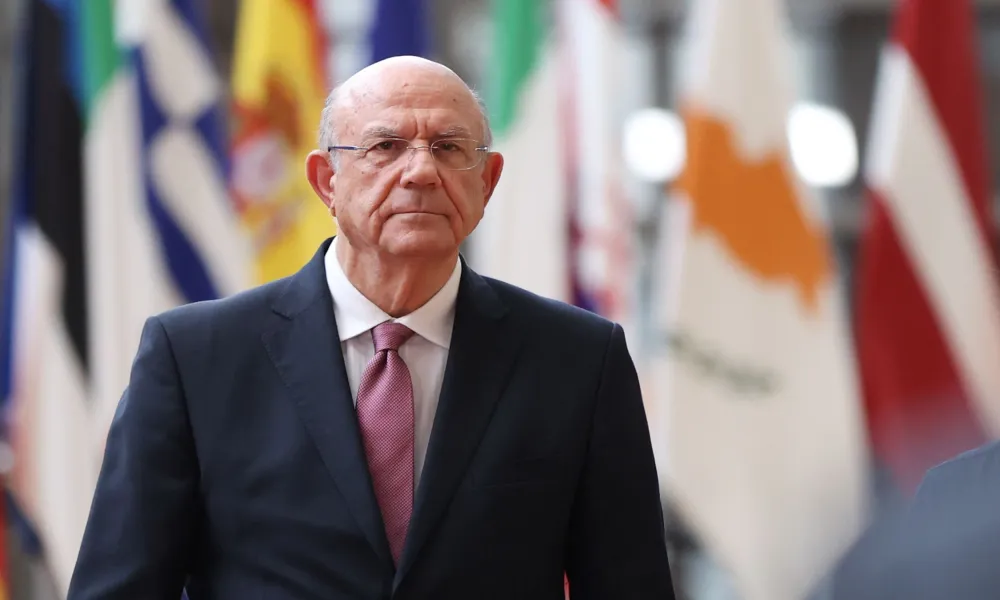
Mr Hernández de Cos, a former governor of the Bank of Spain and currently General Manager of the Bank for International Settlements, will be the first Spaniard to lead the ECB.
Decisions moved to December
Everything now moves to the 17 and 18 December summit. This is the last one before the end-2026 deadline the leaders set themselves for an agreement.
The MFF requires unanimity among all 27 member states and then the consent of the European Parliament.
As Ms von der Leyen acknowledged, putting all the pieces of the puzzle together "will be a challenge". But, she added, "we all know we need an agreement".
Source: ERT