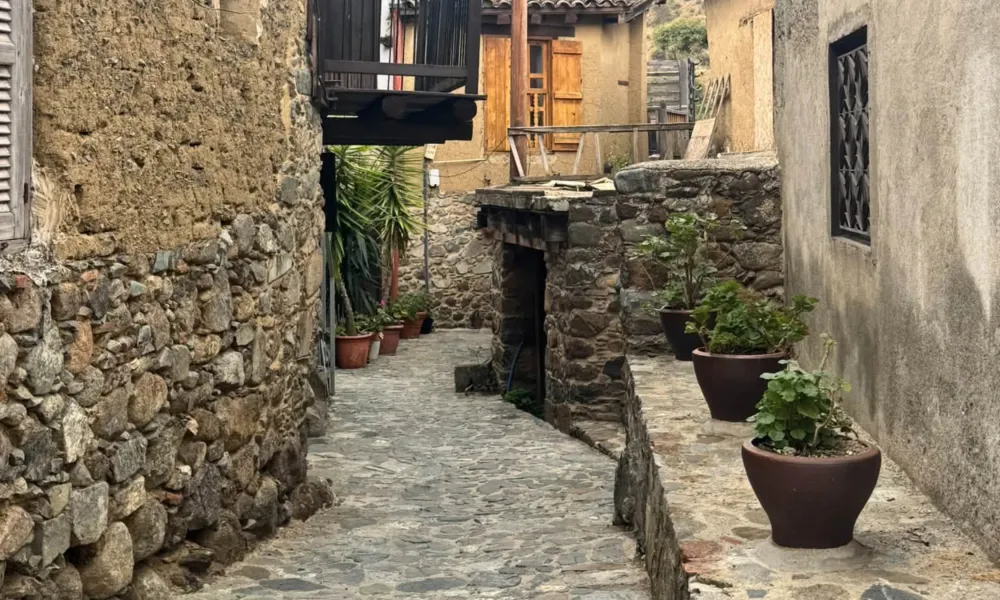

After the death of 17-year-old Kyriaki, the debate quickly turned to banning school trips to Kakopetria. It is understandable that we look for something we can change. But let us allow the investigation into her death to give her family the answers they are owed.
As for the trips, the question is what we will have achieved by cancelling the next weekend away, and what the bigger picture is.
A problem all year round
In Kakopetria, we see things that happen all year round concentrated into a single weekend. When so many groups of friends gather in one place, excesses become more visible, and some see an opportunity to profit at the children's expense.
A teenager can find alcohol in their own neighbourhood. They can find it at a club, a kiosk, a supermarket, even the local café. They can get hold of drugs and other substances in town, without going on a trip. Kakopetria is not Amsterdam.
What is missing everywhere is checks and accountability for those who supply minors.
Relationships and consent
Nor do teenagers' relationships, romantic, sexual or otherwise, begin with a night away in Kakopetria.
When do we talk to them about consent, about peer pressure, about how to respect someone else's limits and how to set your own? And what have we shown them in practice about how to ask for help when someone is pressuring you, or when a friend is in danger?
The same people who oppose sex education for minors are shouting about school trips on television panels.
Responsibility and adulthood
If we have a ban ready for every difficult conversation, children learn to do things in secret.
In a few months, many of these teenagers will leave to study or enter the army. Many will live alone, without daily supervision. They will be able to vote, get a driving licence and, in the army, we will even trust them with a weapon.
And yet, when we talk about a school trip, we forget how soon they will be asked to take on far greater responsibilities. With what experience do we expect them to do so, if until then others decide everything for them?
The students' proposal
In Parliament, the students themselves, through PSEM, put forward again their proposal for trips accompanied by parents and teachers. Let the discussion start there.
Over a weekend away, there can be a responsible adult on site, known to everyone, whom the children can contact at any hour. Students can have a say in the trip's rules and know in advance who is in charge if something goes wrong.
The role of the state
The state must regulate school trips and give schools the means to teach young people about practical matters, from peer pressure to how to respond in an emergency.
The most important agreement, however, is made before the hotel is booked, with the student taking responsibility. Not to trick classmates and make a little money, but to organise a trip they will remember forever, for the right reasons.
How did we end up with even 17-year-olds having only profit and scheming on their minds?
Building trust
Let us look at this differently, with respect, understanding and trust.
Trust means a child knowing they can call home at three in the morning and say "come and get me" or "we need help", even if they have broken a rule. And the person who picks up the phone should first ask, "Where are you?"
That trust is built all year round, in Kakopetria and everywhere else.