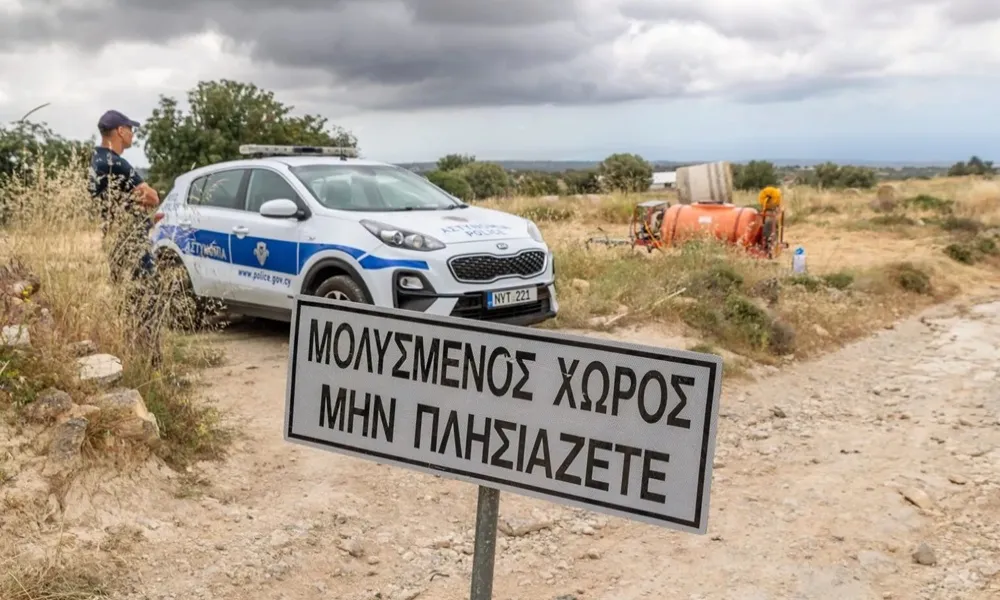
Eight foot-and-mouth disease samples taken on Thursday tested negative, while the remaining animal cullings are expected to be completed by the end of Friday, members of the Scientific Advisory Committee on the disease said after a meeting with farming organisations.
Demetris Epameinondas, a member of the committee and president of the Pancyprian Veterinary Association, said the committee had held “a very productive discussion” with farming organisations as part of the implementation of measures agreed at the Presidential Palace last Tuesday.
He said farming groups had raised questions, some of which were answered during the meeting, while others were recorded and will be discussed next week. A weekly meeting with the organisations has been set for every Friday.
Epameinondas said pending issues were then discussed with the competent departments, mainly the completion of cullings in districts where the process is still under way.
“We expect the cullings to be completed today and sampling to begin next week,” he said, adding that implementation of the measures agreed at the Presidential Palace was “at a good stage”.
Asked about the remaining cullings, he said they should be completed by the end of the day, including in Pachna. He added that farmers had shown “significant consistency” and that no problems had been reported so far.
On sampling, Epameinondas said the eight samples taken on Thursday, five in Nicosia district, two in Larnaca and one in Limassol, were negative.
“There are no other cases so far,” he said.
He clarified that sampling is currently being carried out as part of tracing linked to the latest confirmed cases.
The issues raised by farming organisations mainly concern possible relaxations, the timetable for their introduction and when livestock farming will begin to be restored, he said. These matters will be examined case by case, depending on the epidemiological picture, while some will be discussed during the week so that answers can be given next week.
On the burial of animals in Kokkinotrimithia, Epameinondas said the site had been changed and a solution had been found. He added that culling and burial were also being completed there without problems.
Committee member Demetris Tsaltas said the first responses, particularly from the police, had been “very positive”, noting that checks had begun.
He said 101 checks had been carried out, during which some issues were identified. Epameinondas clarified that two violations concerned movements without the required documents.
The checks mainly concern vehicles deemed suspicious, with authorities inspecting permits, the movement of products, animals and animal feed, as well as compliance with decrees.
Tsaltas said the support of all involved state services was important in helping the Veterinary Services bring the situation under control.
He also highlighted the contribution of the National Guard in creating burial sites, saying the process was being carried out faster and at a lower cost.
“Of course, the cost is borne by the state, but it is certainly the best solution in such emergency situations,” he said.