
Negative results from sampling carried out within a three-kilometre zone around Pachna have strengthened hopes that a foot-and-mouth disease outbreak in Limassol district may have been contained at an early stage.
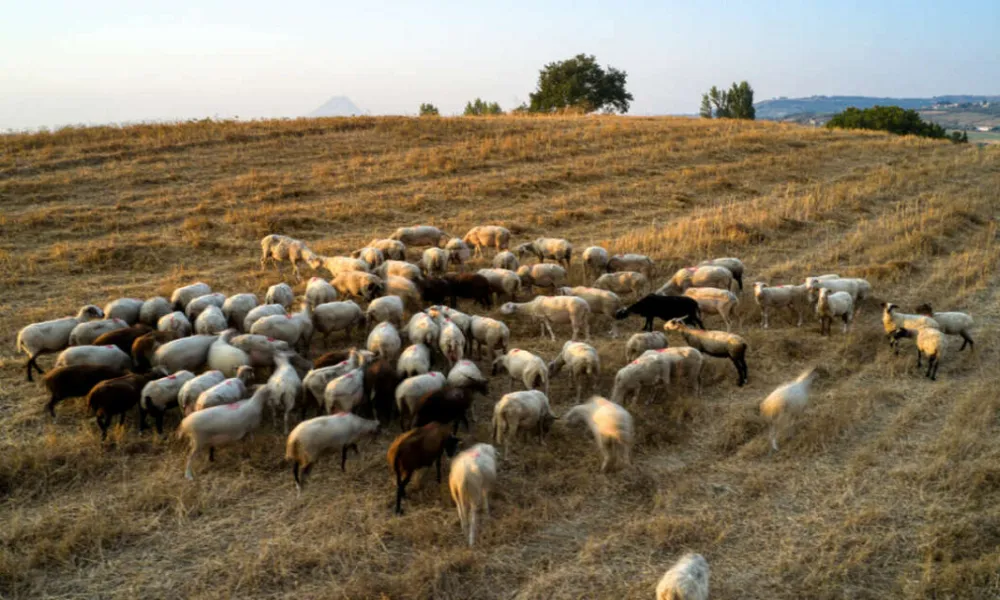
The tests were conducted following the detection of a case at a farm housing 66 sheep and goats approximately one month ago. Results were received on Monday, leaving only the findings from samples taken at seven livestock units in Limassol district still pending.
According to Dr Dimitris Epaminondas, President of the Cyprus Veterinary Association and a member of the epidemiological team overseeing the outbreak, the remaining results will help determine whether the farm in Pachna was the first and only infected unit in Limassol district.
Describing what he called a highly positive scenario, Dr Epaminondas said the findings could demonstrate both the effectiveness and speed of the authorities' response in identifying and containing the virus. While he noted that luck can also play a role in such situations, he stressed that surveillance measures appeared to have delivered results.
"If it is confirmed that the Pachna farm was the first and only case in Limassol district, it will show that some of the monitoring measures we implemented worked, that our strategy produced results and that we managed to stop the spread of infection in Limassol at an early stage because restrictions were imposed immediately," he said.
The outstanding tracing samples relate to farms that had an epidemiological connection with the infected unit in Pachna, similar to the contact-tracing methods used during the Covid-19 pandemic. Some of those results are expected to be announced later this week.
Once the tracing process is completed, sampling will return to a nationwide basis to determine whether any new cases have emerged in the already affected areas of Larnaca and Nicosia districts or elsewhere on the island.
To date, 121 infected units have been recorded. The outbreak has resulted in the loss of 3.5% of the country's cattle population, 9.5% of sheep and goats, and 7.7% of pigs. In total, 2,293 cattle, 43,311 sheep and goats, and 23,742 pigs have been culled.
Last week, the epidemiological team said that while the number of animals lost was significant, it remained within the expected range of an outbreak that authorities have so far managed to keep under control.
Vaccination campaign expands
This week also marked the start of vaccinations in livestock units that had remained unvaccinated until now. These farms are located in Limassol and Paphos districts and account for around 10% of livestock units nationwide.
The vaccination campaign is expected to be completed by August. According to Dr Epaminondas, a further nationwide booster vaccination programme will follow in the autumn.
If continued surveillance fails to detect any new infections, Cyprus could eventually regain the status of a country recognised as free from foot-and-mouth disease while continuing to use vaccination as a control measure. Such a designation would allow disease management without requiring the destruction of vaccinated livestock.
European Commission review due in July
The European Commission continues to monitor Cyprus' compliance with foot-and-mouth disease protocols, with the next formal assessment of the situation scheduled for mid-July.
The review, conducted approximately every six weeks, will consider the latest testing and surveillance data and could lead to revisions of existing measures.
Under a European Commission implementing decision, the entire territory of the Republic of Cyprus has been designated a "further restricted zone" in order to protect the wider European market from the disease. The designation has resulted in a series of movement and trade restrictions.
Despite the strict measures and the loss of Cyprus' disease-free status, halloumi exports have continued. Under European regulations, products that undergo sufficient heat treatment are considered safe for international trade.
'Heat is our greatest weapon'
Alongside vaccinations and stricter biosecurity controls, Dr Epaminondas highlighted Cyprus' summer climate as a potentially important factor in limiting the spread of the disease over the coming months.
"Heat is our greatest weapon," he said.
He explained that high summer temperatures, combined with dry conditions and strong ultraviolet radiation, create an environment in which the virus struggles to survive.
"The dry climate and ultraviolet radiation do not allow the virus to hide. Moisture and low temperatures help preserve it, and those conditions are absent in Cyprus during the summer. Mud dries out quickly and, when it does, the virus is destroyed," he said.
By contrast, he noted that wetter winter and spring conditions can facilitate transmission through mud and microscopic droplets, making seasonal weather patterns an important consideration in disease control efforts.
Dr Epaminondas said the combination of vaccination, surveillance, biosecurity measures and summer weather conditions could leave Cyprus entering the winter months without an active presence of the virus and with a significantly improved epidemiological outlook.