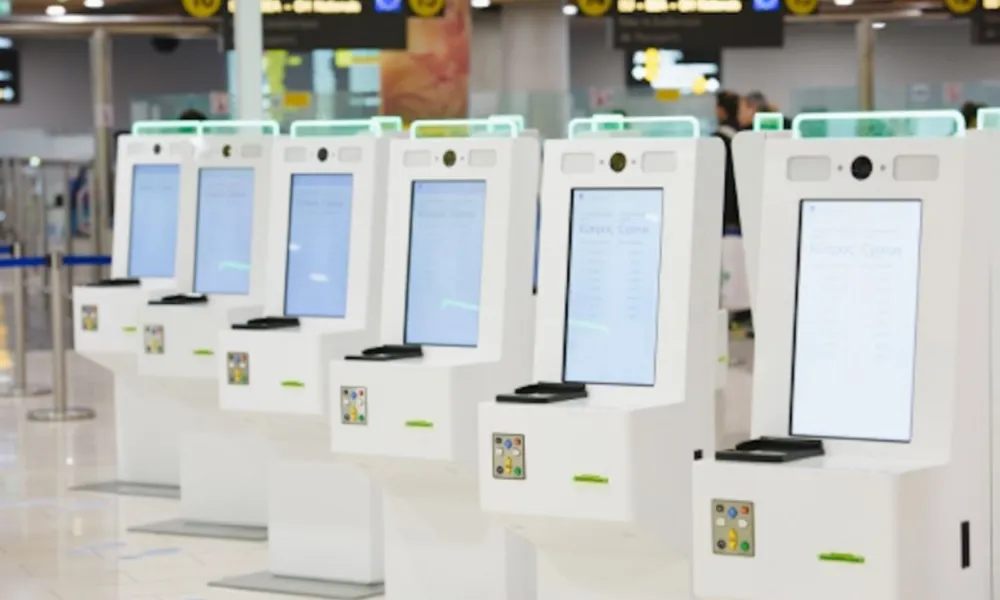

Cyprus has ordered 40 next-generation Automated Border Control (ABC) gates as part of preparations for the EU Entry/Exit System and the replacement of existing passport-control equipment.
The gates are expected to arrive by the end of 2026 and will be installed in the passenger terminals at the country’s two airports as soon as possible, Justice and Public Order Minister Kostas Fytiris said in a written response to DISY MP George Pamboridis.
Why passengers still face manual checks
Pamboridis had questioned the effectiveness of the current system, under which passengers who use the automated kiosks are subsequently referred to a police officer for an additional check.
In his response, dated 11 August, Fytiris said the interactive kiosks will cease operating once Cyprus joins the Schengen area and checks at internal borders are abolished.
He explained that the kiosks were selected after the available technological options were compared. They were preferred over ABC gates because of their speed and considerably smaller size, given the limited space available in airport passenger halls.
“The decision is in no way linked to the fact that Cyprus does not yet fully apply the Schengen acquis,” the minister said.
How the current kiosks operate
The interactive kiosks are self-service systems that collect and process passenger information, including passport scans, photographs and additional checks.
However, once the kiosk process has been completed, a passport-control officer must still verify the traveller’s identity, inspect the travel document and make the final decision on whether entry or exit will be permitted.
ABC gates, by contrast, provide a fully automated border-control process using biometric technology.
Fytiris said the systems are particularly useful when staffing levels are reduced, as they improve passenger service and allow the available personnel to be deployed more efficiently.
What the 2025 figures show
During 2025, 65.60% of passport checks conducted through the interactive kiosks generated the PG, or Passenger Granted, referral code, indicating that no positive alert had been returned.
Another 13% generated the MI, or Minor, code. This provides passport-control officers with important information and helps them quickly confirm that a child is travelling with a parent or legal guardian, as part of efforts to prevent parental abductions and other related serious offences.
The remaining 21.40% involved cases requiring further examination following positive indications generated through automated checks of national and European databases, security screenings or other established procedures.
Role of Frontex officers
Responding to a separate question, Fytiris said members of the European Border and Coast Guard Agency’s standing corps serving at the airports were deployed at the Republic’s request under Regulation (EU) 2019/1896.
They operate under the command of the Cyprus Police’s Aliens and Immigration Unit and carry out checks at positions assigned by the duty officer, alongside other unit personnel. Their duties include checking the printed receipts issued by the interactive kiosks.
Although Frontex standing corps members have executive powers under the regulation, they remain under the direction of the national authorities during their deployment.
They carry out immigration officer duties, including passport checks, verification of travel-document authenticity and secondary checks. These are performed under the instructions of the duty officer at the Passport Control Centre, who retains final responsibility for border controls.
QR code proposal rejected
Authorities also examined whether a QR code could be added to the receipts issued by the interactive kiosks and scanned at electronic gates installed immediately afterwards.
The proposal was not approved because it would have increased the overall time required to complete passport checks.
Fytiris said the installation of the new ABC gates will lead the responsible ministries to reassess how the existing kiosks are used and which categories of travellers they serve.
The kiosks will remain under review until checks at Cyprus’s internal borders are abolished, at which point they will be withdrawn.
Source: CNA