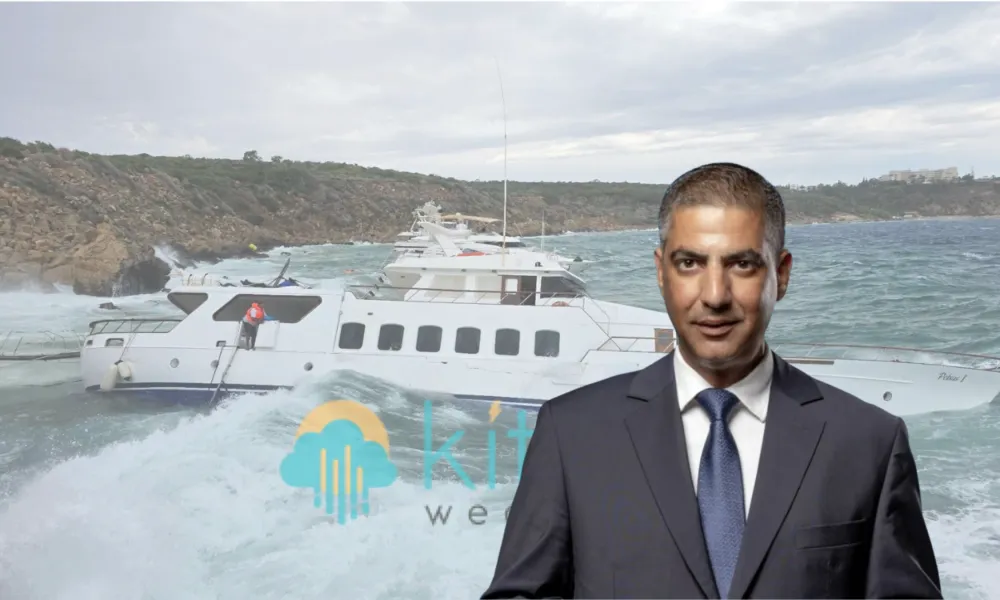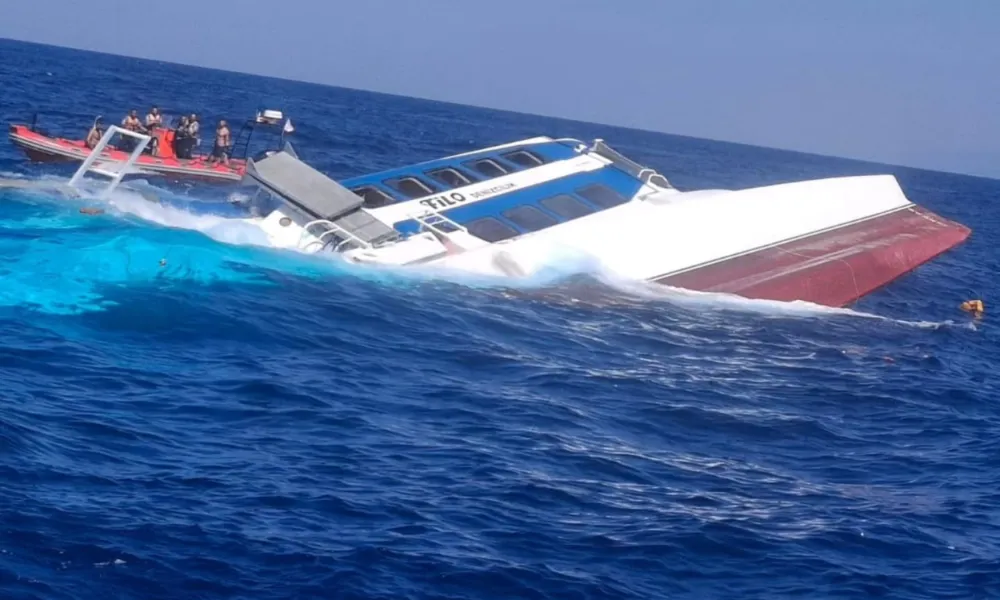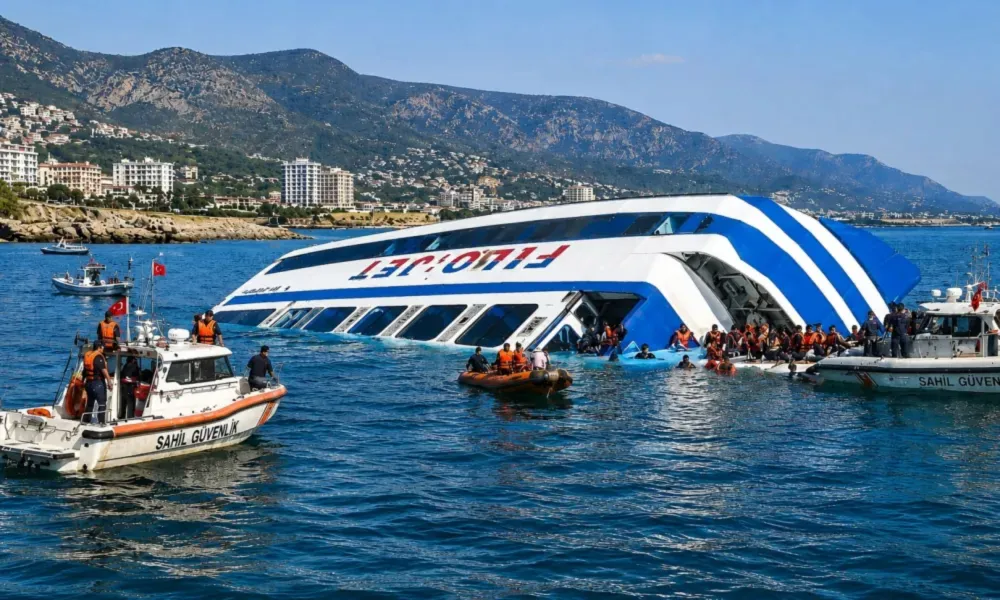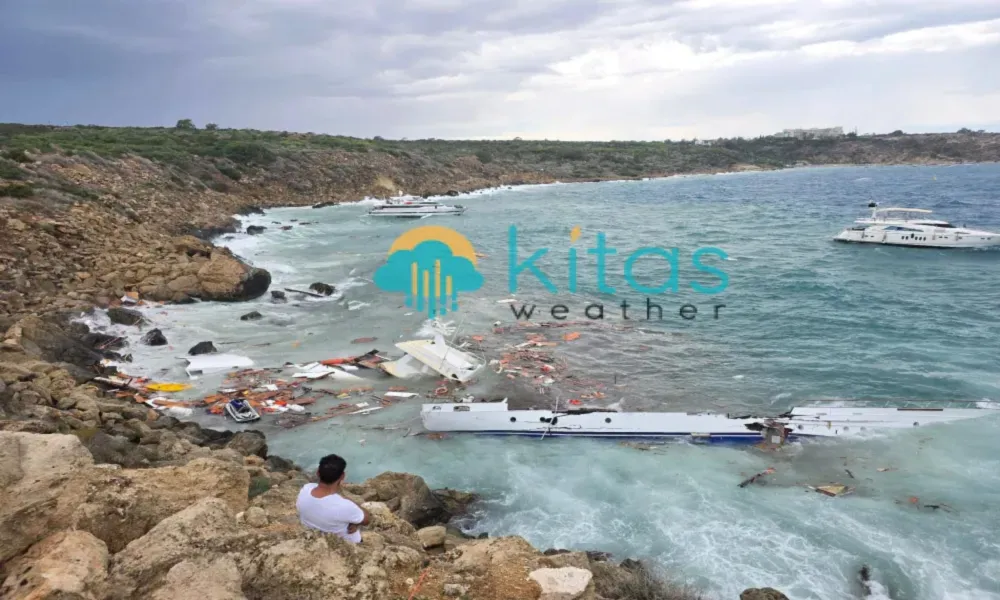

The legal framework governing commercial vessels differs significantly from that applying to private leisure craft during periods of adverse weather, according to Panayiotis Agathokleous, Harbour Master at the Port of Limassol.
Speaking on Politis Radio's Second Look programme, Agathokleous explained that the Cyprus Ports Authority has the power to suspend the arrival and departure of commercial vessels when weather conditions make navigation unsafe. In the case of private leisure craft, however, the final responsibility rests with the vessel's skipper.
"We can suspend arrivals and departures of commercial vessels"
Agathokleous clarified that when reference is made to ports, this primarily concerns commercial ports.
"When there are adverse weather conditions or warnings from the Meteorological Service, the Cyprus Ports Authority, through the vessel traffic monitoring station, has the ability to suspend the arrival and departure of commercial vessels."
He explained that this occurs when strong winds or limited visibility create risks for safe navigation within port areas.
"For leisure craft, the final decision belongs to the skipper"
Referring to smaller and privately owned vessels, Agathokleous stressed that a different regime applies.
"In these cases, recommendations and advisories are issued through Cyprus Radio and vessel traffic monitoring stations."
According to him, vessel operators receive meteorological information and weather forecasts.
"The final decision to depart remains the responsibility of the skipper and the operator of the vessel."
Asked whether a private vessel owner can still choose to go to sea despite official warnings, he replied:
"Yes. In such cases there is effectively no mechanism that can enforce the decision. However, the skipper has an obligation to remain informed and assess the conditions."
"When conditions deteriorate, the vessel must seek shelter"
Agathokleous said international practice is clear when vessels encounter dangerous conditions.
"When a vessel finds itself in difficult conditions, it should seek shelter in a safe harbour."
He added that when weather conditions worsen at sea:
"The safest option is to proceed towards the coast or a port of refuge."
Reference to departure bans in Greece
Commenting on measures used in Greece, Agathokleous noted that sailing bans are frequently imposed on passenger and commercial vessels.
"However, even there, small private boats still rely to a large extent on the judgement of their operators, who are required to comply with the instructions and warnings of the competent authorities."
"The Coast Guard will provide better oversight"
Agathokleous welcomed the government's plans to establish a Coast Guard, saying it could help address gaps that currently exist.
"The Coast Guard will be able to assume responsibilities that do not concern commercial vessels in ports, but rather the movement and supervision of leisure craft, marinas and fishing shelters."
According to him:
"There will be better oversight and control when weather conditions do not permit safe navigation."
"The Ports Authority is not a harbour police authority"
The Limassol Harbour Master stressed that the role of the Cyprus Ports Authority is often misunderstood.
"The Ports Authority is not a harbour police authority."
Its primary mission, he said, is:
"The management of commercial ports and anchorages and ensuring their safe operation."
He added that private vessels and other maritime activities fall under different areas of responsibility, which are expected to be strengthened further through the future Coast Guard structure.
"Penalties are necessary"
Asked whether sanctions should apply to those who ignore warnings or departure bans, Agathokleous said penalties play an important role.
"Penalties are important because they improve compliance."
However, he stressed that sanctions alone are not the solution.
According to Agathokleous, they are an essential tool, particularly where professional activities or passenger transport are involved.
"Safety at sea cannot depend solely on the judgement of a captain when other people's lives are involved. In such cases oversight is required and, where necessary, sanctions."