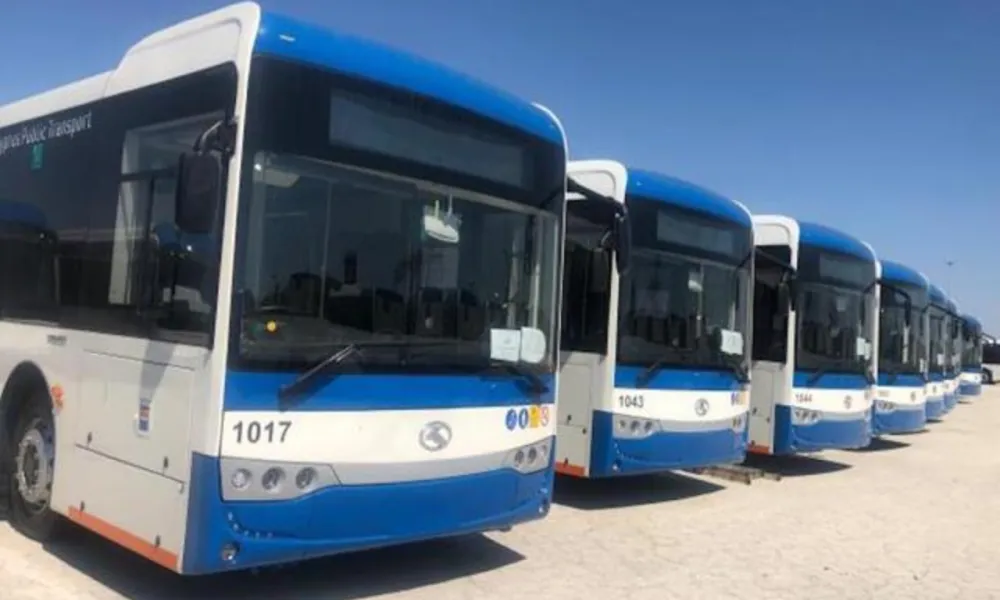

Cyprus' Audit Service has identified what it describes as a serious breach of a public transport contract after a contractor failed to deliver even half of the new buses it had committed to introducing under an agreement for public bus services.
According to an Audit Service memorandum prepared following a complaint, the contractor was required to add 72 new buses to its fleet by the end of the contract's transition period. However, approximately two years later, only 32 new buses had entered service.
The Audit Service said that although financial penalties were imposed, the central objective of the contract, namely compliance with the contractor's fleet renewal commitments, has still not been achieved.
Contractor fell well short of commitment
The concession agreement between the Ministry of Transport, Communications and Works and the operator was signed on 30 November 2022.
Under the contract, the operator was required to comply with specific fleet age requirements during a transition period of up to 12 months. According to the contractor's Transition and Implementation Plan, which formed part of the final agreement, it was obliged to have an owned fleet of 80 buses within 12 months, including 72 new vehicles.
The remaining eight buses were to be transferred from the previous public transport contract in Paphos.
The contractor had also submitted confirmation from a bus manufacturer during the tender process indicating that the vehicles could be delivered within the required timeframe.
Extension granted, targets still missed
According to the Audit Service, the contractor placed orders for 82 buses in January and February 2023.
The ministry considered the period between the signing of the contract and the submission of the orders reasonable and granted an extension of the transition period from 30 November 2023 to 7 February 2024.
Under the revised timetable, the operator was still required to have introduced all 72 new buses by the end of the transition period.
Instead, only 20 new buses had entered service by 7 February 2024.
By the time the Audit Service completed its review in February 2026, the number had risen to just 32 buses, leaving the contractor well short of its contractual commitment.
Auditor raises concerns
The Audit Service noted that even if the ministry acted within the legal and contractual framework and used the tools available to it, the end result remained unchanged.
A key contractual obligation remained unfulfilled 2½ years after the transition period ended.
Auditor General Andreas Papaconstantinou said the case raises significant concerns about the effectiveness of contract management and enforcement.
Questions over state response
The Audit Service said the findings highlight several serious issues.
These include the state's apparent inability to take swift corrective action when substantial deviations from public contracts occur.
The report also warns that failure to enforce contractual obligations could create conditions of unfair competition and undermine the principle of equal treatment among bidders who participated in the tender process.
Risk of setting a precedent
The Audit Service further cautioned that the case could set a negative precedent for future public contracts.
According to the report, tolerating significant non-compliance risks encouraging similar behaviour in other government procurement projects.
The findings raise broader questions about the state's ability to ensure that contractors deliver on commitments that formed part of their successful bids for public contracts.