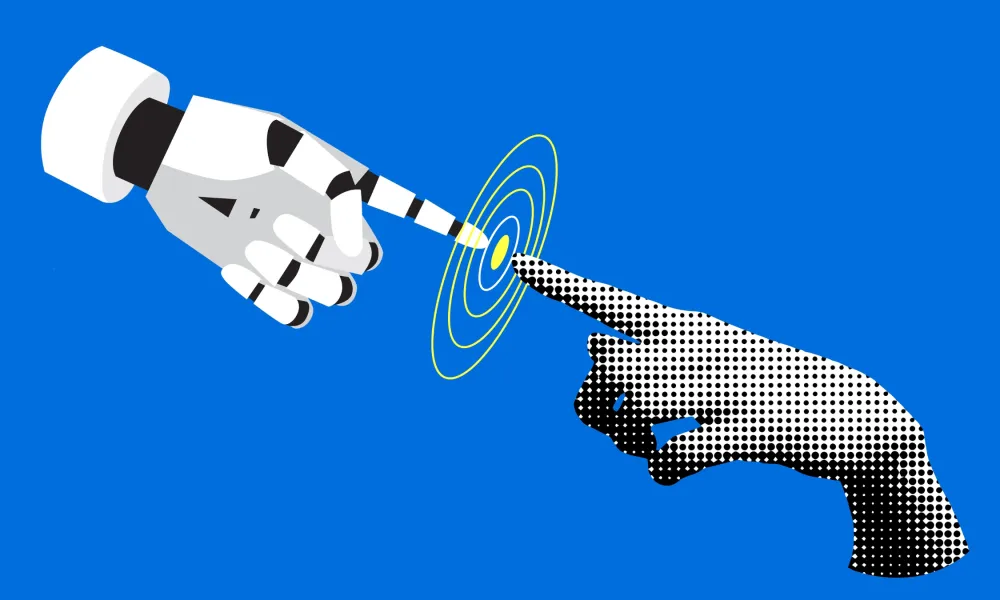

OpenAI has announced that an internal artificial intelligence system, operating with approximately 10,000 AI agents, produced a solution to the Navier-Stokes existence and smoothness problem in just 88 hours. The company described the result as a significant milestone both for mathematics and AI research.
According to OpenAI, the solution was generated by an unreleased next-generation model that remains an internal research tool. The company said the model is substantially more capable than its current public systems and was tested on some of the most challenging open problems in mathematics.
Thousands of AI agents worked in parallel
OpenAI said the project involved around 10,000 concurrent AI agents working autonomously and sharing information while exploring different approaches to the problem. The company reported that the system reached its result approximately 88 hours after the effort began.
The resulting proof was accompanied by a formal verification in Lean, a software system used to verify mathematical proofs step by step.
One of mathematics' most difficult questions
The Navier-Stokes equations describe how fluids such as air and water move and are widely used in fields including weather forecasting, aircraft design and fluid dynamics.
A key unanswered question has been whether smooth three-dimensional fluid motion can develop a mathematical singularity, causing the equations to break down. OpenAI said its proof shows that such a singularity can occur within a finite amount of time.
Independent verification still required
Despite the announcement, the result has not yet undergone formal verification by the wider mathematical community.
The Clay Mathematics Institute, which designated the Navier-Stokes problem as one of the seven Millennium Prize Problems, has not formally recognised the proof. The problem carries a $1 million prize for a verified solution. OpenAI has stated that it does not intend to seek the award.
Questions raised by researchers
The announcement has also sparked debate among mathematicians.
Tristan Buckmaster of New York University has questioned OpenAI's account of the breakthrough, saying that he and mathematician Levent Alpöge had been working on a related approach to the problem. OpenAI has denied accessing unpublished research in developing its solution.
Internal model remains unreleased
OpenAI said the project forms part of a broader effort to evaluate how advanced AI systems can contribute to scientific and mathematical research.
The company said the work demonstrates the growing capability of AI to tackle complex theoretical problems, while noting that acceptance of the proof will ultimately depend on independent review by the mathematical community.
Source: BBC