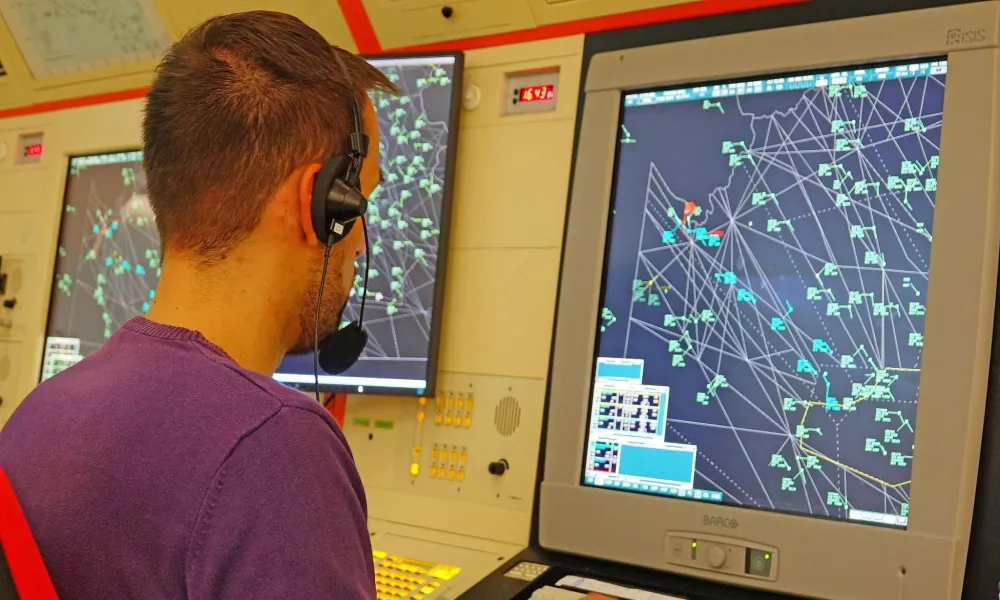

The operation of the illegal Tymbou airport, known by Turkey and the Turkish Cypriot administration as Ercan, is once again under scrutiny amid concerns over flight safety within the Nicosia Flight Information Region (FIR).
A joint session of the House Transport and Defence Committees is examining the issue following a request by DIKO MPs Adamos Aspris and Chrysanthos Savvides, who called for a review of the risks arising from Turkish actions and activities linked to the airport.
Concerns over flight safety
According to Cyprus' Department of Civil Aviation, the airport's continued operation creates significant challenges for air traffic management in the Nicosia FIR and raises broader concerns about aviation safety.
Officials note that since 1974, Turkey has refused to cooperate with the Republic of Cyprus on civil aviation matters, despite the international obligations stemming from the International Civil Aviation Organization (ICAO) framework.
The airport is not supervised by any recognised international or European aviation authority and is viewed by Cyprus as a source of interference affecting air traffic operations in one of the busiest flight information regions in the eastern Mediterranean.
Near-miss highlighted
One of the most serious incidents cited by officials occurred in 2012, when a mid-air collision was narrowly avoided within the Nicosia FIR after aircraft received incorrect and misleading information originating from the illegal airport.
According to reports, an accident was prevented only because the aircrafts' onboard collision-avoidance systems activated in time and instructed both crews to alter course.
Restrictions imposed by Turkey
Cyprus also continues to object to Turkish restrictions affecting its aviation sector.
Turkey does not permit aircraft registered in the Republic of Cyprus to fly over Turkish territory or through the Ankara FIR.
Additionally, aircraft departing from the international airports of Larnaca and Paphos are barred from landing at Turkish airports.
Cypriot authorities argue that these restrictions violate international aviation agreements while increasing flight times, operational costs and delays.
Questions over travel through Tymbou
The issue is also relevant to Cypriot citizens travelling through the occupied north.
According to the Cyprus Pilots Association, Cypriots using Turkish airlines to travel through the illegal airport face concerns not only regarding flight safety but also regarding the validity of insurance coverage in the event of an accident or incident.
The association further notes that no international airline operates direct flights from third countries to Tymbou because insurers generally refuse to cover aircraft operating to an airport considered illegal under the Republic of Cyprus' legal framework.
In addition, Eurocontrol does not accept flight plans for direct services from other countries to the airport, according to the pilots' organisation.
Cyprus continues international lobbying
The Department of Civil Aviation says it regularly raises the issue in meetings with international and European aviation bodies, including ICAO, EASA and Eurocontrol.
These efforts are coordinated with the Foreign Ministry and the Legal Service and are aimed at preventing any form of international recognition of the airport.
Authorities also maintain an Aeronautical Information Circular advising airlines that use of the airport constitutes illegal entry into and exit from the Republic of Cyprus under international law and established practice.
Cyprus notes that an attempt by Turkey to have the airport included in ICAO's Regional Air Navigation Plan was firmly rejected in 1977, with ICAO concluding that the Republic of Cyprus had neither requested nor approved its designation as an international airport.
Air navigation company remains unrealised
The debate has also revived concerns about Cyprus' own air traffic management infrastructure.
A law passed in 2019 provided for the creation of a state-owned air navigation services company intended to improve flexibility, efficiency and staffing in air traffic control operations.
However, the company has yet to become operational.
In a letter sent in April to the ministers of transport and finance, the Cyprus Air Traffic Controllers Association warned that recruitment and training of new controllers continue to lag behind traffic growth.
The association said chronic understaffing, limited recurrent training, workforce ageing and increasing overtime requirements are contributing to safety concerns and operational delays.
It argued that many of these issues could be addressed through the establishment of the state air navigation company, a recommendation that has also received support through various Eurocontrol assessments in recent years.