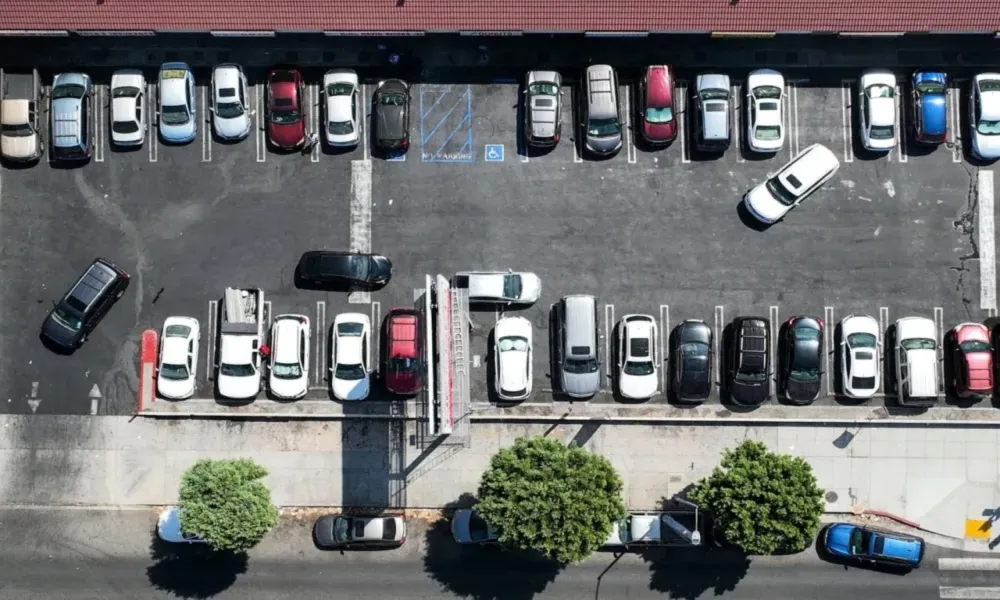

Parking in central Limassol is set for a major overhaul as the municipality moves ahead with its Smart Parking system, introducing new charges and arrangements designed to increase space turnover and discourage long-term parking in the city centre.
After almost four months of discussions and consultations, the new pricing policy secured a large majority in the Municipal Council. It will initially operate on a six-month pilot basis, putting into use a system that cost Limassol Municipality approximately €5 million.
The aim is not simply to change how motorists pay for parking, but to introduce a different approach to parking and, more broadly, access to the city centre.
€1 an hour, first 30 minutes free
The new system covers 2,211 parking spaces, comprising 716 spaces in organised car parks and 1,495 on-street spaces.
The standard charge will be €1 per hour, with the first 30 minutes free.
If a driver remains parked for longer than 30 minutes, however, the charge will be calculated from the beginning of the parking period.
Parking spaces for people with disabilities and spaces designated for mothers will remain free, while every organised municipal car park will have an attendant.
Special €60 parking cards will also be available for employees using on-street parking areas and for residents using organised car parks overnight.
One-hour limit at prime central locations
One of the most significant changes concerns long-term parking in the city centre.
The municipality wants spaces to turn over more frequently and serve a greater number of motorists, rather than encouraging cars to remain in the same location for several hours.
Up to 100 on-street spaces in prime central locations will therefore have a maximum parking time of 60 minutes.
The measure is specifically intended to support commercial activity by increasing the turnover of visitors.
Up to 500 spaces for residents and students
Different arrangements will apply to people who genuinely need daily parking in central Limassol.
Up to 500 spaces may be allocated to residents, students and other categories.
On-street parking will also be free between 7.30pm and 7.30am, while parking will be free on Sundays.
Parking becomes part of mobility policy
The Smart Parking system is also linked to Limassol’s wider mobility strategy.
Making long-term central parking more expensive is intended to discourage reliance on private cars for everyday journeys while encouraging greater use of buses, walking and cycling.
Parking is therefore being treated as a tool for managing traffic rather than simply as a municipal service.
Limassol Municipality has itself begun a process of offering employees incentives to cycle or use buses to travel to work.
Free parking and shuttle buses for CUT students
Special arrangements are planned for students at the Cyprus University of Technology (CUT).
A free parking area exclusively for students will operate on Aiolou Street, with frequent minibus services connecting it to the city centre.
The municipality will cover the cost of the shuttle service.
Students living in central Limassol will be included in the arrangements available to residents.
In cooperation with CUT, the municipality is also expected to examine additional incentives encouraging students to use alternative forms of transport.
Three in four spaces to have controls
Parking controls across municipal facilities are also being gradually expanded.
Limassol Municipality currently has 1,418 spaces across 23 municipal car parks, with barriers and sensors already covering a significant proportion of them.
Once the programme is completed, approximately three out of every four spaces will be covered by a monitoring system.
Full launch expected within a month
Smart Parking is expected to become fully operational in approximately one month.
Before then, the municipality is expected to issue detailed announcements explaining who will qualify for the special arrangements, the eligibility criteria and how residents can register with the system.
Further information will also be provided on the procedure for obtaining the relevant parking cards.