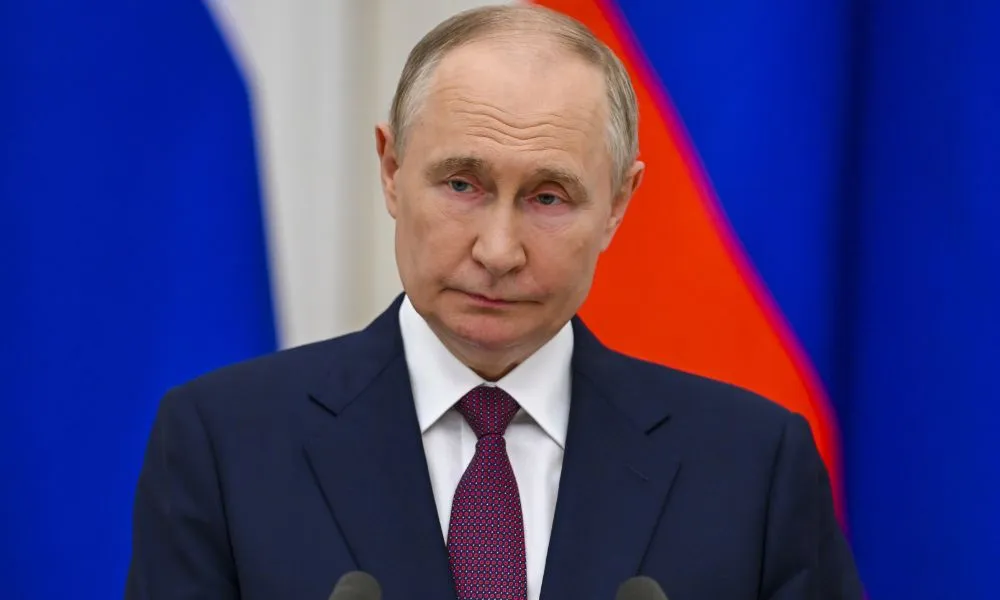

Russian President Vladimir Putin and Serbian President Aleksandar Vučić held a telephone conversation focusing on the war in Ukraine and Russia-Serbia energy cooperation, according to the Kremlin.
Energy discussions centred on Serbia’s Russian gas supplies and the future of Petroleum Industry of Serbia (NIS), the country’s largest oil company.
Serbia seeks long-term Russian gas deal
Following the conversation, Vučić said Belgrade is seeking a long-term agreement with Russia.
Serbia remains heavily dependent on Russian gas but has not secured a long-term contract since its previous three-year agreement expired in summer 2025. Instead, the country has relied on short-term extensions.
“The gas agreement expires on 30 September. I believe that, following today’s conversation, it will be extended and that we will secure stable gas supplies,” Vučić wrote on Instagram.
He added that Serbia would continue to benefit from what he described as a “good, low gas price of €318 per 1,000 cubic metres”, compared with a market price that he said currently stands at €868.
Despite its ambition to join the European Union, Serbia remains one of the few European countries to retain close ties with the Kremlin following Russia’s invasion of Ukraine.
The country also imports gas from Azerbaijan and has limited domestic production, although this is insufficient to compensate for the potential loss of Russian supplies.
US sanctions on NIS
Belgrade is also dealing with US sanctions against NIS because of the company’s majority Russian ownership.
The complete withdrawal of Russia from the company is required for the sanctions to be lifted.
Negotiations over the sale of the 56% Russian stake to Hungarian energy group MOL have been continuing for months.
“We also discussed the issue of the Petroleum Industry of Serbia, in the hope of finding a solution that is good for both sides,” Vučić said.
Vučić preparing to step down as president
The call with Putin was among Vučić’s final diplomatic engagements as Serbian President.
He has announced that he will resign on 27 September to run for Prime Minister in early elections called following nearly two years of student-led anti-corruption protests.
Source: CNA