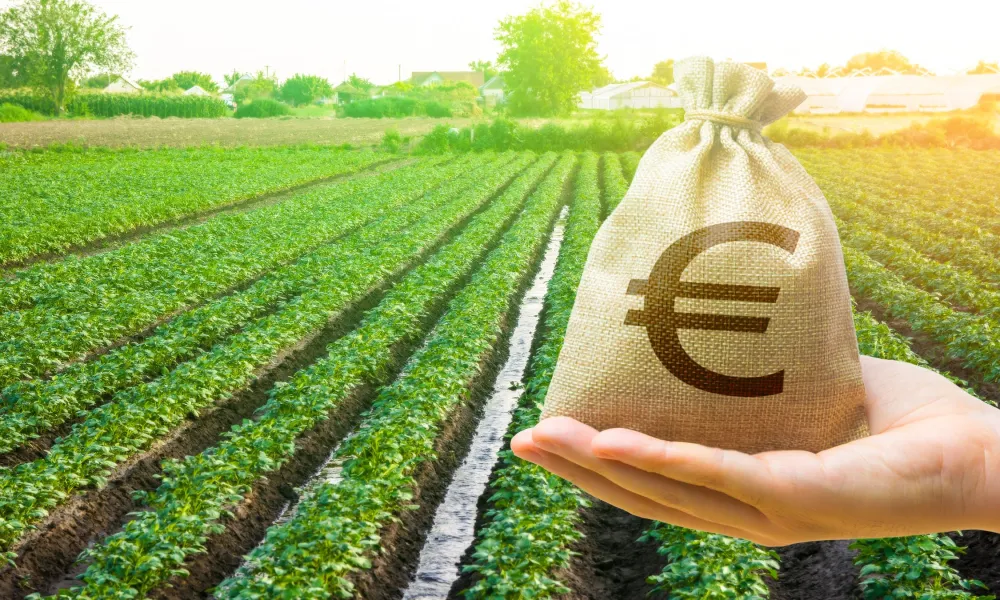

A recent European Parliament amendment to direct part of the revenue raised through the Carbon Border Adjustment Mechanism (CBAM) towards European farmers could provide support for Cyprus’ agricultural sector, which relies heavily on imported fertilisers.
The amendment, tabled by European People’s Party MEPs Manolis Kefalogiannis and Céline Imart, comes as carbon pricing on imported fertilisers threatens to increase production costs for Cypriot farmers.
How CBAM works
CBAM is an EU environmental and trade measure and a central part of the Fit for 55 package and European Green Deal, which aim to reduce net greenhouse gas emissions by at least 55% by 2030.
Its primary objective is to prevent “carbon leakage”, which can occur when European companies move production outside the EU to countries with less stringent environmental standards to avoid emissions costs, or when European products are replaced by more carbon-intensive imports.
By applying a carbon cost at the EU border, CBAM is intended to ensure imported products face a CO₂ cost comparable to that imposed on European producers through the EU Emissions Trading System (EU ETS).
The main sectors affected include fertilisers, iron and steel, aluminium, cement, electricity and hydrogen.
Following a transitional phase between 2023 and 2025, CBAM entered its definitive regime on 1 January 2026.
Higher fertiliser costs for Cyprus farmers
DISY and EPP MEP Michalis Hadjipantela told Politis that the CBAM revision approved in Strasbourg on 15 September keeps fertilisers within the mechanism.
This means imported fertilisers will carry a carbon cost that could ultimately be passed on to Cypriot farmers and consumers.
“To offset this, we supported the amendment by Mr Kefalogiannis and Ms Imart, which directs part of the revenue from the CBAM carbon tax towards financing European farmers, including Greek and Cypriot producers, in the context of the ‘just green transition’,” Hadjipantela said.
He explained that Cyprus imports most of the fertilisers it uses, meaning carbon pricing directly increases production costs for local farmers.
The amendment on farmer funding now forms part of Parliament’s position ahead of negotiations with the European Council, with national governments called upon to agree to the proposal.
Parliament backs Temporary Decarbonisation Fund
Alongside CBAM, Parliament adopted its position on the Temporary Decarbonisation Fund (TDF) by 433 votes in favour, 97 against and 146 abstentions.
The fund is intended to complement CBAM and support European producers and exporters.
As carbon costs within Europe rise, the TDF is designed to protect businesses competing in international markets where equivalent green taxation does not apply.
Hadjipantela served as the EPP shadow rapporteur on the legislative file.
“The fund was designed to protect European exporters from the risk of ‘carbon leakage’ once free emission allowances are phased out,” he said.
“We adopted significant improvements compared with the Commission’s original proposal, specifically a longer duration for the fund, broader eligibility, support for cement and cereals, and other measures.”
Cyprus farmers could seek compensation
According to Hadjipantela, the combination of fertiliser eligibility and the inclusion of cereals as a new category could have particular significance for Cyprus.
“Especially for Cyprus, the combination of fertiliser eligibility with the new cereals category means that local farmers will be able to seek compensation for increased costs caused by carbon pricing, something that was absent from the European Commission’s original plan,” he said.
Both the CBAM and TDF files are now moving into negotiations between Parliament and the Council, with the aim of reaching a common agreement.
Hadjipantela stressed that whether farmers ultimately receive practical support will depend on the outcome of those negotiations and whether the relevant provisions secure backing from national governments.