Biggest change: CAP joins a wider national plan
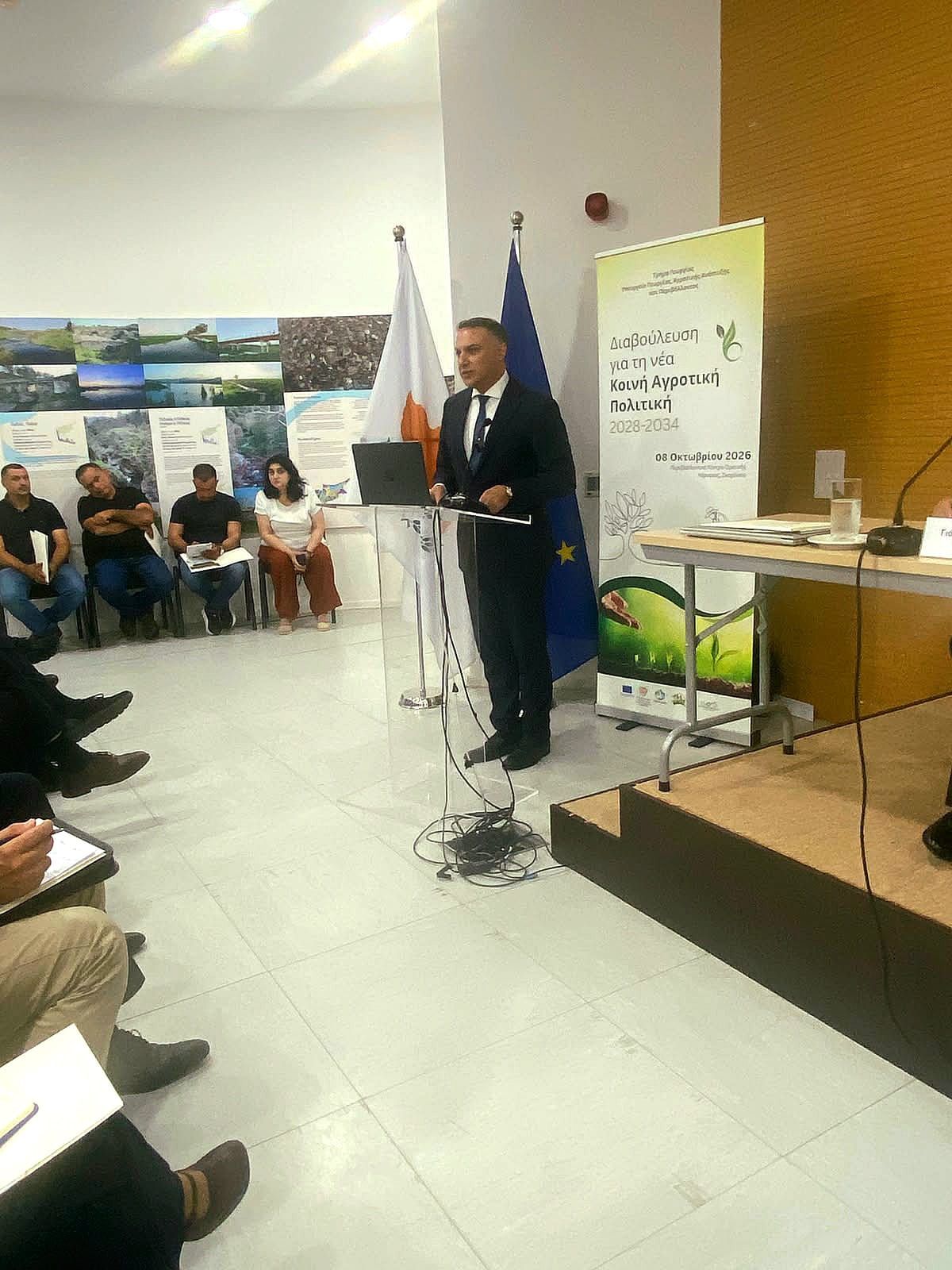
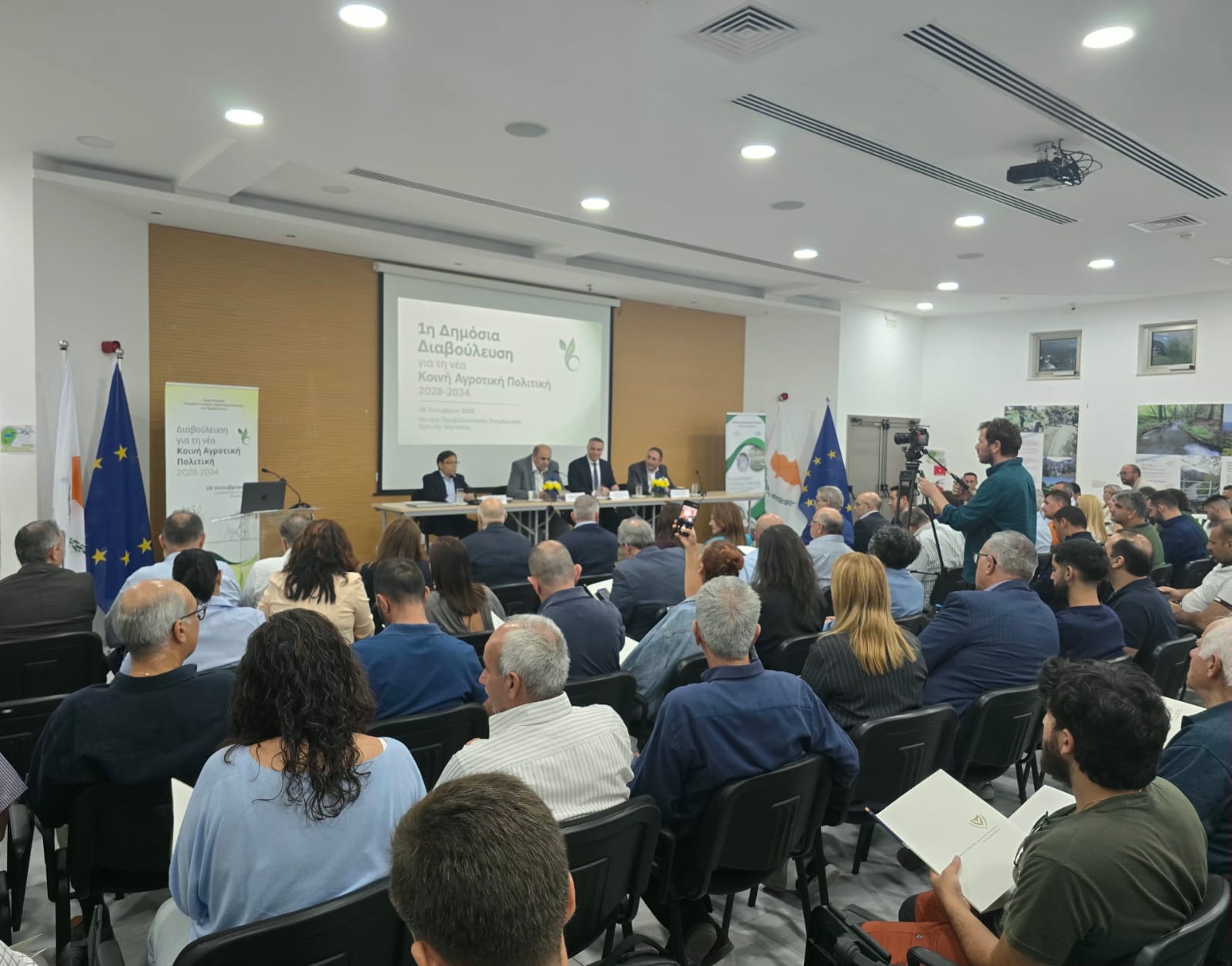
According to presentations delivered during the consultation, the most significant reform for the 2028-2034 period is that the CAP will no longer operate through a standalone Strategic Plan.
Instead, agricultural policy will be incorporated into a broader national framework alongside other EU policies and funding tools.
Officials say the new structure is intended to improve coordination, flexibility and complementarities between agriculture and other sectors, including:
- water infrastructure;
- energy;
- research and innovation;
- digitalisation;
- training;
- rural development.
The change will also give member states greater responsibility for setting priorities and allocating resources.
Cyprus objects to excluding retired farmers
Senekis told farmers that one of Cyprus' key objectives in ongoing EU negotiations is maintaining flexibility so member states can account for local realities.
In particular, Cyprus opposes a European Commission proposal that could exclude farmers who have reached retirement age from receiving direct support payments.
"The Commission's initial proposal does not reflect the reality of rural Cyprus," Senekis said.
He argued that many people continue farming and contributing to agricultural production well beyond retirement age.
"Support should be linked to genuine agricultural activity, not simply to a producer's age."
Cyprus intends to continue working with other member states to prevent the measure from being adopted.
Focus on younger farmers
The minister also identified generational renewal as a major priority.
He said future policies must not only encourage young people to enter agriculture and livestock farming but also provide realistic opportunities for them to remain in the sector and earn a sustainable income.
He added that agricultural planning should be guided by scientific evidence and take into account the impact of climate change.
A study is currently being prepared with the University of Cyprus examining climate change impacts on agriculture and the measures needed to adapt.
Farm lending scheme set to launch
Access to finance remains a major obstacle for many producers seeking to invest in their businesses.
Senekis noted that the Council of Ministers approved a Farm Lending Facilitation Scheme on 29 April 2026, designed to support farmers undertaking productive investments.
The scheme is expected to be launched in the near future.
Reducing bureaucracy and strengthening resilience
The minister also highlighted the need for a simpler agricultural policy that is easier for farmers and livestock breeders to access.
He said excessive bureaucracy remains a significant barrier to making full use of available support measures.
Senekis further pointed to ongoing challenges facing the sector, including:
- rising production costs;
- climate change;
- drought and water scarcity;
- pressures on livestock farming.
Recent outbreaks of foot-and-mouth disease, he added, have reinforced the need for stronger biosecurity measures, better risk management and increased resilience within the livestock sector.
Consultation process continues
The consultation is intended to identify:
- the main challenges facing Cypriot agriculture;
- the priorities of farmers and livestock breeders;
- views on future policy interventions.
According to the Agriculture Ministry, no specific measures or funding allocations have yet been finalised because EU negotiations remain ongoing.
Further consultations are expected during 2027, once a more developed draft of the CAP chapter has been prepared.