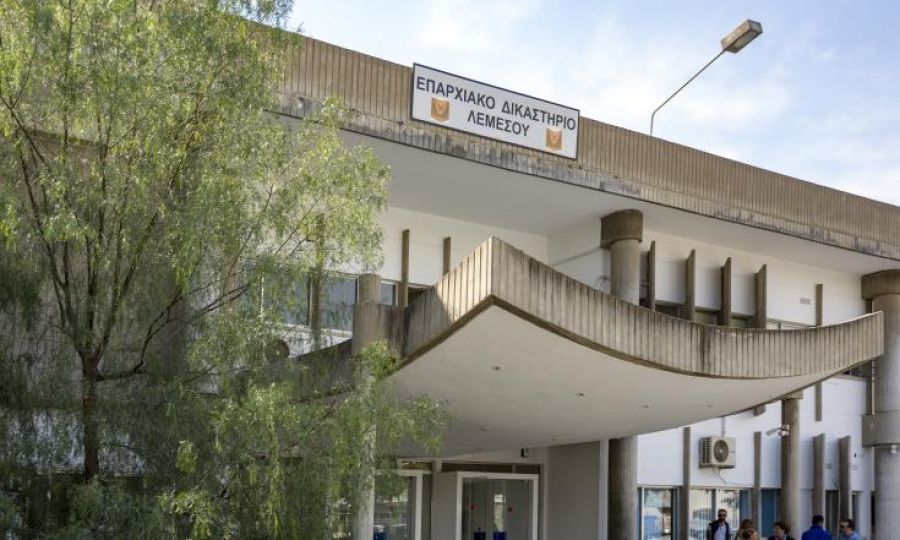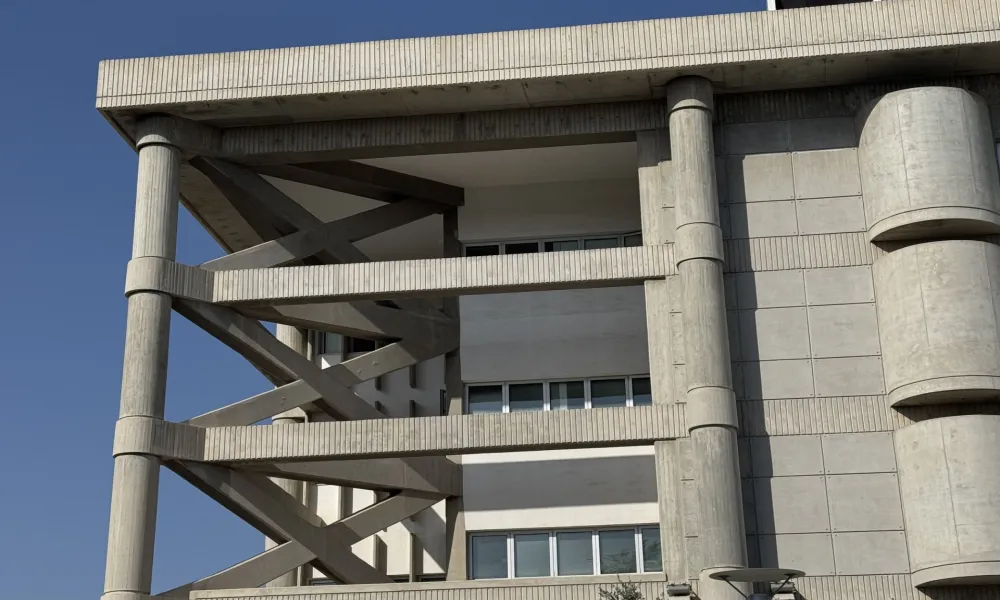

The Limassol District Court is alleged to have undergone significant alterations to its appearance and character following maintenance works and extensive repainting carried out without the required permit or approval from the Conservation Branch of the Town Planning Department, a procedure required for protected buildings.
The painting of exposed concrete surfaces, which form a central element of the building's architectural identity, has drawn criticism for altering its appearance and character. The case has also highlighted an apparent communication gap between state departments, as the Public Works Department said it was unaware that the site had protected status.
The parcel of land that includes both the Limassol Archaeological Museum and the Limassol District Court was declared a protected site in 2025 following a request and recommendation from the Limassol Municipality.
The works were carried out over recent months as part of a maintenance programme and extended beyond repainting. They included interventions to aluminium window frames inside and outside the building, works on the dome-like corridor connecting the old and new buildings, and improvements to courtrooms and other internal areas.
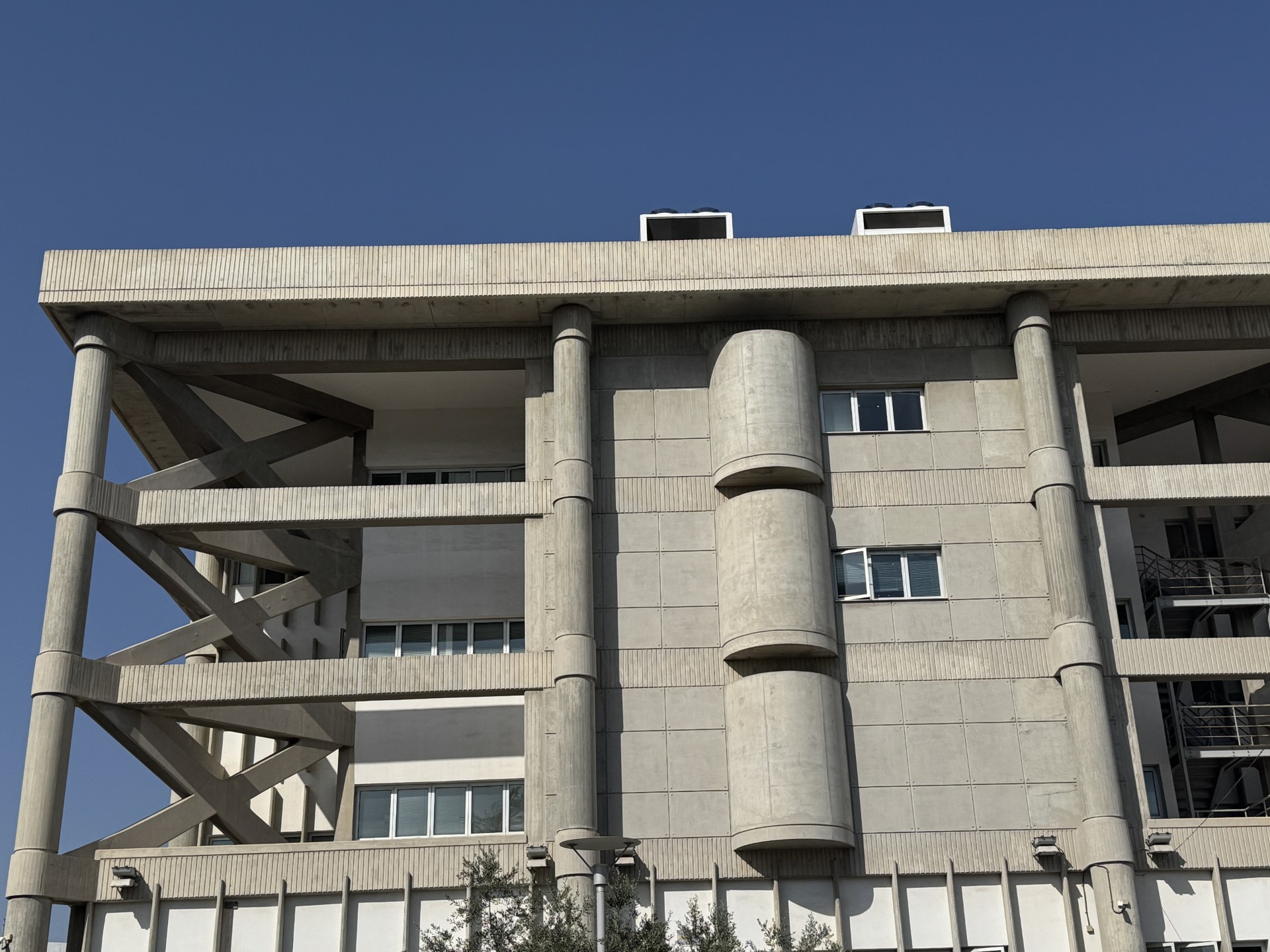
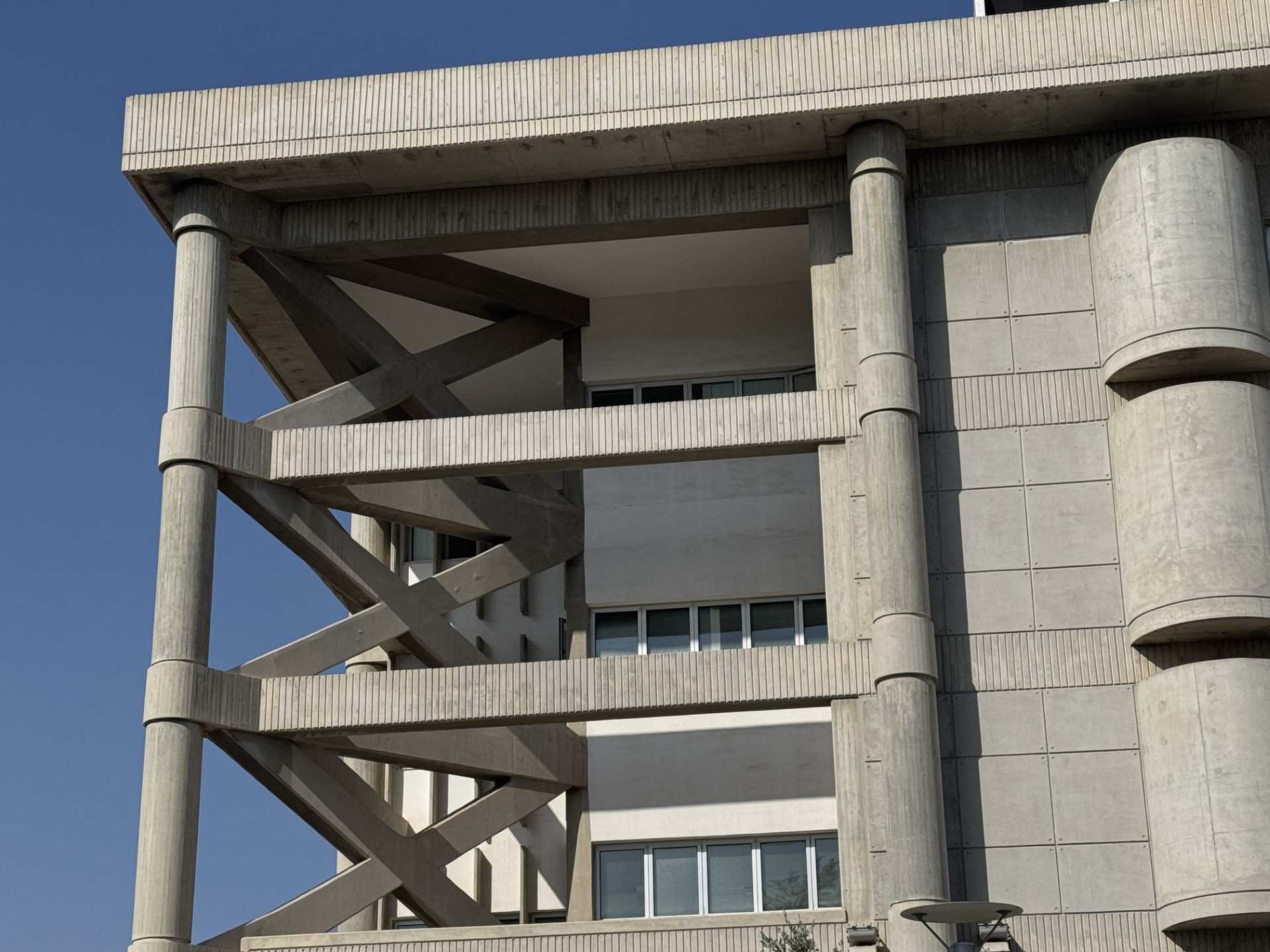
The most visible changes, however, are on the exterior façades, where exposed concrete surfaces, originally designed to remain visible as a defining architectural feature, were covered with paint. The difference is particularly evident when compared with the newer wing, where corresponding concrete surfaces remain unpainted.
A landmark of Cypriot modernism
The court building is considered a characteristic example of Cypriot modernist architecture and stands on a protected site that also includes the Archaeological Museum.
At the same time, the court building itself is currently being evaluated for designation as a protected building in its own right, a process that, according to information available, is expected to be completed soon.
The current protection status of the site requires any intervention, including maintenance work, to receive a special permit from the Conservation Branch of the Town Planning Department.
The works are also expected to involve the participation and supervision of an architect to ensure that both the methods used and the materials applied are compatible with the building's architectural significance.
In this case, however, the relevant division of the Public Works Department was reportedly unaware both that the complex sits on a protected site and that the court building was under evaluation for protected status.
The apparent lack of awareness raises questions about coordination and information-sharing between government departments before works are planned and executed on public buildings of architectural value.
According to information obtained by Politis, only last week, after concerns about the interventions were raised, the Town Planning Department circulated a letter referring to a number of significant public buildings and stressing the need for special care in their management and maintenance.
"Necessary maintenance works"
The Public Works Department's Limassol District Engineer, Panicos Panayiotou, confirmed that approval from the Conservation Branch had not been obtained for the works carried out at the court building.
Asked specifically whether such approval had been sought, he replied: "In this case, no."
He argued, however, that the interventions related to maintenance and did not alter the building's character.
According to Panayiotou, no additions were made to the building and the painting of the exterior surfaces was intended to protect the concrete from moisture.
"We did not paint it for aesthetic purposes. It is part of the maintenance."
He said the objective was not to improve the building's appearance but to address deterioration.
Panayiotou explained that a cement-based coating, commonly known as "cement paint", was used to prevent moisture from penetrating the concrete.
He said moisture causes gradual degradation over time and described the intervention as a common maintenance method for exposed concrete, known as "fair face" concrete.
He added that on 24 January 2025 the court had sent a letter highlighting the need to repair parapets on the old building, which had suffered significant deterioration and required protection from moisture.
Asked whether the building's architectural significance should have led to a different approach, Panayiotou replied that the same works would have been carried out because they constituted maintenance.
Regarding broader interventions at the court complex, he said improvement works undertaken over the past two years exceeded €840,000 including VAT, although that figure relates to all works and not solely to the repainting.
"The building's character has been altered"
Architect and member of the ETEK General Council, Alexis Papadopoulos, argues that the repainting of the exterior surfaces has altered the building's architectural identity.
"Once again we are seeing the casual manner in which the state and its services manage the architectural heritage of public buildings," he said.
Papadopoulos noted that there are specific procedures governing the maintenance of protected buildings.
"It is very unfortunate when state departments ignore these procedures, leading to poor outcomes. Government departments should be shining examples in the protection of architectural heritage."
According to him, the building, designed by architect Giorgos Mavrommatis, is a characteristic example of mature Cypriot modernism dating from 1971, adapted to local climatic conditions, culture and architectural influences of the period.
Its clean geometric lines, functional design without unnecessary ornamentation and extensive use of exposed concrete define its architectural identity.
Drawing influences from Brutalism, the design elevates concrete into a principal structural and aesthetic element, contributing to the imposing character of the judicial complex.
Papadopoulos stresses that exposed concrete surfaces, known as "fair face" concrete, are an essential component of the design and character of the building.
Their maintenance, he argues, requires a specialised and scientifically documented process and cannot be reduced to simple repainting.
According to him, the painting changes both the appearance and the materiality of the structure, altering a fundamental element of its architectural identity.
"What happened here is clearly painting."
He described it as regrettable that government departments would intervene in such buildings without the advice of an architect, particularly when protected structures require permission from the appropriate conservation authority.
Papadopoulos argues that the paintwork has significantly changed the building's appearance and character.
He points to the newer wing, where exposed concrete surfaces remain unpainted, saying the difference is obvious.
"Government departments should be examples for others. The approach cannot simply be, 'let's paint over it so it looks new'."
He said greater sensitivity should have been shown towards the building, even if it had not yet formally received protected-building status.
Papadopoulos also called for an investigation into whether other interventions may have been carried out under the banner of maintenance and urged the immediate launch of restoration procedures following a comprehensive study by an architect specialising in conservation.
He argued that any restoration should be based on a technical assessment of the building's current condition and scientifically documented intervention methods that respect the authenticity of the materials and the original architectural intent.
"The period of Cypriot modernism is extremely important for Cyprus' architectural heritage and we must protect it."