
Fifty years ago, farmers in Italy's Emilia-Romagna region would open the windows of their barns at night during summer to keep their cattle cool. Today, with heatwaves pushing temperatures to record highs, those windows stay open around the clock in an effort to protect the cows, and ultimately the milk that underpins the region's centuries-old Parmigiano Reggiano industry.
Nicola Bertinelli, president of the Parmigiano Reggiano Consortium, who also runs the dairy farm his family founded near Parma in 1895, said extreme heat affects both the quality and the quantity of milk. With temperatures topping 40 degrees Celsius, cows spend more time lying down, eat less, and produce up to 10% less milk, one of only three ingredients in Parmigiano alongside salt and rennet.
Costs mount as cheese ages
Authentic Parmigiano Reggiano can only be produced in five provinces, mostly within Emilia-Romagna, and the cows must be fed exclusively on grass and hay grown there. Bertinelli, 54, said that without rain, the grass cannot grow, hay cannot be produced, and it becomes impossible to obtain the milk needed to make the cheese. He and other producers have installed fans and water mist systems to keep their herds cool, but the additional cooling has driven their energy costs sharply higher.
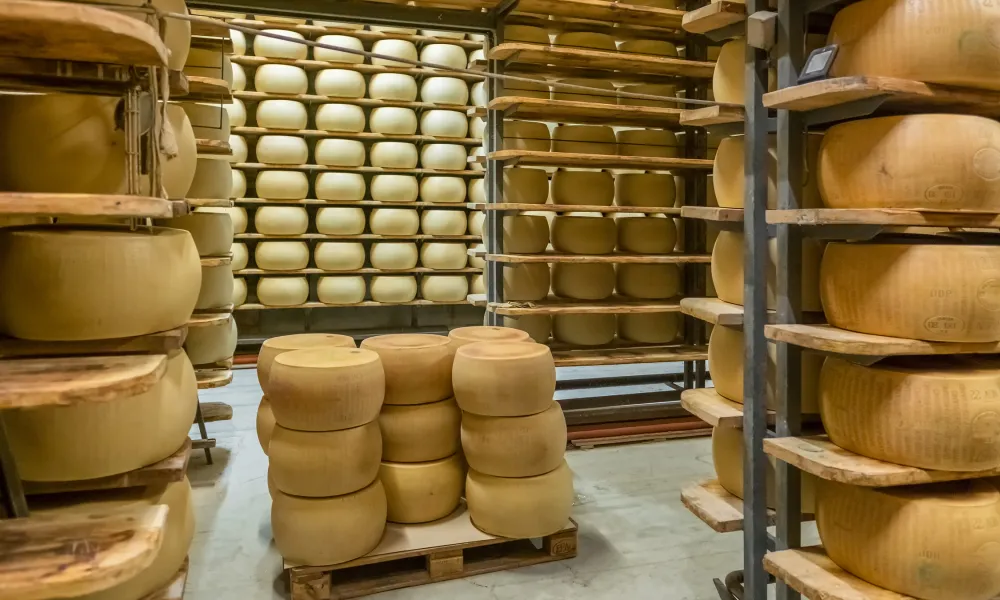
Rising bills are also affecting the warehouses where wheels of Parmigiano are stored during the ageing process, which lasts at least twelve months and sometimes three years or longer. More than 500,000 wheels, together worth over €300 million, are held in two warehouses run by Magazzini Generali delle Tagliate, a unit of Credito Emiliano, in the provinces of Reggio Emilia and Modena. MGT director Giancarlo Ravanetti said daily energy consumption rose by around 30% during this year's peak heatwaves, adding that the company has since improved its cooling systems and boilers, upgraded insulation, and increased its use of renewable energy.
We don't want to be the last generation to eat it
The region's climate controlled warehouses have become institutions in their own right, collectively known as the Bank of Parmigiano, where technology and tradition operate side by side. Each wheel undergoes strict quality inspections, including X-ray scans, to rule out defects, and is checked weekly by experts who tap it with small hammers, listening for signs of flaws that may have developed during ageing. Ravanetti said the human element remains central to the process and represents its real strength.
Paolo Ganzerli, international sales director at food group GranTerre, which posted consolidated revenue of €1.87 billion in 2025, echoed those concerns over rising costs. He said that if extreme weather events become longer and more intense, they will affect both the quantity and quality of milk, but above all will drive costs higher.
The stakes are considerable. The Parmigiano Reggiano industry generates an estimated €4.5 billion, around $5.15 billion, in annual revenue and employs thousands of people, underpinning much of the local economy. In 2025, exports accounted for more than half of the cheese's global sales, with the United States as its largest foreign market. Parmigiano Reggiano has existed for more than 800 years, Ganzerli said, adding that producers do not want to be the last generation able to eat it.
Source: Reuters