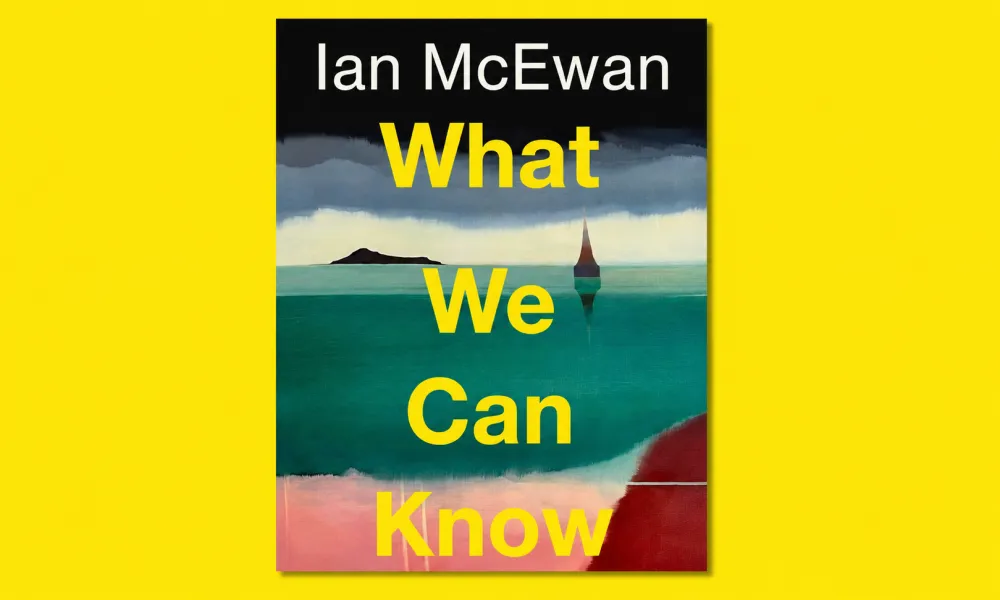

One of the sharpest chroniclers of contemporary consciousness, McEwan constructs an ambitious novel of ideas that revolves around the search for a lost poem by the legendary poet Francis Blundy. From this premise emerges a wider exploration of knowledge, memory and cultural inheritance.
The novel poses a series of unsettling questions. What transforms a work of art into a myth? Is it its intrinsic value, its historical significance, or perhaps its absence? How often is collective memory built on gaps, lost evidence, fragments and narratives that attempt to fill the silence left by history? And might absence itself be the force that creates legend?
Searching for the past
These questions shape the investigation undertaken by Tom Metcalfe, an academic living in 22nd-century Britain who attempts to reconstruct the past from the traces that remain.
Yet the search for the missing poem is only the starting point. Beneath the literary mystery lies a broader inquiry into the limits of human understanding. Despite having access to technological tools of unimaginable sophistication, Metcalfe repeatedly encounters uncertainty, omissions and distortions, exposing the difficulties inherent in any attempt to fully comprehend the world.
McEwan uses the novel's futuristic setting not to celebrate technological progress but to test its limits, asking whether an abundance of information necessarily leads to deeper wisdom.
Knowledge without wisdom
At the same time, the Britain of the future is grappling with the consequences of environmental collapse, serving as a reminder that technological advancement does not automatically bring better judgement.
This tension lies at the heart of the novel: the coexistence of unprecedented access to knowledge and a persistent inability to manage the crises humanity creates for itself. McEwan turns that contradiction into the book's central concern, linking the anxieties of the future directly to those of the present.
Blending philosophical speculation, literary investigation and social commentary, What We Can Know continues McEwan's long-standing fascination with the ways individuals understand reality. It is a novel that questions not only what we know, but whether knowledge itself is ever enough.