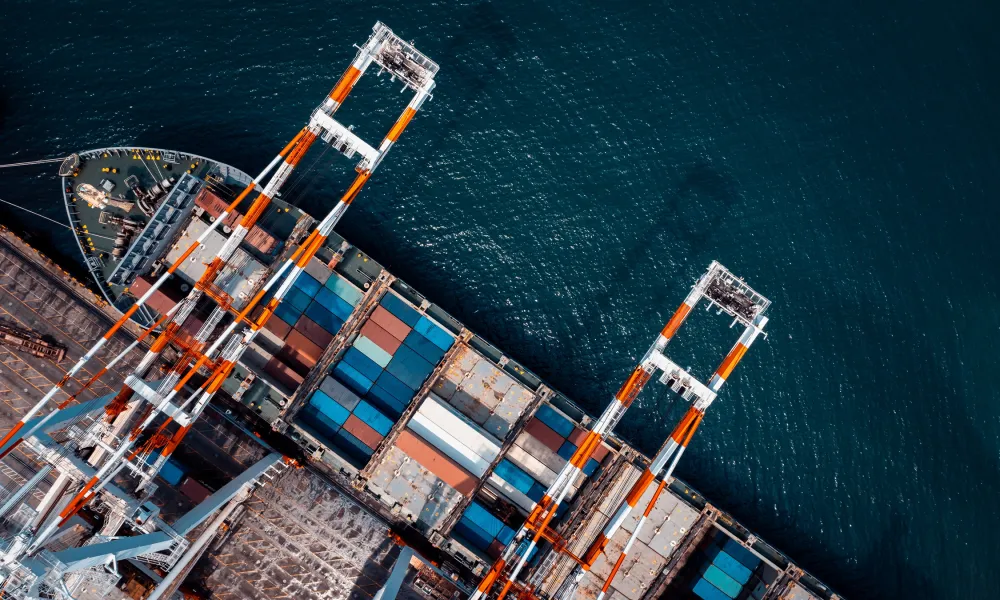



Greece is blocking a new round of EU sanctions against Russia in order to protect Dynagas, the shipping company belonging to Greek tycoon George Prokopiou that specialises in transporting Russian cargoes from a liquefied natural gas plant in the Arctic, according to a Financial Times report citing people briefed on the discussions.
Athens's ambassador to the EU told fellow national envoys on Wednesday that the planned sanctions, which would ban the transport of Russian LNG to third countries, would "ruin" Dynagas, the FT reports, citing two people briefed on his remarks. Two further sources confirmed to the paper that the ambassador cited Dynagas specifically as the reason Greece could not support the sanctions, which require unanimous approval to proceed.
Dynagas operates 27 gas tankers, according to maritime data portal Equasis, including a third of the fleet of Arc7-class vessels built to withstand the icy Arctic waters near the Yamal LNG plant. Greece's objection has held up approval of the EU's 21st sanctions package against Russia for a week, leaving other measures, including sanctions on additional banks, cryptocurrency networks and military-industrial companies, in limbo. The package also includes a mechanism to lower the price cap on Russian crude oil above which companies cannot legally purchase or transport it.
A week-long extension
Ambassadors were forced on Wednesday evening to agree an emergency week-long extension of the existing $44.10-a-barrel price cap to buy more time for negotiations. Without a decision, the FT notes, the cap would have risen significantly due to the increase in global prices caused by the war in Iran, generating billions in additional revenue for Moscow. According to an EU official briefed on the decision, the extension was also intended to allow more time to study the economic and technical implications of the sanctions, including the proposed LNG transport ban.
Other EU diplomats argue that all member states have seen their own companies lose business as a result of the sanctions, in order to inflict economic pain on Moscow. Kaja Kallas, the EU's chief diplomat, said on Monday that she regretted the bloc had not reached agreement on the 21st package, acknowledging that "member states have various reasons" to oppose it, and that the EU would begin work on an alternative plan for the oil price cap if no agreement is reached.
Two shipping businesses, one owner
Prokopiou owns both Dynagas and Dynacom, an oil tanker business that has earned at least $915 million from trading Russian crude oil over the past three years, more than any other Greek shipping company, according to the FT. Dynacom was among the first companies willing to risk sending tankers through the Strait of Hormuz during the early weeks of the US-Israel conflict with Iran.
Dynagas has transported more than 10 million tonnes of Russian LNG since the start of 2025 across 11 vessels, according to FT calculations using data from analytics firm Kpler, which identified 144 voyages completed by those ships over that period. Its fleet of Arc7 vessels was purpose-built to serve Yamal, on Russia's Arctic north coast.
Greece has argued that Dynagas would be unable to redeploy the vessels elsewhere and would be forced to sell them to non-western buyers, according to people briefed on the discussions cited by the FT. The highly specialised ships are among the most complex to build, costing around $300 million each. The remainder of the Arc7 fleet is operated by Seapeak, owned by New York-based investment firm Stonepeak, and Japan's Mitsui OSK Lines, with one vessel owned by Russia's Sovcomflot.
The Greek government and Dynagas did not immediately respond to the FT's requests for comment.
Source: Financial Times