
The government's proposed pension reform has failed to convince many economists and social partners, who argue that significant gaps remain despite measures aimed at increasing retirement benefits, particularly for low-income pensioners.
While stakeholders broadly acknowledge that the package contains positive elements, they say important questions remain unanswered regarding funding, long-term fiscal sustainability and the future role of occupational pension funds.
Concerns have also been raised over the planned changes to actuarial reductions for early retirement, with trade unions arguing that the proposal offers only limited relief, while some economists contend it effectively lowers the retirement age.
Positive elements, but significant gaps
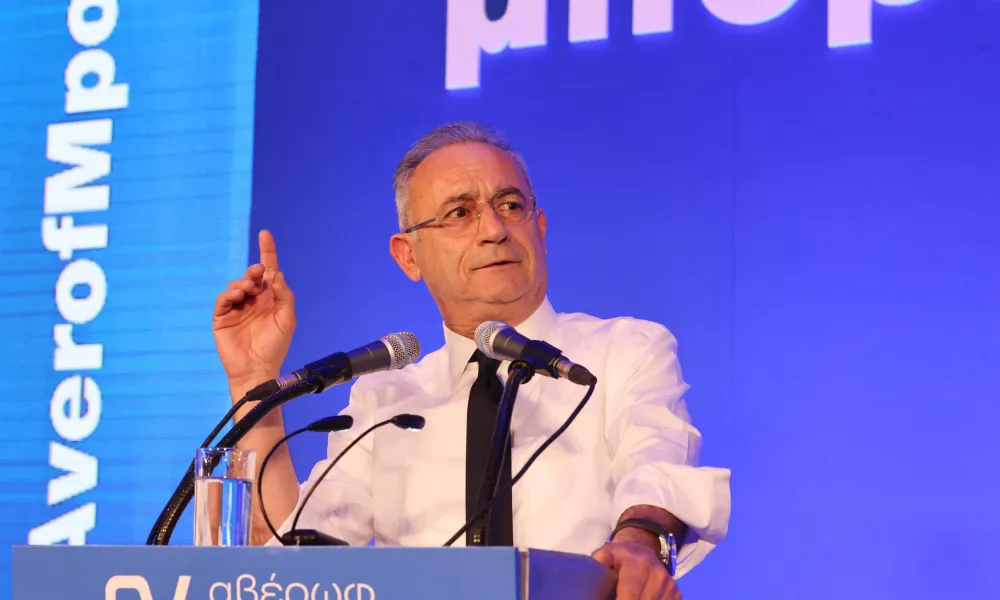
Speaking to CyBC radio, University of Cyprus finance professor Andreas Milidonis, who specialises in pension research, identified both strengths and weaknesses in the government's proposal.
According to Milidonis, the positive aspects include higher pensions, particularly for lower-income earners, in line with the social role of the Social Insurance Fund (SIF). He also pointed to measures intended to address declining birth rates and incentives encouraging people to remain in work until the age of 67.
However, he criticised the absence of reforms related to the second pension pillar, namely provident funds, and the lack of an independent supervisory authority for those funds.
Without strengthening the second pillar, he argued, pressure on public finances will increase over time.
Milidonis also said that changes to the formula used for actuarial reductions on early retirement effectively lower the retirement age at a time when most European countries are discussing how to respond to increasing life expectancy.
He further noted that the fiscal cost of the reform is projected to reach €250 million during the first five years, while uncertainty remains over the longer-term impact.
Regarding the proposed extension of Social Insurance contributions to income from rents, interest, dividends and certain office holders, Milidonis described it as a positive step, while warning that some of the cost could be passed on to tenants in the short term.
He also suggested that the reforms leave open the possibility of contribution increases within the next five or six years to finance higher pension payments.
Questions over replacement rates
One of the key unresolved issues highlighted by Milidonis is the pension replacement rate, the proportion of a person's final salary replaced by their pension.
He noted that Cyprus currently has a replacement rate of around 44%, among the lowest in the European Union.
"What will the replacement rate be after the reform?" he asked.
The same question was raised by Marinos Gialelis, general manager of the Hotel Industry Employees Provident Fund.
He argued that the central issue should be how much of a worker's final salary is replaced by their pension.
Using an example, he said a person earning €3,000 before retirement and receiving a pension of €1,500 would have a replacement rate of 50%.
In more advanced pension systems, he said, replacement rates generally reach 70% to 75%, combining payments from both the Social Insurance Fund and occupational pension schemes.
According to Gialelis, this should be the main benchmark in any pension reform debate.
Calls to strengthen provident funds
Evangelos Tryfonos, a member of the Council for Economy and Competitiveness, said the measures announced by the government move in the right direction.
However, he stressed that pension adequacy depends on the combined operation of the system's three pillars:
- Social Insurance Fund
- Provident funds
- Private pensions
To guarantee adequate pensions for future generations, he argued, the second pillar must be significantly strengthened.
Tryfonos also agreed that reducing the actuarial penalty for early retirement effectively lowers the retirement age.
Concerns over financing
Questions over the cost of the reform and how it will be funded were raised by Andreas Charalambous, chairman of the Cyprus Fiscal Council.
Speaking to CNA, Charalambous said the reform appears broadly positive but warned that the issues of cost and financing remain unresolved.
"The cost and the financing are significant issues," he said.
Employer organisations have also requested greater clarity regarding funding arrangements, stressing the importance of safeguarding both the Social Insurance Fund and public finances.
Philokypros Rousounidis, secretary-general of the Cyprus Chamber of Commerce and Industry (CCCI), said the financing mechanism had not yet been adequately explained and that further clarification would be sought from technical experts.
Similarly, Michalis Antoniou, director-general of the Employers and Industrialists Federation (OEB), said it would be necessary to determine whether projected revenues are sufficient to fund the increased benefits without raising contributions.
He described contribution increases as an absolute red line.
Areas of agreement
The Fiscal Council said it supported maintaining the retirement age at 65, as well as incentives encouraging people to remain in employment beyond that age on a voluntary basis.
Charalambous also welcomed measures supporting low-income pensioners and adjustments to the basic and earnings-related components of pensions.
He stressed, however, that a detailed actuarial study is needed to determine the long-term effect of the reforms on the sustainability of the Social Insurance Fund.
Importance of all three pension pillars
Charalambous also argued that the second pillar, occupational pension and provident funds, must be developed urgently to provide supplementary retirement income and strengthen long-term sustainability.
The same applies to the third pillar, under which individuals make private retirement arrangements.
"All three pillars need to be developed if long-term pension adequacy is to be secured," he said.
He also endorsed the gradual end of government borrowing from the Social Insurance Fund, while emphasising the need for prudent management of the fund's assets through low-risk investments.
Milidonis similarly described investment policy as one of the most important aspects of the reform, particularly as the Social Insurance Fund moves towards greater independence from the state.
Trade unions seek broader reform
Trade unions generally welcomed parts of the proposal but argued that the overall reform remains incomplete.
SEK secretary-general Andreas Matsas said a pension reform without a functioning second pillar cannot be considered a genuine pension reform.
SEK acknowledged pension improvements and other positive measures but said key questions remain regarding the operation of what it describes as "pillar zero", investment policy and actuarial reductions for early retirement.
The union called for the simultaneous introduction of governance rules for the Social Insurance Fund, a clear investment framework and a detailed plan for supporting vulnerable pensioners.
PEO and DEOK reservations
The PEO trade union said a meaningful reform should eliminate pensioner poverty, ensure adequate retirement income and address the current 12% early-retirement penalty in a comprehensive way.
PEO also argued that universal access to provident funds is necessary if retirees are to achieve adequate incomes.
The union criticised the fact that proposed pension increases would be phased in over five years, saying this falls short of expectations and does not address low pensions quickly enough.
It also argued that the planned reduction of the 12% penalty to 7.5% is incomplete because it applies only to the basic pension component.
PEO additionally criticised the absence of provisions addressing the situation of male widowers whose spouses died before 2018 and who remain ineligible for widow's pensions.
Meanwhile, DEOK president Stelios Christodoulou said further explanations are needed regarding the fund's investment policy, repayment of money borrowed by the state from the Social Insurance Fund, and the management of future surpluses.
He also expressed reservations about the proposed changes to the early-retirement penalty, arguing that the reduction would have only a limited financial impact because it applies solely to the basic pension.