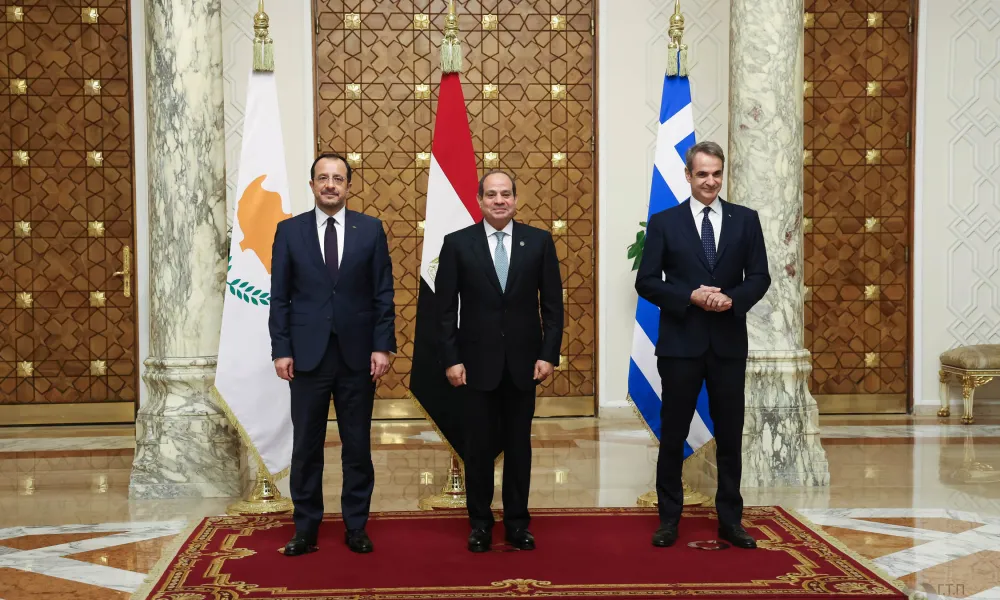

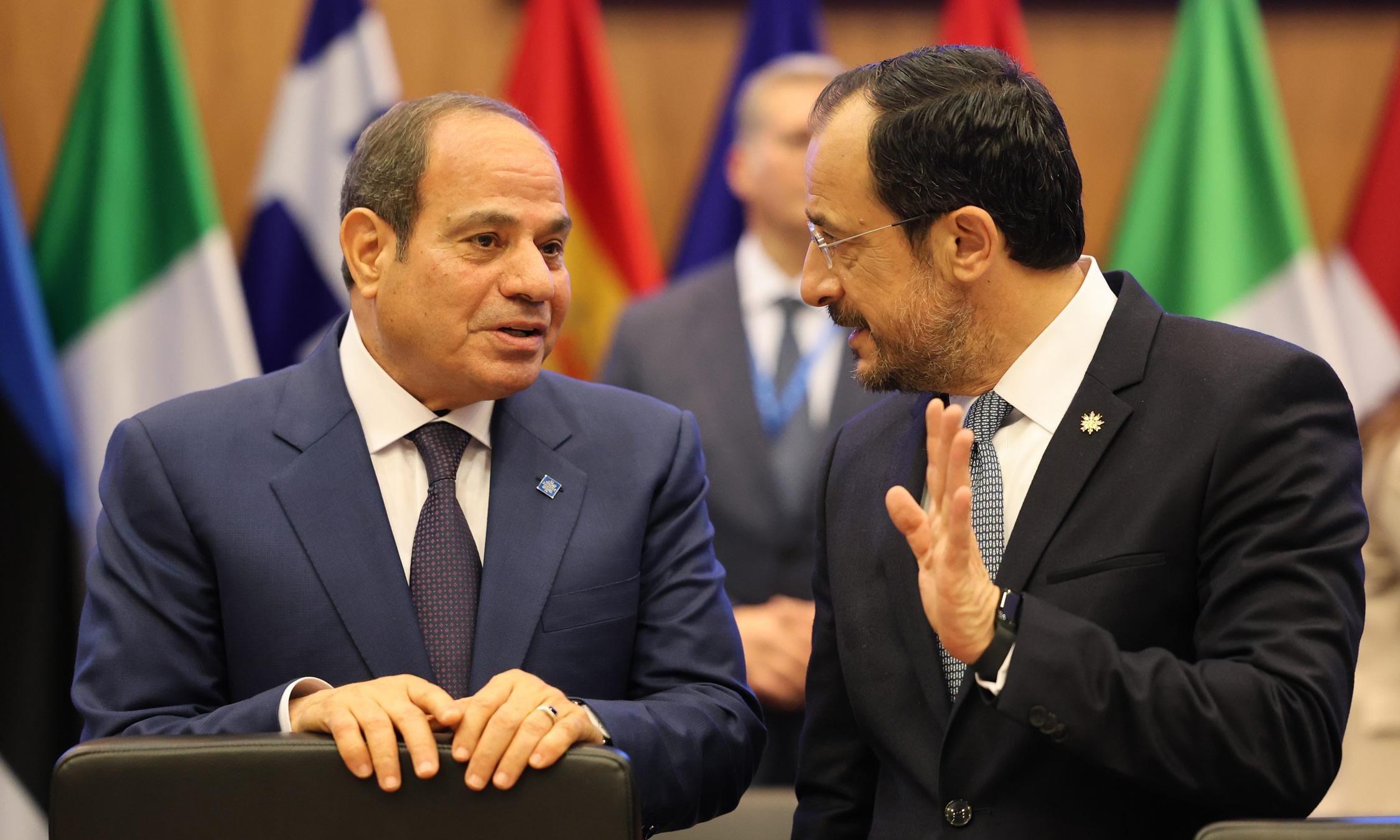
President Nikos Christodoulides is flying to Egypt’s El Alamein on Tuesday to participate in an impromptu trilateral meeting with his Egyptian and Greek counterparts to discuss regional developments and closer collaboration.
Government Spokesperson Konstantinos Letymbiotis said the summit is taking place “at a particularly important juncture for the wider region”.
Egyptian President Abdel Fattah El-Sisi will hold bilateral meetings with Christodoulides and Greek Prime Minister Kyriacos Mitsotakis before the trilateral summit.
Letymbiotis said Cyprus-Egypt relations have “expanded and deepened significantly” in recent years, reaching the level of a strategic partnership, with cooperation across a range of sectors, including energy, security, and close coordination on regional and international developments.
Egyptian Ambassador to Cyprus Mohamed Zaazou told Politis that the trilateral summit reflects the strategic nature of the three countries’ partnership. Tuesday’s meeting will provide an opportunity for the leaders “to advance practical cooperation in various areas including strategic coordination, energy, investment, trade, and public diplomacy”.
It will also give the leaders a chance to consult and coordinate on regional challenges to peace and stability in the Eastern Mediterranean, he noted.
Ad hoc summit ahead of official trilateral
The last trilateral summit between the three was held in January 2025 in Cairo. The next official trilateral is due to be held in Cyprus by the end of 2026.
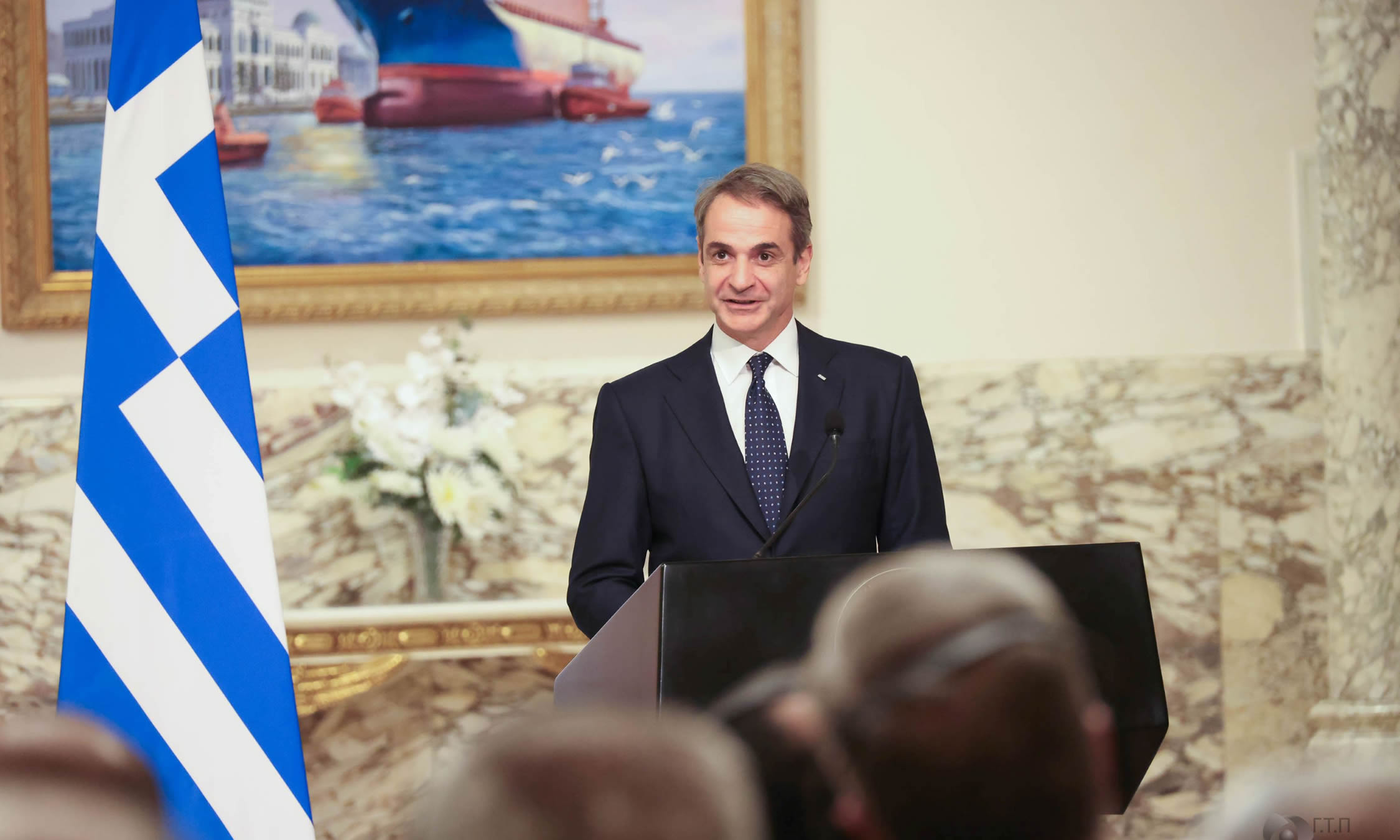
However, with the Greek PM and Cypriot president attending the El Alamein International Airshow in Egypt, El-Sisi decided to use the opportunity for an ad hoc meeting of the three.
According to diplomatic sources, there is no official agenda, but plenty to discuss at the bilateral and trilateral level.
Growing energy ties
Bilaterally, Mitsotakis will likely wish to discuss plans for the electricity interconnection cable between Greece and Egypt. For his part, the Egyptian president might want to discuss Greece’s recent agreement with Israel on the air defence system Achilles Shield.
Christodoulides will also have energy issues to discuss on the bilateral level.
Cyprus is expected to become a first-time gas producer before the decade ends as natural gas from the Eni-operated Cronos reservoir is slated to go to Egypt’s liquefaction plant at Damietta. This gateway to international markets could potentially be used for other Eni-licenced discoveries.
Interstate agreements with Egypt have also opened the path for the potential transport of Chevron’s Aphrodite concession to Egypt.
Nicosia has invested significantly in energy relations with Cairo, preferring existing energy infrastructure over developing new domestic means in the hope this could finally expedite the export of Cypriot gas, first discovered in 2011.
Mecca Agreement focuses minds
On the trilateral level, the three leaders have much to discuss. The region faces conflict from Gaza to Lebanon to the Strait of Hormuz.
And then there is the Mecca Joint Defence Agreement, signed on 7 August 2026 by Turkey, Saudi Arabia and nuclear power Pakistan.
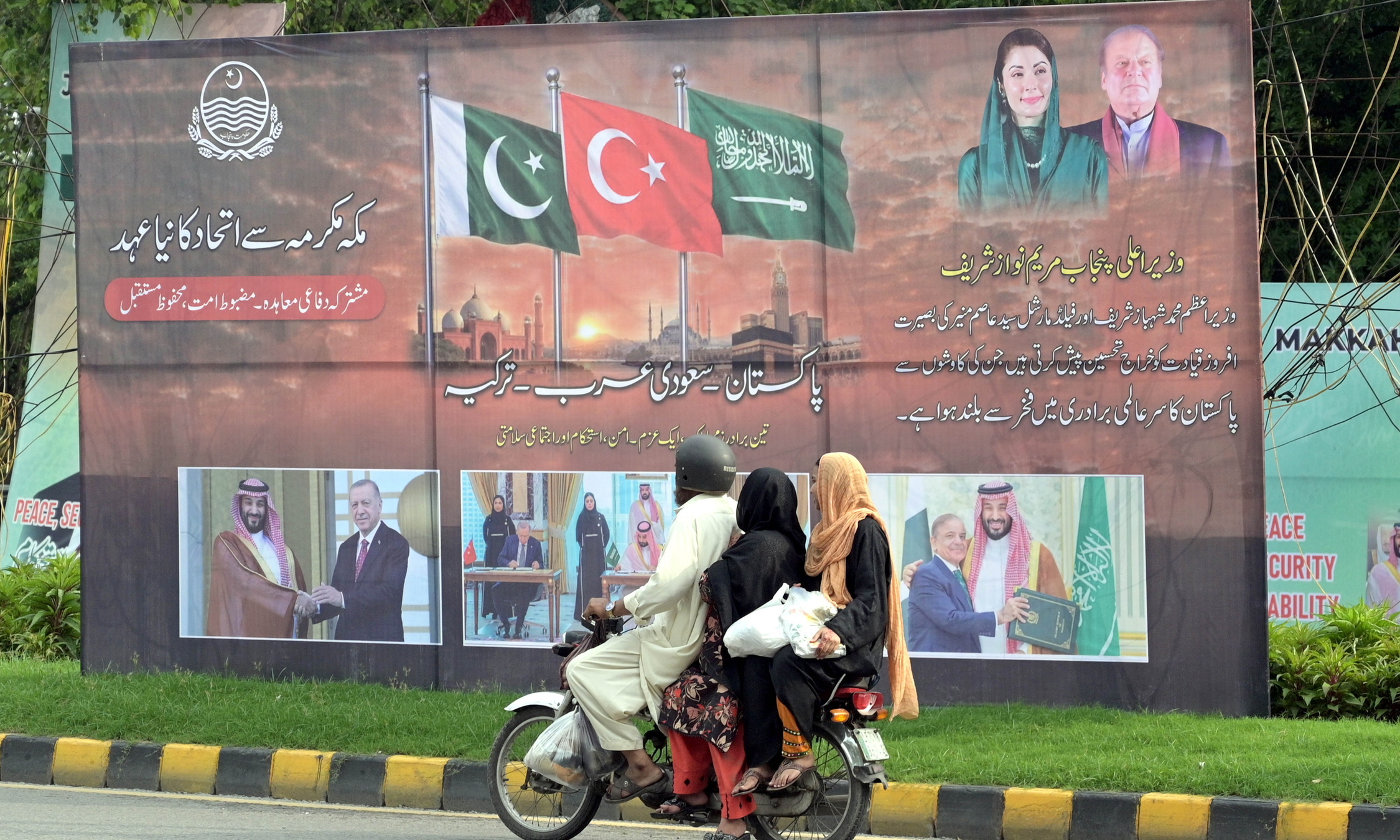
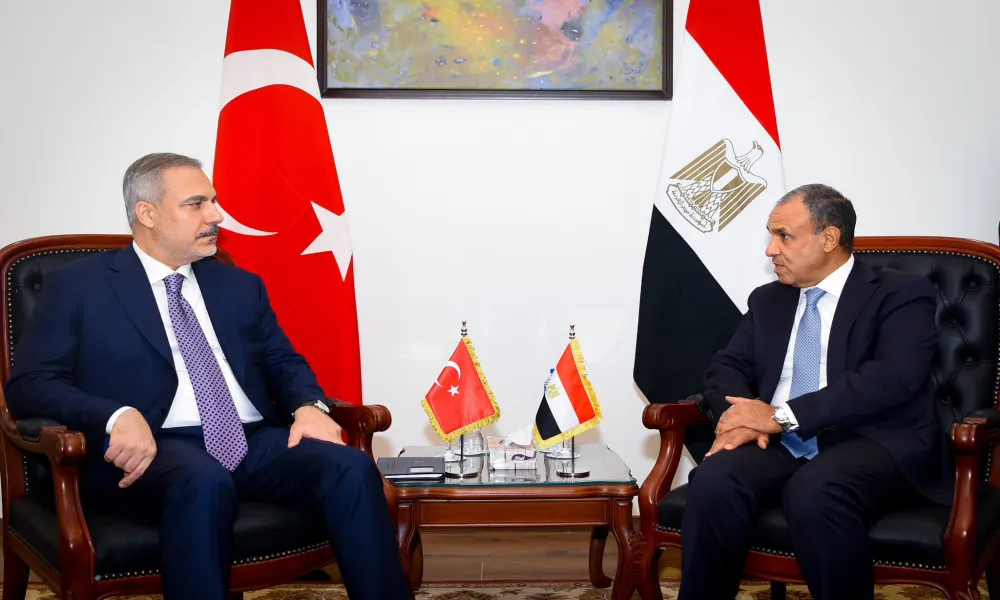
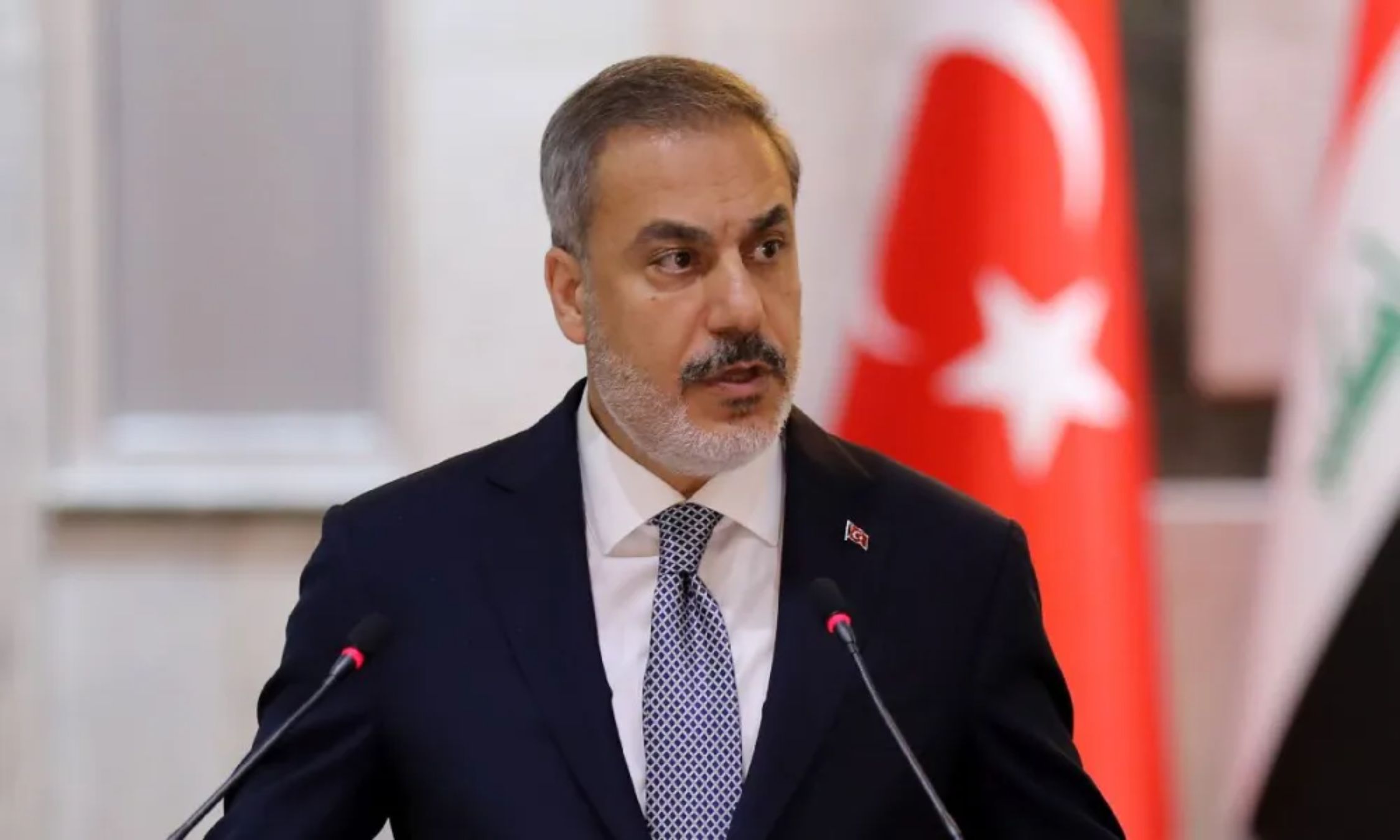
Turkish Foreign Minister Hakan Fidan has said he expects Egypt to be the next member of this new defence alliance, once “a few technical issues” have been ironed out, describing Cairo as a “natural partner on all issues”.
The exact details of the agreement have not been made public though, according to Hurriyet Daily News, Fidan said the clause on mutual defence was “technically the same” as NATO’s Article 5 where an attack on one member is considered an attack on all.
The Turkish FM explained that a formal request for assistance could trigger a response from the other members in the form of intelligence sharing, logistic support or even the deployment of military units, depending on the threat.
On 31 August, the three countries’ foreign and defence ministers, joined by their military chiefs, held the first high-level meeting of the ‘Mecca Alliance’ in Istanbul. According to Al -Monitor, Fidan said the alliance would establish a ministerial committee modelled on NATO’s structure and create a general secretariat based in Saudi Arabia. He called on other countries to join the pact.
During a recent visit to the UK, Pakistani FM Ishaq Dar said six to seven Muslim-majority countries have expressed an interest in joining the defence pact, reported Al-Monitor.
The view from Cyprus
Speaking on Capital TV at the weekend, Foreign Minister Constantinos Kombos said the Mecca agreement is certainly an important geopolitical development, but it started a year ago with the Turkey-Pakistan agreement. Now, Saudi Arabia has joined.
He questioned whether the infrastructure and interoperability exist for Mecca Alliance members to activate a NATO-type mutual defence clause – though he noted, this could change.
Kombos said the pact raised an important question on what it means for NATO countries. Previously, he pointed out, EU-NATO members would push back against advancing the EU’s mutual defence clause, Article 42.7, arguing it could impact NATO functionality. What impact will the Mecca agreement have?
Weighing up pros and cons
A diplomatic source told Politis that Egypt needs to weigh up many complex issues before deciding whether it wants to join the Mecca Agreement. Importantly, it has a peace pact with Israel. If a regional agreement is reached with Iran, how will this affect developments? Any change in stance would require serious consideration of the impact on Egypt’s traditional foreign policy.
A lot depends on what the new pact is about. Who will join it? Will it develop military structures? Will members seriously consider activating a mutual defence clause, for example, against India? Is it more about political signalling? Or perhaps about intelligence sharing and bringing financing together with technological know-how to develop defence industry cooperation (for example, on drones), while also providing space for political and diplomatic projection.
Another source said Egypt might explore joining the Mecca agreement, but it will be keen to show that it is not burning any bridges with traditional partners. It will also have to consider its domestic audience. Any move towards Mecca will not happen overnight, said the source.
According to Ahram Online, Egypt and Turkey signed a Memorandum of Understanding on expanding defence industry cooperation on the sidelines of the Sarajevo defence expo on 2 September.
Israeli President visiting
Meanwhile, Israeli President Isaac Herzog’s office announced that he will travel to Cyprus this Thursday for a one-day visit focused on “deepening cooperation” and strengthening ties between the two countries.
Although he does not represent the executive, a visit by Herzog is considered important, particularly given the limited likelihood of Israeli Prime Minister Benjamin Netanyahu travelling to Cyprus.