
The Labour Ministry is proposing significant changes to Cyprus' support system for low-income pensioners as part of its broader pension reform agenda, with a particular focus on the so-called "Pillar 0" of the pension system, the safety net designed for retirees with limited income.
The proposal, which was due to be presented to the Labour Advisory Body on 20 August 2026 and concerns the reform of the existing Low-Income Pensioners' Benefit (LIPB), was circulated to social partners on Wednesday and obtained by Politis.
According to the ministry, the objective is to transform the benefit into an integral part of the philosophy of a reformed Social Insurance Fund (SIF), increasing the effectiveness of pension policy. The proposal envisages introducing the benefit through legislation in the near future as a rights-based guaranteed minimum pension available to all eligible recipients.
As a supplement to pensions paid through the Social Insurance Fund, the redesigned benefit would incorporate poverty protection more comprehensively and effectively while helping to improve income replacement for low-paid workers.
What would change?
The ministry argues that the current system suffers from significant weaknesses.
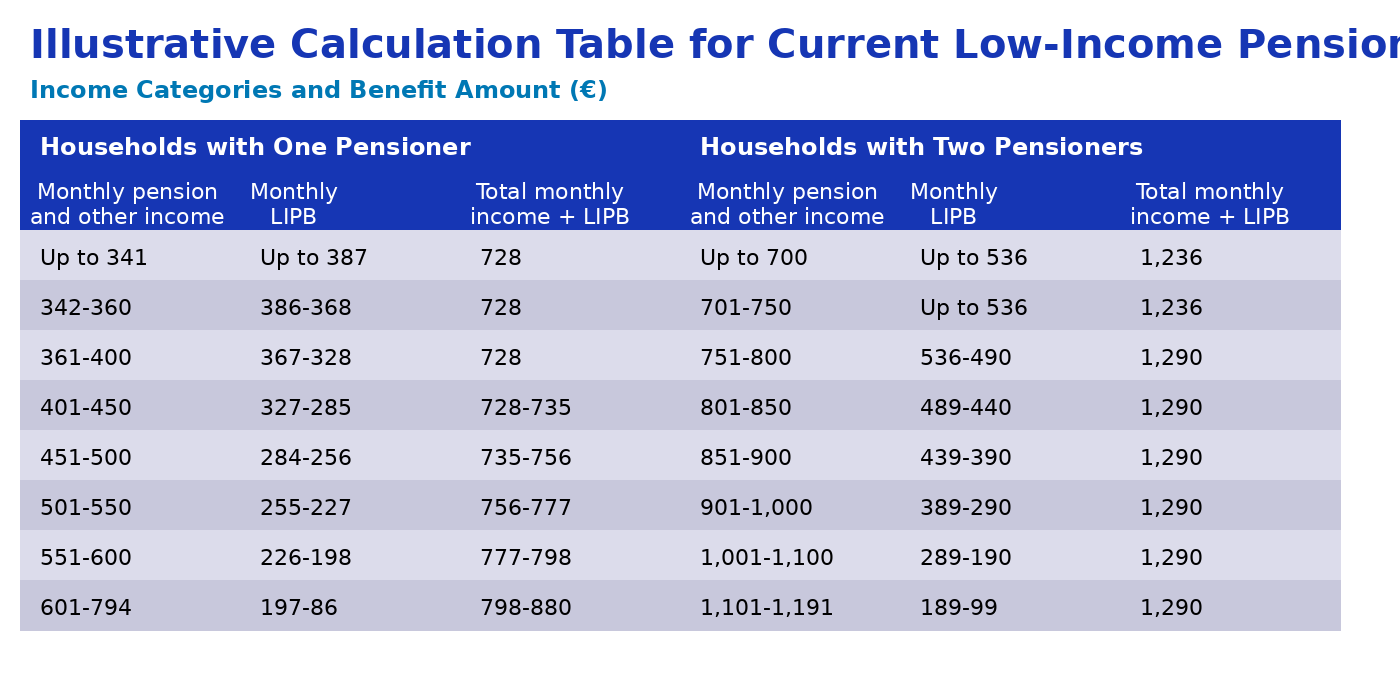
According to the presentation, the existing framework is characterised by complexity and an ineffective interaction between the Social Insurance Fund, the Social Pension and the Low-Income Pensioners' Benefit. It also reduces incentives to work and save.
In addition, the eligibility income threshold has remained unchanged since 2013, despite the fact that, between 2022 and 2025, the EU's official at-risk-of-poverty threshold consistently exceeded the benefit's income limits.
The core principle of the reform is to integrate poverty protection directly into the structure of the pension system itself.
The benefit would become a supplement to Social Insurance pensions and operate as a guaranteed minimum pension for people with low retirement incomes.
Higher income thresholds
The reform proposes revising eligibility thresholds so that they are aligned with income adequacy indicators, with the possibility of reviews every three or five years.
The proposal also provides for an increase in the maximum combined monthly payment from the Social Insurance Fund and the Low-Income Pensioners' Benefit, ensuring that all beneficiaries receive improved income support compared with the revised thresholds.
Periodic reviews would also be introduced to account for increases in the cost of living.
The ministry further proposes linking both the eligibility threshold and the level of the benefit to annual adjustments in the new basic Social Insurance pension, alongside the creation of a single public service mechanism for administering the system.
Under the proposal:
- The maximum income threshold for households with one pensioner would increase from €794 to €900 per month.
- The threshold for households with two pensioners would rise from €1,191 to €1,350 per month.
Two options under consideration
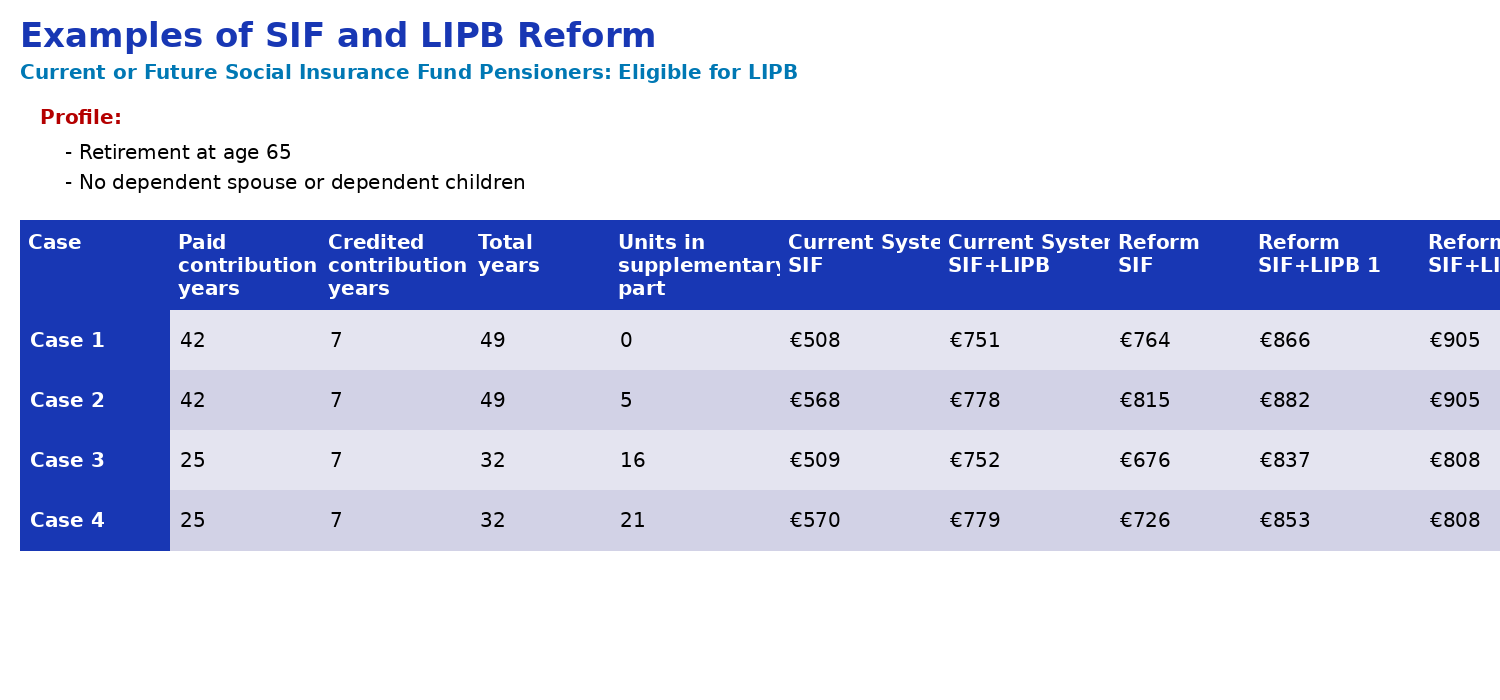
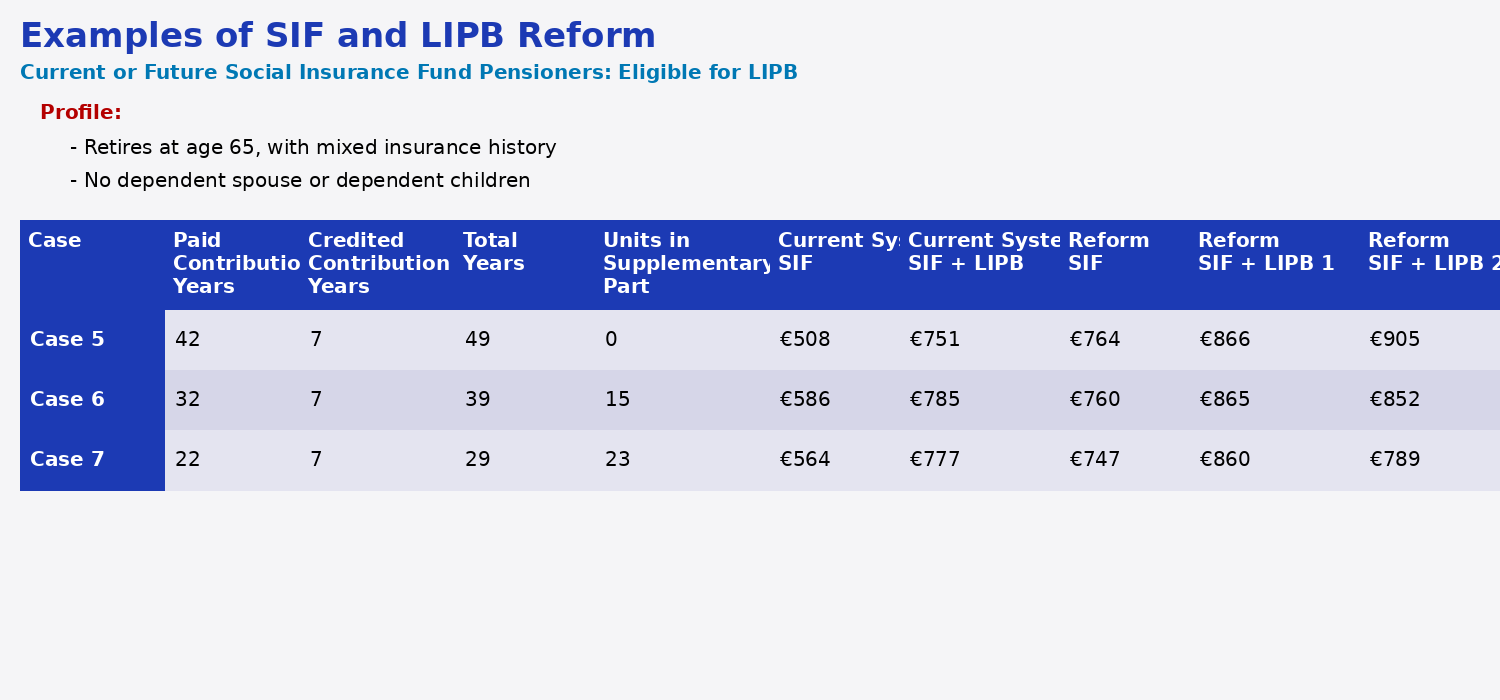
The ministry presents two alternative approaches for calculating the new benefit.
Scenario 1
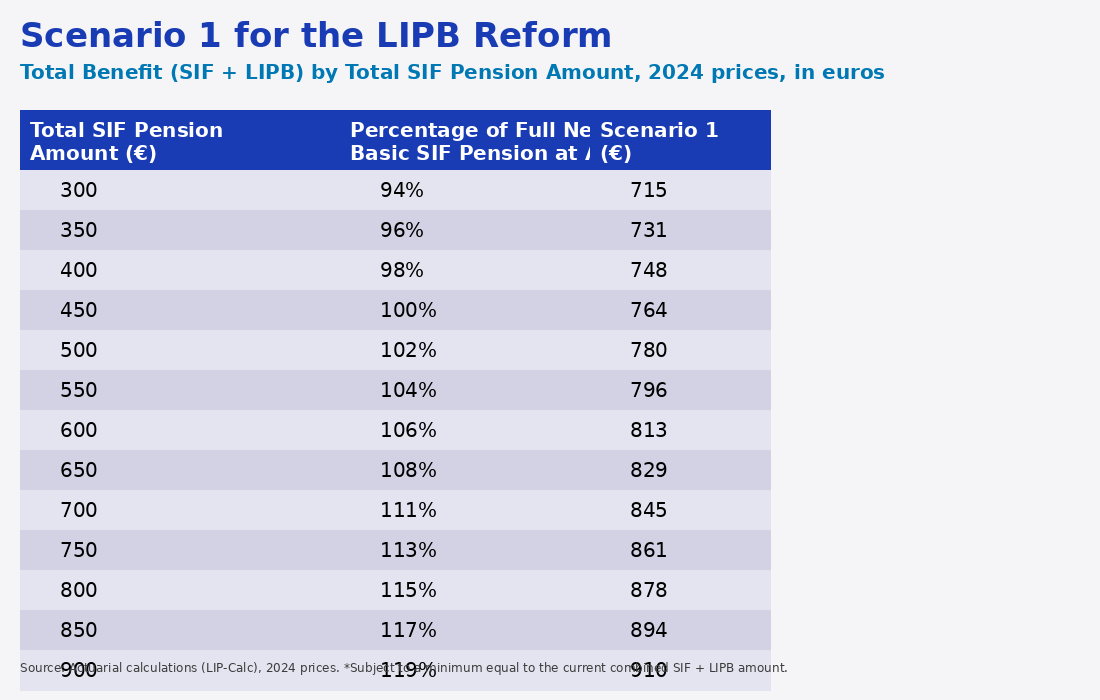
The total pension income, consisting of the Social Insurance pension and the Low-Income Pensioners' Benefit, would be determined as a percentage of the new full basic pension payable at age 65, based on the overall pension income received by the beneficiary.
Scenario 2
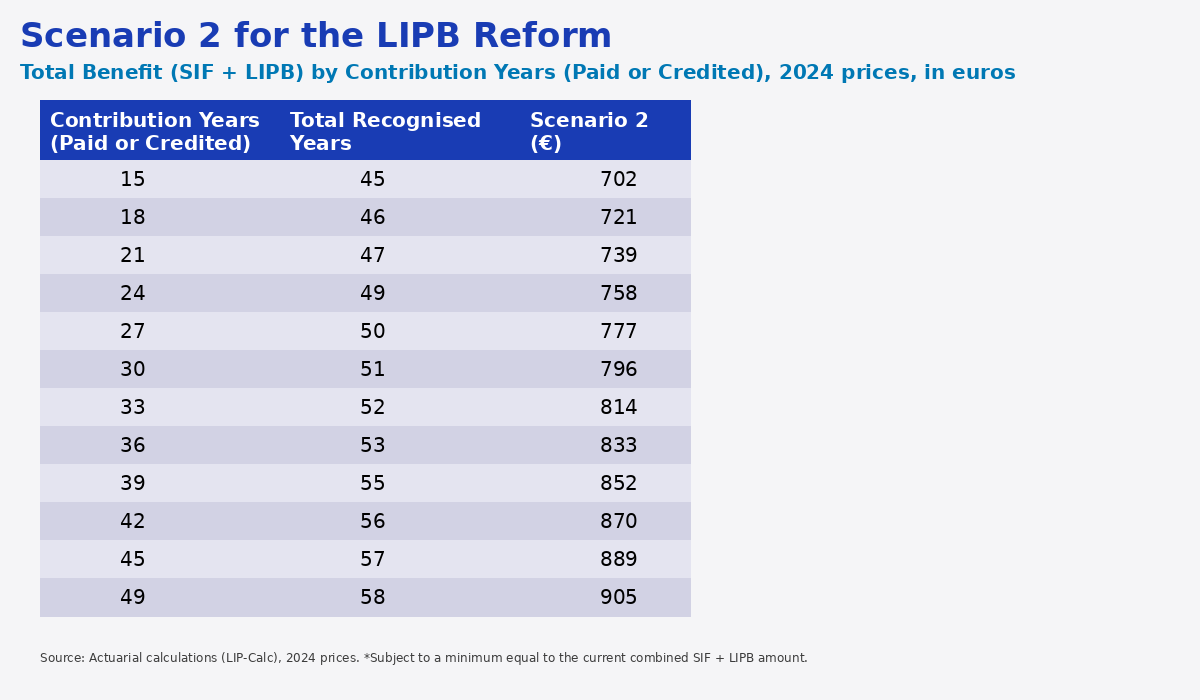
The total payment would be calculated on the basis of years of insurance contributions, with a minimum of 39 recognised years and a maximum of 58 years.
An additional two recognised years would be credited for every five years of contributions, whether paid or credited. The calculation would use a new Social Insurance basic pension coefficient of 1.3 per month at age 65.
People with longer contribution records would qualify for a higher guaranteed minimum pension through additional recognised years.
Safety mechanism
A common feature of both scenarios is a built-in safeguard ensuring that no beneficiary would receive less than they currently receive from the combined value of their pension and the existing Low-Income Pensioners' Benefit.
Who would be affected?
Approximately 30,400 people currently receive the Low-Income Pensioners' Benefit, at an annual cost to the state of around €87 million.
Most beneficiaries are women, low-income pensioner couples and older individuals. A significant proportion also comes from recipients of the Social Pension.
The government believes the new model will improve pension adequacy, simplify the operation of the system and provide a more transparent and permanent form of protection for those who are near or below the poverty line.
Political significance
The proposed Pillar 0 reform forms one of the most important components of the wider pension reform package currently under development.
Through the creation of a guaranteed minimum pension, the ministry aims to move away from a system of administratively complex benefits towards a more stable and predictable framework of social protection, while maintaining the reduction of pensioner poverty as a central objective.
The proposal is scheduled to be discussed at the next meeting of the Labour Advisory Body on 28 August.