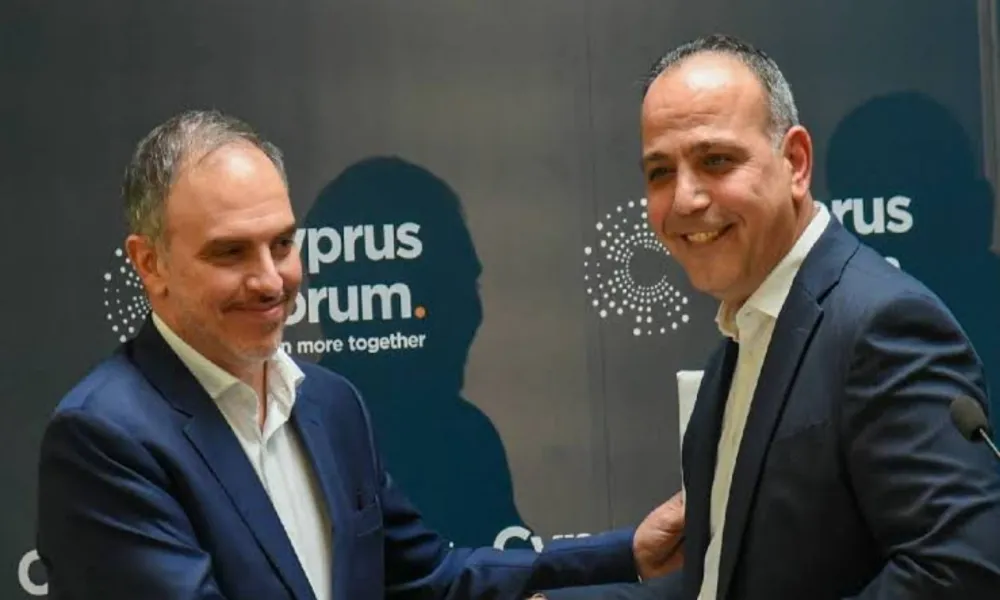

Finance Minister Makis Keravnos presented trade unions with a proposal on Friday aimed at improving the wages and other benefits of hourly-paid government employees, as negotiations continue over a new collective agreement.
The proposal comes within the framework of commitments made by President Nikos Christodoulides, with a meeting at the Presidential Palace on Monday expected to prove decisive in determining whether an agreement can be reached.
Trade unions OEKDY SEK, PASYEK PEO and DEE KDOKO DEOK met Keravnos on Friday, alongside Finance Ministry Director-General Andreas Zachariades and other officials.
The talks focused on demands concerning hourly-paid government employees ahead of the renewal of their collective agreement for 2025-2027.
Unions say offer still falls short
OEKDY-SEK General Secretary Giorgos Constantinou told Politis that the Finance Ministry’s proposal remained unsatisfactory.
“We are hopeful about the meeting we will have on Monday with the President of the Republic,” he said.
Constantinou argued that the unions’ demands for low-paid public sector employees are within the economy’s capacity, adding that they hoped dialogue would continue.
PASYEK-PEO General Secretary Stavros Andreou said the government had acknowledged the need to improve both wages and starting salaries.
“We are not within reach of an agreement, nor are we at a point that allows us to renew the collective agreement,” he said.
“However, we hope that at Monday’s meeting with the President we will cover the distance needed to sign the agreement.”
Andreas Antoniou, representing DEE-KDOKO-DEOK, said the union was examining the Finance Ministry’s proposal and would await Monday’s meeting with Christodoulides.
He described the meeting as decisive for the unions’ final decisions.
First 24-hour strike in June
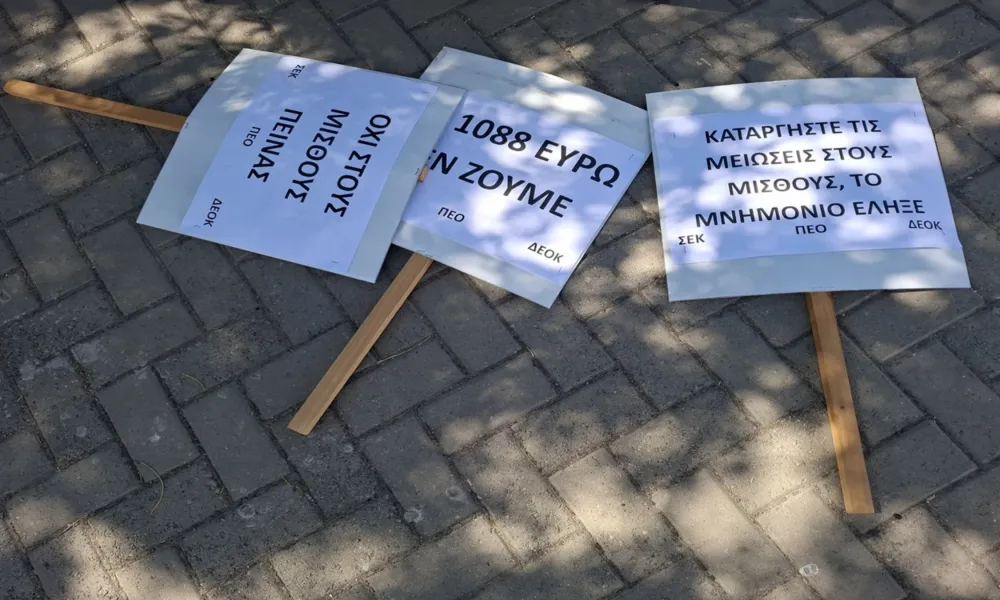
Hourly-paid government employees staged a 24-hour strike on 24 June, the first such action since the establishment of the Republic of Cyprus.
Workers demonstrated under slogans including “No to starvation wages” and “Enough with the mockery, we are not second-class workers”.
A second 24-hour strike was subsequently announced for 17 September, after the government rejected demands for general wage increases covering the 2025-2027 period.
Unions sought 8% increase
The Finance Ministry argued that the unions’ demand for a general 8% pay increase over three years could not be considered in isolation.
It maintained that granting the increase could create a precedent for other groups of employees in the public and broader public sectors.
The ministry also estimated that the unions’ overall demands would cost around €50 million over the three-year period.
If similar increases were extended more broadly, it argued, the fiscal cost could exceed €300 million annually.
Presidential intervention restarted talks
The situation changed after Christodoulides intervened the following day, opening the way for discussions on possible salary increases.
His intervention led to the suspension of the planned strike and the resumption of negotiations.
Despite indications that the government now recognises the need for improvements to wages and starting salaries, union representatives say the two sides have yet to reach common ground.
Attention now turns to Monday’s meeting with Christodoulides, which unions expect will determine whether the remaining differences can be bridged and the new collective agreement signed.