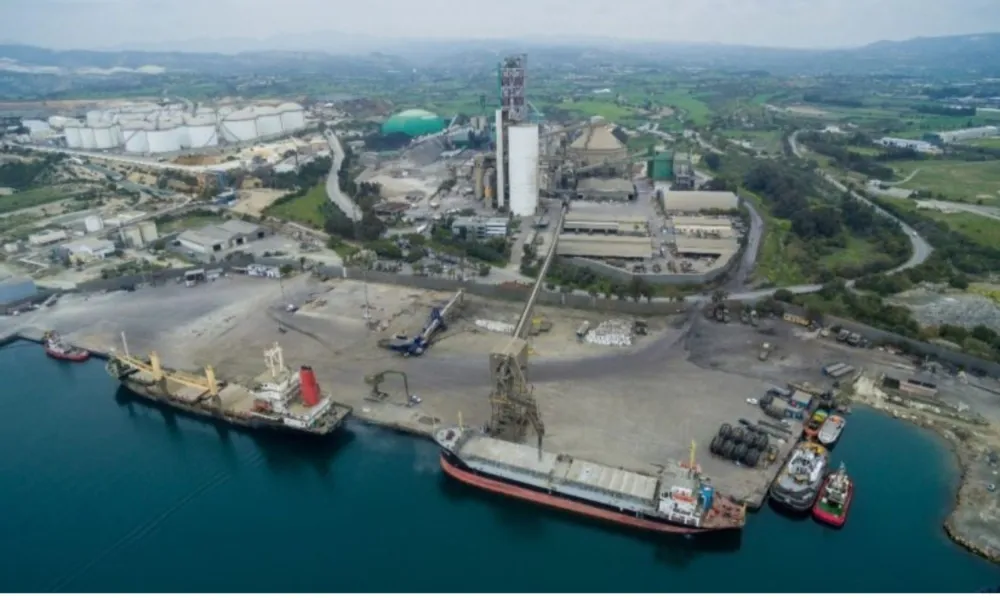

Interest from eight companies and consortiums in completing the Vasilikos liquefied natural gas (LNG) terminal has boosted prospects for restarting one of Cyprus' most significant energy infrastructure projects.
The participation of major international contractors is being viewed as an encouraging development, as completion of the terminal is considered essential for introducing natural gas into electricity generation and potentially reducing power production costs.
The bidders include companies with experience in large-scale energy and construction projects across Europe, Asia and the Middle East.
Those expressing interest are:
- Saipem (Italy)
- China Harbour (China)
- Baran International (Israel)
- Petrojet (Egypt)
- TERNA (Greece)
- AVAX (Greece)
- Archirodon (Greece)
- EConnect Energy (Norway)
Particular attention is being paid to the participation of China Harbour in partnership with Cyprus-based Cyfield.
While China Harbour is state-owned, it is not directly linked to CPP, the company originally contracted to build the terminal before its contract was terminated and it withdrew from the project.
The presence of internationally experienced firms expands ETYFA's options, though it does not predetermine the outcome of the process. The key objective will be selecting a contractor capable of completing the remaining works with technical expertise, a clear timetable and controlled costs.
Next phase
The Natural Gas Infrastructure Company (ETYFA), a subsidiary of DEFA, will evaluate the preliminary applications and decide which companies or consortiums will be invited to submit full bids.
The terms of the next stage have been prepared with the assistance of Technip Energies, which is acting as adviser to the state company on completion of the terminal.
The project's preliminary budget stands at €180 million.
That figure, combined with the need to address outstanding issues arising from the previous contract, makes the evaluation process particularly important for the project's future.
Impact on electricity generation
Completion of the terminal is about more than construction.
The project is directly linked to Cyprus' ability to use natural gas for electricity generation, reducing dependence on oil and petroleum-based fuels.
The transition could lower fuel costs for power generation and, if market conditions and system operation allow, contribute to lower electricity bills for households and businesses.
However, any eventual benefit will depend on several factors, including the purchase price of natural gas, the operating costs of the infrastructure and the extent to which savings are passed on to the electricity market.