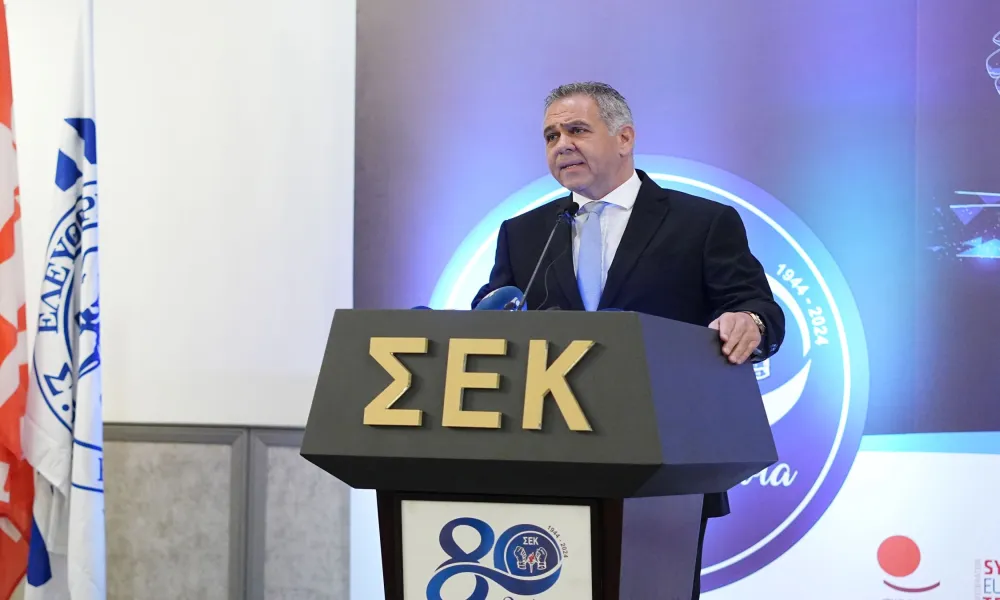

Andreas Matsas, secretary-general of SEK, has said no pensioner should receive an income below the poverty threshold of €1,103, while stressing the need for stronger support for low-income pensioners and the inclusion of provident funds in the pension reform package.
Speaking on Politis Radio's Morning Briefing programme, Matsas said a key objective of any comprehensive reform must be the provision of adequate pensions, noting that around 35% of pensioners are close to or below the poverty line.
Debate over 12% reduction remains open
Matsas said the government's latest proposal concerning the 12% actuarial reduction is an improvement on two previous proposals rejected by social partners, but does not fully meet SEK's objectives.
He explained that SEK has asked the Ministry of Labour to make a further effort and that specific proposals have already been submitted by both SEK and PEO.
According to Matsas, SEK has not sought the complete abolition of the reduction, arguing that such a move would effectively place retirement at 63 on the same footing as retirement at 65.
Instead, the union proposes a gradual reduction in the impact of the 12% penalty so that pensioners are not subjected to a lifetime deduction.
He added that many workers were forced into early retirement during the economic crisis and periods of unemployment, rather than leaving the labour market by choice.
Retroactive payments if reforms are delayed
On the timetable for reform, Matsas said 1 January 2027 remains an important milestone, but reaching a comprehensive agreement is the priority.
He said SEK wants discussions within the Labour Advisory Board to be completed properly, warning that an incomplete agreement could require lengthy debate in parliament.
If implementation is delayed beyond the target date, he argued that any increases should be paid retrospectively so beneficiaries do not lose entitlements.
Among the improvements already secured, he highlighted:
- Extension of the transition period to 15 years
- Reduction of the interval for granting increases from five years to three
- An end to state borrowing from the Social Insurance Fund
- The launch of a process to repay government debts owed to the fund
Provident funds for all workers
Matsas also emphasised the need for a comprehensive agreement on provident funds, arguing that the design of the second pension pillar should be finalised before the wider reform package is implemented, even if its introduction takes place gradually.
SEK is proposing a universal provident-fund system covering all workers, without affecting existing provident funds that operate mainly through collective agreements.
He also backed the creation of an independent supervisory authority to oversee provident funds and intervene where problems arise.
Concern over collective bargaining legislation
The SEK chief criticised delays in the legal review of legislation aimed at expanding coverage through collective agreements.
He argued that Cyprus is already two years behind the timetable set by the European Commission for transposing the relevant directive.
Matsas said wage growth is directly linked to improved pension benefits because of the contributory nature of the system.
He also called for what he described as an injustice affecting men who became widowers before 1 January 2018 to be addressed, noting that they remain ineligible to receive their late spouses' pension because of the date restriction.