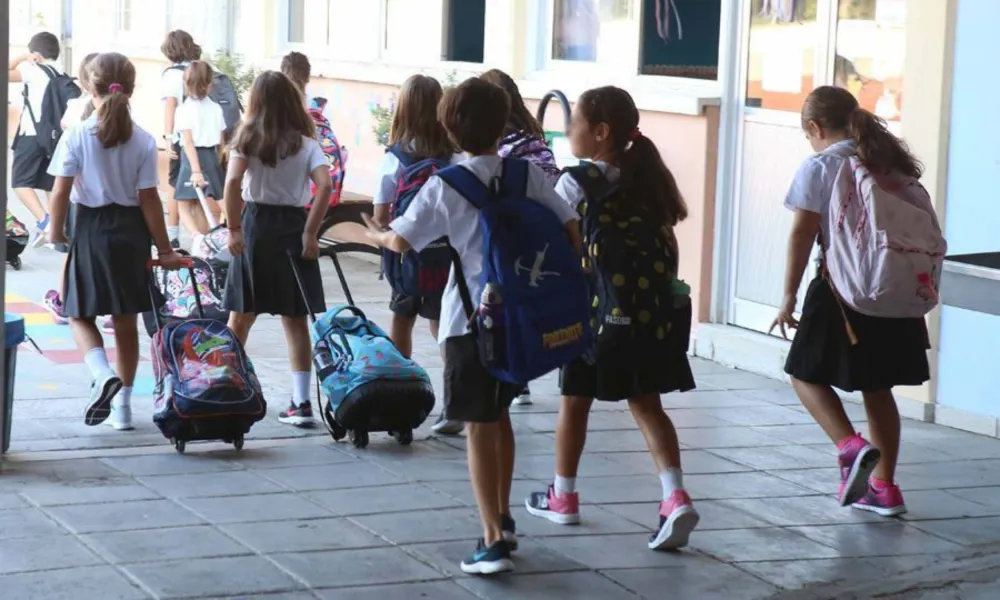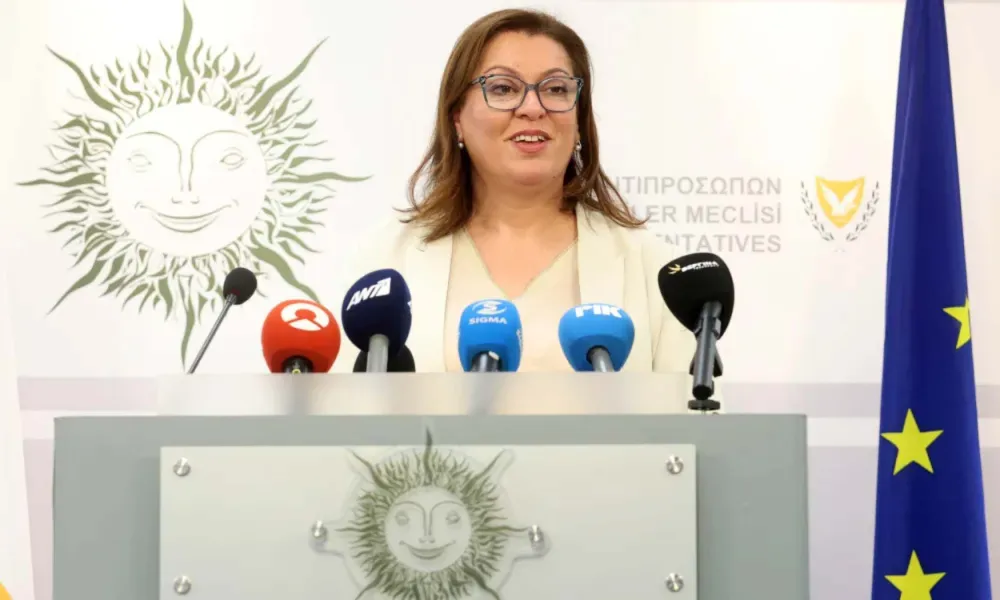

Education Minister Athena Michaelidou has sought to reassure parents that public schools are safe following the Audit Office's concerning findings on fire safety, electrical safety and schools' preparedness for emergencies.
Speaking to Politis, Michaelidou said parents should not be worried.
"Our schools are safe and under no circumstances should citizens, the parents who entrust their children to us, be concerned," the minister said, while acknowledging that problems accumulated over many years do exist.
According to Michaelidou, efforts to address these shortcomings are already under way, something that she said is also recognised in the Audit Office report. She noted that this is the first time in decades that school infrastructure has been treated as an issue directly linked to the quality of the education system and has therefore been elevated to a government priority.
Longstanding needs and management gaps
Speaking after a Cabinet meeting, the minister said the problems highlighted both in the report on prefabricated classrooms and in the more recent report on health and safety in schools are not new.
She attributed them to "longstanding needs and management gaps" that have accumulated over decades, arguing that the current government is attempting to reverse years of stagnation through investment, planning and stricter oversight.
"The report finds us in agreement," she said, adding that the recommendations have already begun to be implemented in cooperation with School Boards.
According to Michaelidou, the ministry is strengthening central coordination, setting timelines and moving from isolated responses to problems towards a comprehensive system of prevention, monitoring and intervention.
The minister insisted that the ministry is not addressing the issues piecemeal but is implementing an overall strategy for school infrastructure.
She said that one of the largest school-building upgrade programmes in recent decades has been under way over the past three years, including new construction projects, extensions, maintenance works, seismic upgrades and energy-efficiency improvements. Fire protection systems and inspections of electrical installations form a key requirement in all projects.
Michaelidou also pointed to the ongoing programme to install air-conditioning units in schools, noting that their operation requires extensive electrical upgrades and certification of installations.
According to the minister, progress on the project demonstrates the scale of the interventions required in older school buildings.
She acknowledged that the main shortcoming highlighted by the Audit Office is not only the carrying out of the necessary inspections but, more importantly, the completion of the process through the issuance of the required fire-safety and electrical-safety certificates.
"It is not enough for some schools to have them. We want all schools to have them," she said, adding that the Ministry of Education would adopt a more demanding approach towards School Boards to ensure that the certification process is completed following inspections.
Regarding infrastructure upgrades, Michaelidou said that more than 90 per cent of the schools' seismic upgrading programme has been completed, while energy-efficiency projects, new construction works, extensions and maintenance projects are also progressing.
"A lot has been done and much more still needs to be done," she said, insisting that the difference today lies in the political will, planning and systematic monitoring of project implementation.
Children are paying for systemic failures
The Audit Office reports on school buses, prefabricated classrooms and safety in public schools should not be treated merely as another record of technical or administrative shortcomings.
Instead, they serve as a reminder that the protection of children is a fundamental right and a non-negotiable obligation of the state, according to Children's Rights Commissioner Elena Perikleous, in comments to Politis.
Perikleous stressed that every child has the right to attend a safe, functional and suitable learning environment and to travel to and from school in a manner that protects their life, health and physical integrity.
"Safety is not an additional prerequisite of education. It is an integral part of the right to education itself," she said.
'This is not an administrative issue'
The commissioner said the findings of the three reports reveal something much deeper than organisational or administrative weaknesses.
According to Perikleous, longstanding shortcomings in planning, prevention, oversight and accountability have a direct impact on the daily lives and rights of children.
"No child should spend years being educated in facilities that were designed as temporary solutions, attend a school that does not meet the necessary safety standards, or be transported in a vehicle whose suitability has not been fully ensured," she said.
She argued that the protection of children cannot be limited to dealing with problems only after they have been identified.
Instead, it must be based on prevention, with risks identified and addressed before they develop into incidents.
Perikleous stressed that the three Audit Office reports should serve as the starting point for meaningful interventions rather than simply generating public discussion about the problems they identify.
As she noted, the state has a duty to invest in safe school infrastructure, effective oversight mechanisms and safe student transportation through long-term planning, reliable data, continuous evaluation and clear accountability from all competent authorities.
"Children's safety does not begin at the classroom door, nor does it end with the final school bell," the commissioner concluded.
"It begins the moment a child leaves home and extends through every aspect of school life. That is the responsibility of the state. And that is our obligation towards every child."