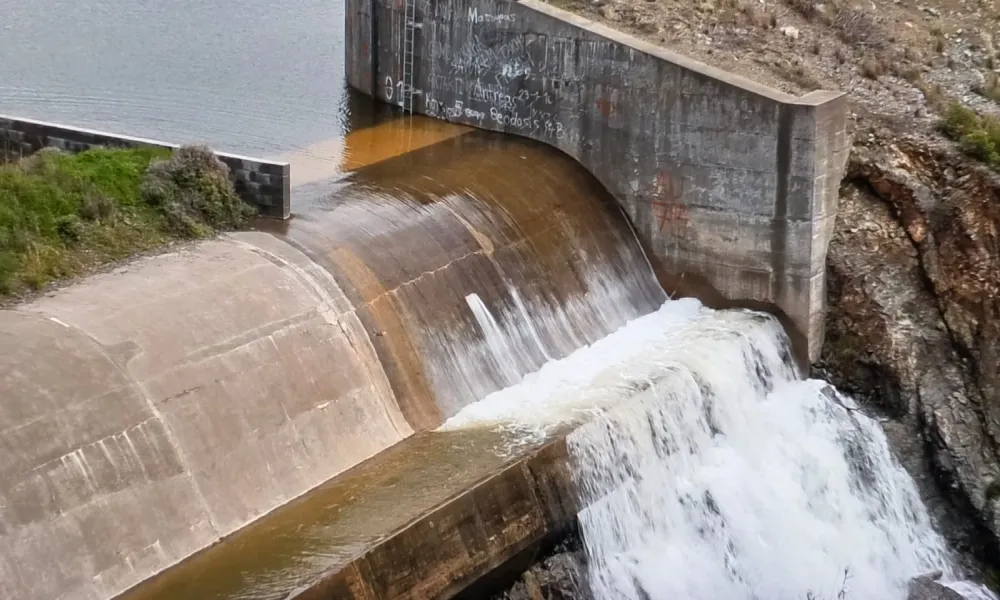


Beach sand does not appear from nowhere. It travels. Rivers carry sediment from inland catchments down to the sea, where waves distribute it along the coastline. That process, repeated over millennia, built the beaches that line the Mediterranean and every other coast. It is also a process that humans have been quietly dismantling for decades, according to experts cited by the Spanish news agency EFE. The culprit, they say, is dams.
"The first thing we need to understand is that everything is connected: the river is the sea, it does not end at the estuary. This interconnection is fundamental to the dynamics of the planet, to the water cycle and to the sediment cycle," said Alfredo Olero, researcher and professor in the Department of Geography and Spatial Planning at the University of Zaragoza. Understanding that connection, he argues, is essential to understanding why river dams produce a sediment deficit in the sea, with contributions between five and ten times lower than before the dams existed.
More dams, less beach
The link between dams and beach loss is, in the words of the experts, direct. Askoа Ibisate, researcher and professor of Physical Geography at the University of the Basque Country, put it plainly: "The real problem is not that the sea washes the sand away with waves, but that sediment does not reach the coast. To have sand on the beach, we need sediment from the continent to reach the sea." When it does not arrive, it is because dams fragmented along a river's course are trapping it. As new sediment deposits stop reaching the shore, beaches retreat or disappear altogether.
The consequences extend beyond the coastline. Reduced sediment transport leads to the loss of river ecosystems and biodiversity, changes in a river's morphology, and increased water velocity that can undermine the foundations of infrastructure and cause structural collapses.
Replenishment, when it happens at all, typically involves dredging sand from the seabed and dumping it back on the beach, a process with significant environmental consequences and a high financial cost.
How dams work against sediment
Not all dams affect sediment in the same way, explained Carles Ferrer, researcher and professor at the Polytechnic University of Catalonia, specialising in river geomorphology, hydraulic engineering and sediment transport. Large dams, built to store water, trap almost 100% of the gravel and sand that would otherwise contribute to beaches downstream. Smaller dams, installed to raise water levels for diversion into irrigation canals or hydroelectric plants, affect the river's capacity to carry sediment at all, even if they accumulate less of it directly.
Ferrer used the Ebro Delta as the clearest illustration of what happens when sediment supply collapses. The Ribaroja and Mequinenza dams, built in the 1960s just a few kilometres from the Ebro's mouth, retain more than 90% of the sediment the river's catchment is capable of producing. The delta now receives a small fraction of what it once did. Smaller dams scattered across the catchment compound the problem further by reducing the river's capacity to carry sediment downstream. "If the coast where a river flows has that river as its main source of sediment, the existence of dams will cause a very sharp reduction, as the sea will continue its erosive work," Ferrer said.
A similar dynamic played out along the Llobregat river in Catalonia, whose basin filled with dams during industrialisation in the mid-19th and early 20th centuries. The Llobregat Delta gradually began to retreat. Experts believe the dams bear significant responsibility, with other factors, including large reservoirs, land-use changes and river infrastructure, converging from the 1960s onward to accelerate the decline.
Draining reservoirs as a solution
One practical tool that experts believe is being neglected is the periodic opening of bottom outlets, structures built into dams specifically to flush accumulated sediment and maintain storage capacity. Despite the fact that all dams have these drainage structures, they are not currently being used, most likely, the experts suggest, because there is no environmental management culture around reservoirs that would prioritise doing so.
More broadly, the management of rivers that have been degraded or abandoned is gaining increasing attention as a means of restoring natural sediment dynamics, with benefits not just for river ecosystems but for the beaches that depend on them, particularly in high-pressure tourist areas such as the Mediterranean basin.
Source: CNA