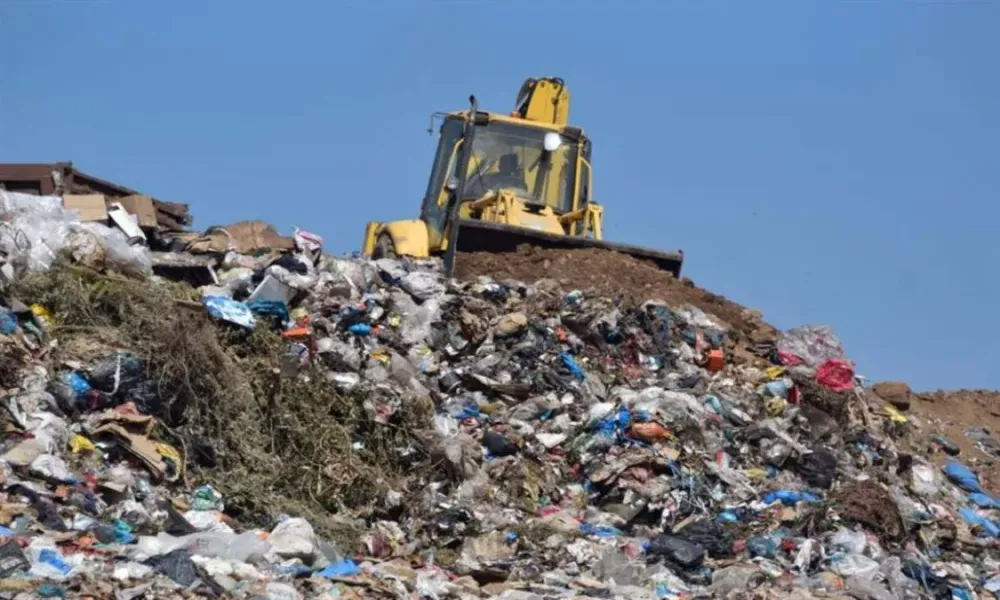

The House of Representatives is set to debate the introduction of a landfill tax today, with the government arguing that approval of the measure is required to unlock €23 million from the Recovery and Resilience Facility, while local authorities continue to voice concerns over the additional financial burden.
According to the Ministry of Agriculture, Rural Development and Environment, landfill taxes are already applied in most European Union member states and are aimed at reducing the volume of waste sent to landfill. The measure forms part of Cyprus' commitments under its Recovery and Resilience Plan.
The ministry notes that the original proposal envisaged a landfill tax of €35 per tonne of waste. Following consultations with the European Commission, however, the rate was reduced to €10 per tonne in 2026, with annual increases of €5 until it reaches €70 per tonne in 2039.
Based on ministry estimates, the cost to households is expected to be around €10 per year in 2027, equivalent to less than €1 per month per household.
The government also argues that increased recycling and source separation will reduce the amount of waste ending up in landfill and, as a result, lower overall costs for local authorities.
Municipalities have repeatedly expressed strong reservations, pointing to Cyprus' 68% landfill rate for municipal waste and deficiencies in waste-management infrastructure.
The government's position is that the tax is not intended primarily as a revenue-raising measure but as an environmental policy tool designed to reduce mixed waste and encourage recycling.
It also maintains that revenue generated by the tax will be channelled into waste-management initiatives implemented by local authorities.
According to ministry projections, the introduction of source-separation programmes from 2028 could significantly reduce revenue from the tax, reflecting a decline in the volume of waste destined for landfill.
The key issue facing parliament is whether the measure represents a necessary reform to meet Cyprus' European obligations and secure funding for new environmental initiatives, or whether it will impose additional costs on municipalities and households while shortcomings in waste-management infrastructure remain unresolved.