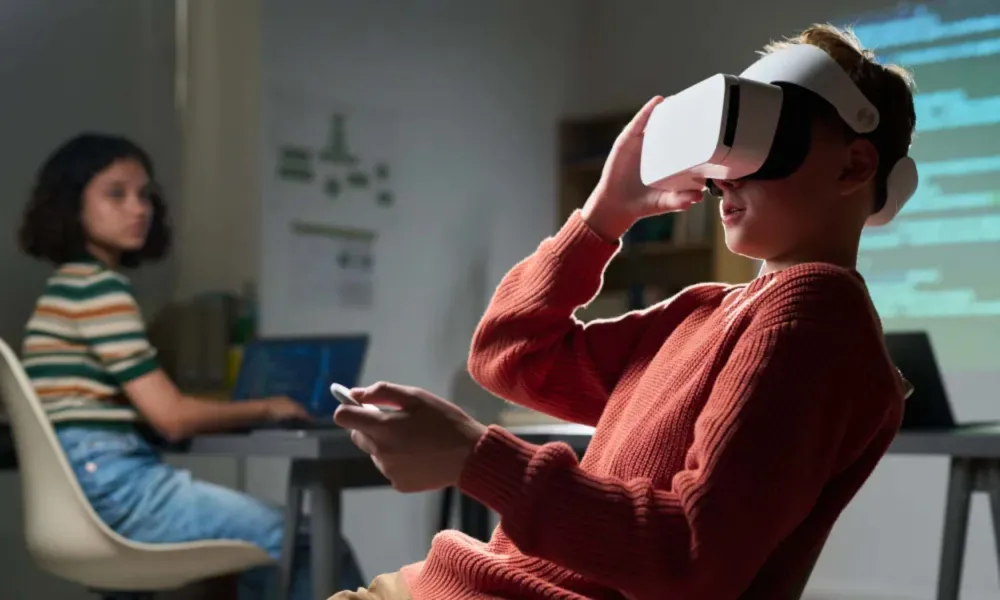

The Ministry of Education will begin implementing educational initiatives aimed at integrating artificial intelligence (AI) into lessons from September, across both primary and secondary education.
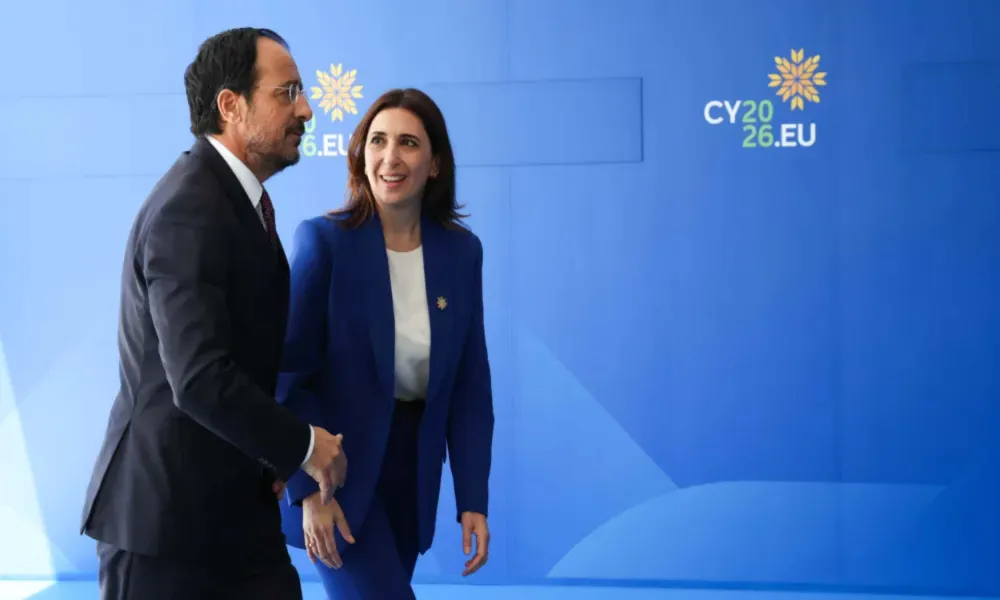
Education Minister Athena Michailidou said the goal is not to distance children from technology but to cultivate critical thinking, creativity and responsible use.
Speaking on Politis radio (107.6 and 97.6) during the programme Morning Review with Andri Daniel, Michailidou said AI is already part of everyday life for both students and teachers and can neither be ignored nor replaced.
The minister's intervention followed a Politis report on recommendations by a panel of experts calling for children to avoid screen exposure until the age of three and for restrictions on social media access for children under 13.
Michaelidou clarified that restrictions on mobile phone use in schools do not conflict with the use of new technologies for educational purposes.
"The use of mobile phones has nothing to do with the use of technology, especially for educational purposes. We support the use of technology, but again with moderation and in an ethical manner," she said.
"Artificial intelligence is already part of our lives"
According to the minister, the education system must adapt to a reality in which AI is already widely used by both children and adults.
"Artificial intelligence is not something that is coming. It is something that has already arrived and is part of our lives. Children use it and adults use it too," she said.
As she explained, the objective is not to prohibit its use but to incorporate it into the educational process in a way that helps children learn rather than bypass the effort that learning requires.
"We neither want to reduce it nor replace it with something else. We cannot do that anyway. What we are doing is ensuring that it is used properly and that children learn through this process," she said.
The minister highlighted the risk of students using AI solely to obtain ready-made answers or completed assignments without understanding their content.
"Neither creativity, nor critical thinking, nor understanding, nor even basic knowledge develops,"
she said, describing what happens when technology completely replaces a student's own work.
Teachers, she added, should go beyond simply recognising that a student knows how to use an AI tool. They should assess what the student actually learned from the process and whether they can explain, evaluate and make use of the result.
"Well done for using artificial intelligence, but what message does all this produce? How can we use it further?"
she said, giving an example of the kinds of questions teachers could ask students.
Educational initiatives from September
The Ministry of Education has already prepared a guide containing recommendations for teachers on the educational use of artificial intelligence and the assessment of student work.
According to Michailidou, the next phase begins in September and will involve specific activities within classrooms.
"The second stage begins in September, with educational activities within various subjects, both in secondary and primary education," she said.
To prepare the material, the ministry worked with a committee of experts in artificial intelligence and education, while cooperation with academics and other specialists will continue.
For older students, dedicated AI modules already exist within Information Technology classes, although the technology will not be confined to a single subject.
As the minister explained, AI will be incorporated horizontally across a range of disciplines.
For younger pupils, the emphasis will be on the horizontal development of digital skills, focusing on the proper use of technology, protection from addiction and the development of the competencies required of active citizens.
Michaelidou noted that teacher training has already begun and will continue, stressing that AI integration is an evolving process that will expand in line with emerging needs.