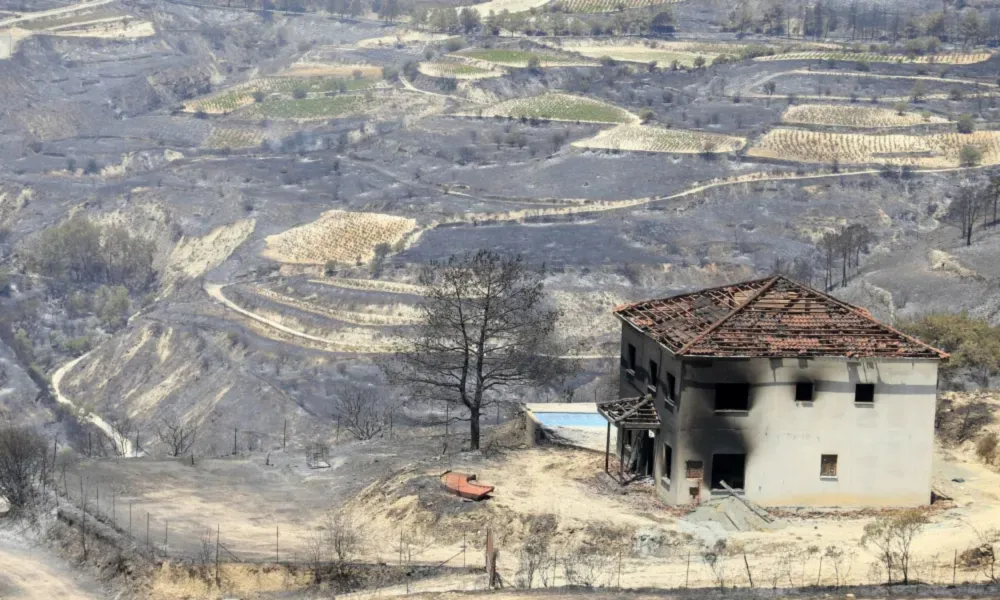

Cyprus' firefighting services will remain on heightened alert for at least the next 10 days as temperatures climb above 40°C and strong winds create conditions similar to those that contributed to last year's catastrophic wildfire in the Limassol district.
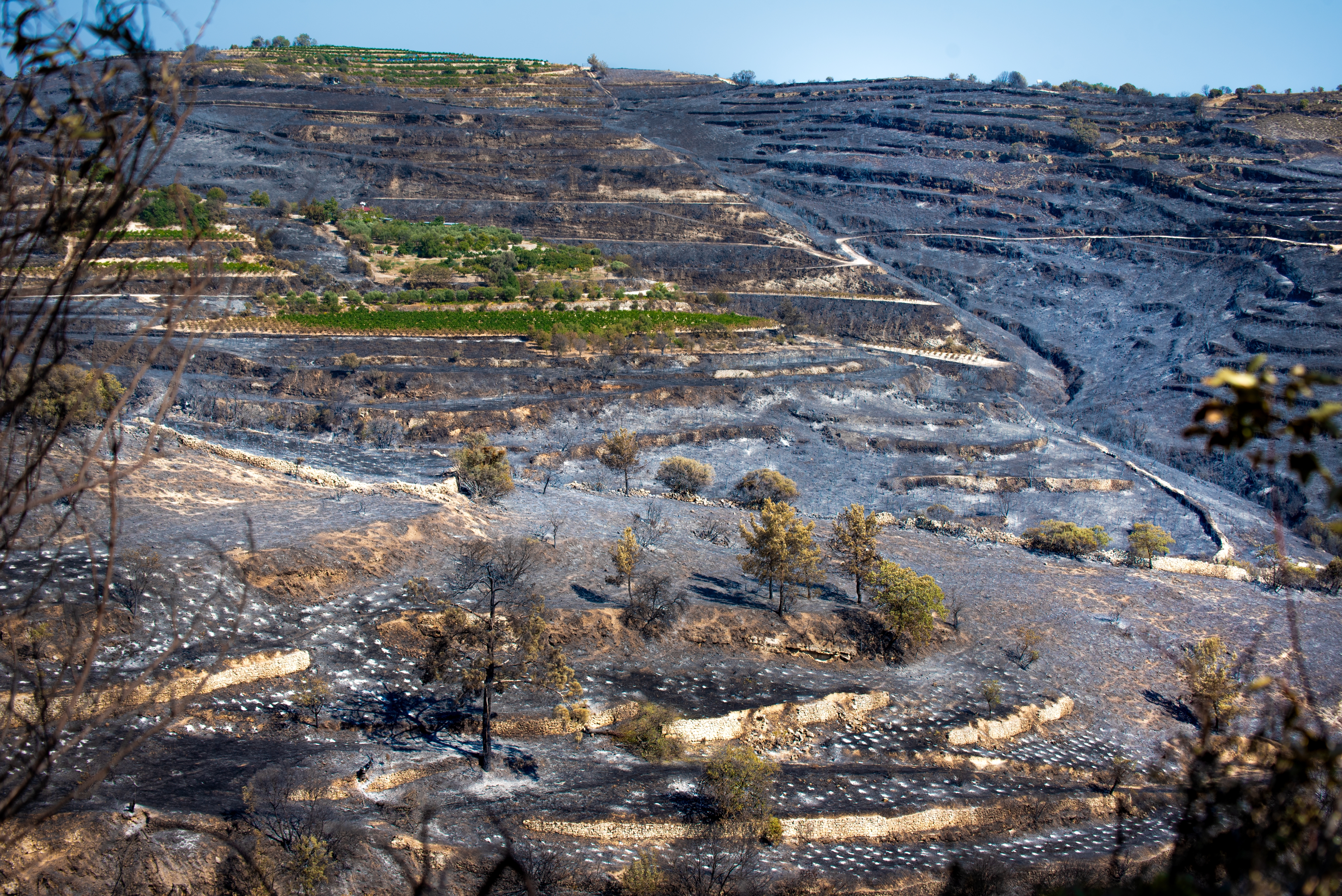
The timing coincides with the anniversary of the blaze that erupted on 23 July 2025, claiming two lives and destroying an estimated 1.3 per cent of the island's land area.
With those risks in mind, Fire Chief and National Fire Coordinator Nikos Logginos has convened an emergency meeting of all relevant state and emergency services at Fire Service headquarters.
More patrols planned
Speaking to Politis, Logginos said emergency measures will be discussed in response to the challenging conditions expected in the coming days, alongside a review of the response to fires recorded so far this season.
Among the measures under consideration is an increase in patrols in vulnerable areas.
Logginos said the combination of extreme temperatures and strong winds requires enhanced coordination among agencies. Operational teams will be briefed on the expected level of risk and receive updated instructions to ensure that, as he put it, "everyone remains on alert".
The meeting will also assess coordination procedures and identify any concerns raised by participating services.
Conditions mirror last year's disaster
Logginos warned that the weather forecast for the coming 10 days is strikingly similar to the conditions that prevailed during last year's major Limassol wildfire, which began near Malia before sweeping through villages and reaching the Limassol-Paphos motorway.
He said authorities have already strengthened staffing levels, expanded the use of earth-moving equipment, upgraded coordination systems, installed additional fire-detection cameras and enhanced aerial firefighting capabilities.
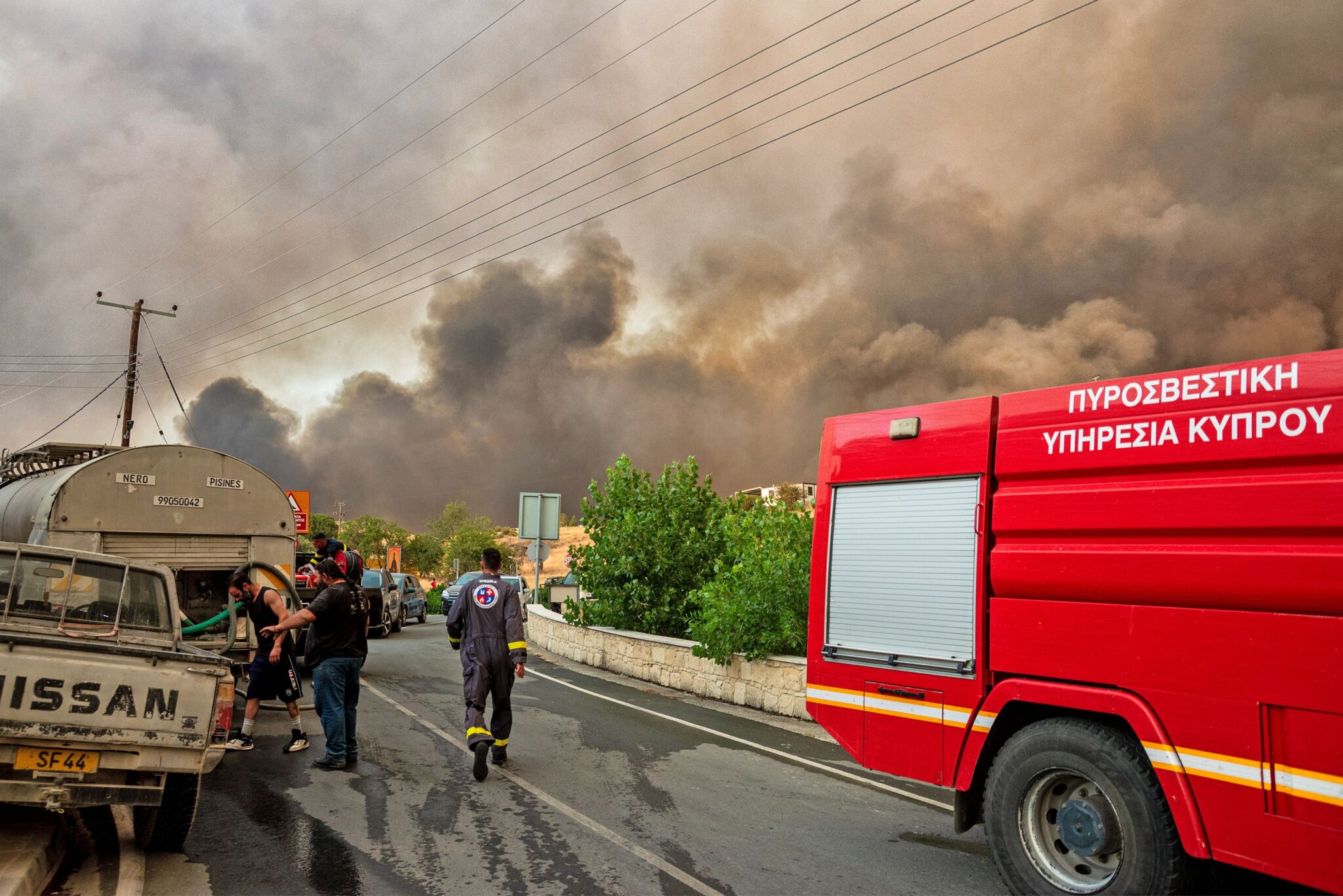
The Fire Service has recruited 60 additional hourly-paid personnel to reinforce rural fire stations and increased the number of stations operating around the clock to seven.
Funding of more than €1.2 million from the Interior Ministry has enabled the deployment of bulldozers and water tankers at strategic locations in the districts of Larnaca, Limassol and Paphos.
Authorities have also activated the National Operations Coordination Centre, a €6.5 million facility funded through European programmes and equipped with advanced monitoring technology.
Camera networks covering parts of Nicosia, Limassol, Larnaca and Paphos now provide live feeds to the coordination centre and regional fire stations.
This year, Cyprus also has 13 primary aerial firefighting assets available, in addition to aircraft from the British Bases, police aviation units and the National Guard.
Private land remains a weak point
Despite progress in vegetation management by local authorities, officials remain concerned about overgrown private plots.
Heavy winter rainfall has led to unusually high volumes of dry vegetation, increasing fire risk across the countryside.
Logginos pointed to Sunday's fire in Pyrga, Larnaca, where flames spread into residential yards that had not been properly cleared, contributing to extensive property damage.
According to the Fire Service, an additional 60 hourly-paid staff have been recruited to reinforce rural fire stations, while the number of stations operating on a 24-hour basis has been increased to seven.
He warned that homeowners must take responsibility for cleaning plots, fields and gardens, noting that a house does not have to be directly hit by a wildfire to catch fire.
A single burning ember can travel hundreds of metres.
According to Logginos, some of the homes lost during last year's Limassol wildfire were ignited when embers landed on roofs and in gutters clogged with dry vegetation.
Calls for tougher penalties
Andreas Kitromilides, president of the Cyprus Communities Union, said communities have carried out extensive vegetation-clearance work using grants provided by the Interior Ministry.
However, he argued that the bigger challenge remains privately owned land that has not been cleaned.
The Communities Union has proposed legislative amendments introducing tougher penalties for owners who fail to clear hazardous vegetation.
Kitromilides said many landowners assume local authorities will ultimately carry out the work, with the costs billed to them later. In many cases, however, the authorities struggle to recover those expenses.
He estimated that 95 per cent of affected property owners fail to respond to notices requiring them to clean their land.
As a result, authorities continue to view neglected private plots as one of the biggest vulnerabilities heading into what is expected to be a difficult wildfire period.