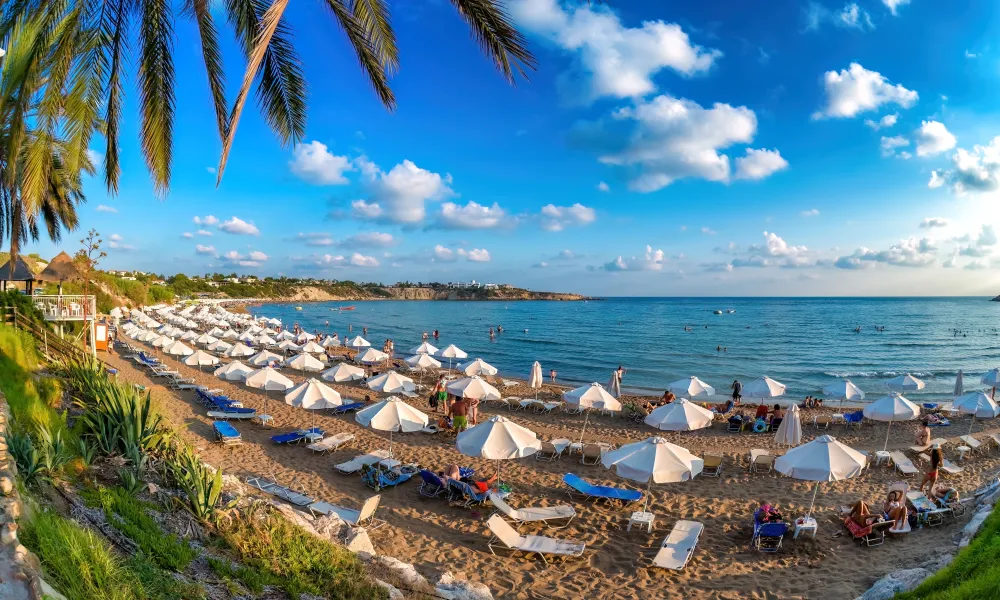

Akamas Municipality has opened a tender for the installation of 220 submerged concrete units at Coral Bay, with bids due by 18 September. While the Environment Department describes the scheme as a low-impact, nature-based intervention, coastal engineer Xenia Loizidou has raised concerns over its scale.
Department backs nature-based approach
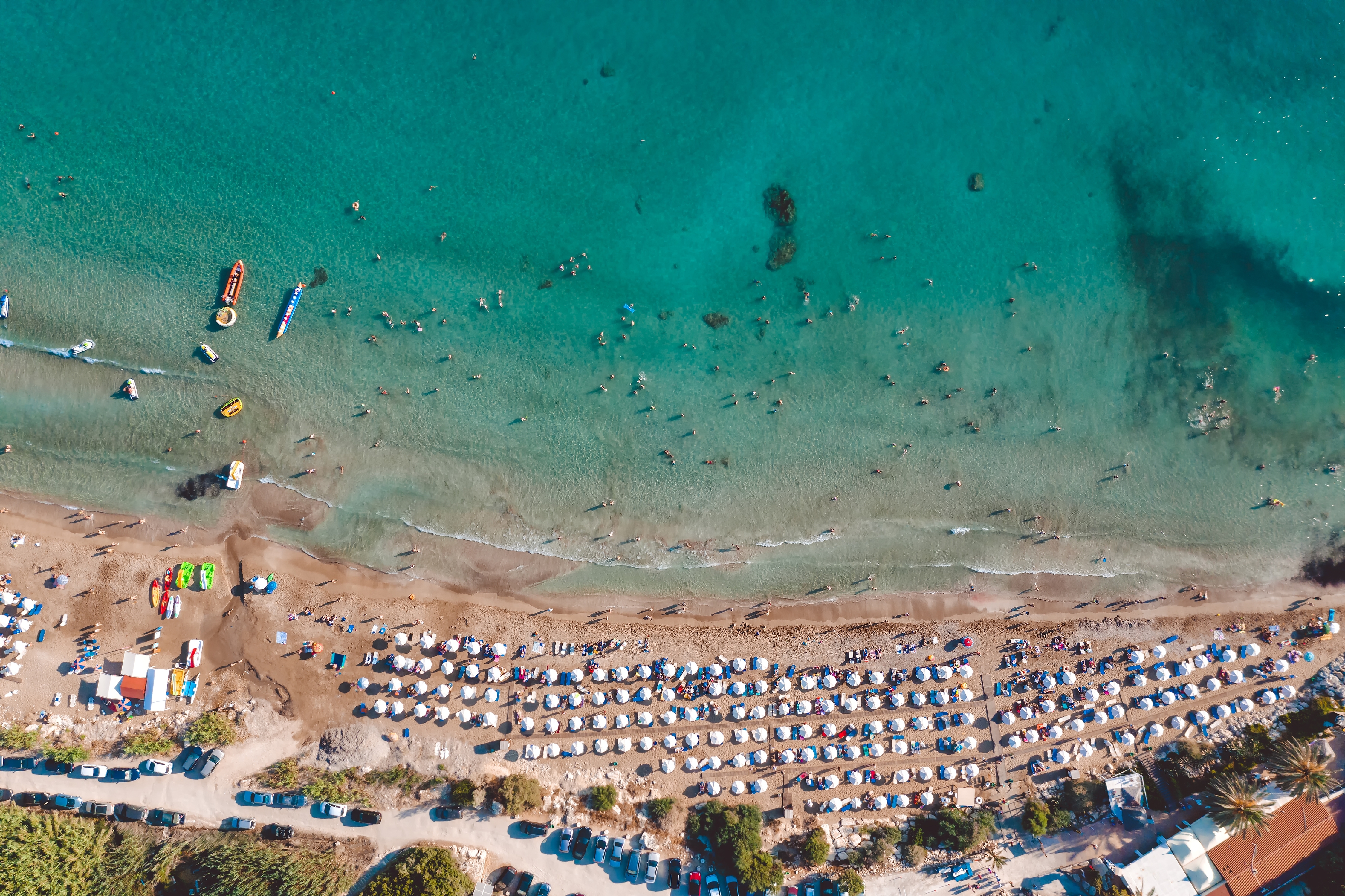
The units will be placed at a depth of around four metres, between 115 and 130 metres from the shoreline. Together, they will form an artificial reef extending approximately 100 metres.
The Environment Department formally backed the project in a letter dated 8 September 2025, outlining what it considers to be its potential benefits. Department officials have also participated in meetings with the authorities and organisations involved.
“This project is important as a research and pilot initiative for addressing coastal erosion,” Environment Department Acting Director Elena Stylianopoulou told Politis. “We also consider it positive that it promotes nature-based solutions.”
Stylianopoulou said the department would monitor the project and described it as a low-impact intervention.
“It is a pilot project aimed at identifying nature-based solutions, which the department wants to promote,” she said.
According to Stylianopoulou, the initiative could also help advance gentler coastal protection measures as alternatives to the harder engineering structures traditionally used in Cyprus.
The project is funded through the Interreg Greece-Cyprus 2021-2027 cross-border cooperation programme, which is co-financed by the European Regional Development Fund and national funding from Cyprus and Greece. Akamas Municipality is participating through the ECO-BEACHTECH project.
Concerns over pilot designation
Coastal engineer and AKTI Project and Research Centre President Xenia Loizidou expressed concern over both the project’s size and its designation as a pilot scheme.
“From a coastal engineering perspective, there is no such concept as a ‘pilot’ project at sea when dealing with structures of this scale. Pilot projects are carried out on land,” she told Politis.
Loizidou also criticised the wider transformation of the area.
“It is regrettable that, within 20 years, Coral Bay has gone from being a beautiful natural coastline to a collection of hard and destructive engineering structures,” she said.
She added that participation in a European programme does not remove the requirement to comply with national environmental legislation.
“Although the project is part of a European programme, Cypriot law provides for environmental studies, which we have not seen,” Loizidou said.
Environmental and recreational aims
According to the tender documents, the project is also intended to improve marine habitats and enrich local marine life.
The artificial reef is expected to provide an area for freediving and snorkelling, support scientific research and raise public awareness of coastal protection and environmental education.
The project calls for 220 concrete units in total. The contractor will manufacture 200 of them, while another 20 smaller units will be produced using 3D-printing technology by the ERATOSTHENES Centre of Excellence at the Cyprus University of Technology.
Four-partner consortium
According to the Interreg Greece-Cyprus 2021-2027 programme website, ECO-BEACHTECH is being implemented by four partners:
- University of the Aegean, as lead partner
- North Aegean Regional Development Fund
- ERATOSTHENES Centre of Excellence at the Cyprus University of Technology
- Akamas Municipality