
Municipalities are set to take centre stage in Cyprus's waste management reform as they prepare to introduce source separation and the Pay-As-You-Throw (PAYT) system from early 2027.
By mid-2027, separate collection of organic waste from major producers is expected to follow, with hotels, restaurants and other large facilities entering the scheme. Household organic waste, however, will be addressed at a later stage.
The Pay-As-You-Throw (PAYT) system, under which households are charged according to the volume of waste they generate, is regarded as a cornerstone of efforts to reduce household waste, lower management costs and move away from landfill towards a more sustainable circular economy.
Under EU obligations, Cyprus should have introduced PAYT nationwide by 1 July 2024. A revised target pointed to implementation during the first half of 2026. To date, however, the reform has largely remained on paper.
Nationwide rollout in early 2027
The government is now attempting to make up lost ground by targeting a nationwide rollout in early 2027.
The plan does not initially include separate collection of household organic waste, despite this having been a legal obligation since 1 January 2024 and one of the key tools for reducing household waste volumes.
The intention is to begin with large producers of organic waste during 2027 and expand later.
According to the Department of Environment, the delays are largely due to the fact that legal obligations were introduced before the required infrastructure was in place.
In a written response to Politis, the department said that while the previous government planned to implement PAYT from 2024, "the necessary infrastructure had not matured and been delivered" to make the system operational.
Linked to reducing landfill
As reported in previous Politis investigations, Cyprus still sends 60% to 65% of its waste to landfill, while the facilities at Koshi and Pentakomo are under pressure and require investments of €162 million merely for interim upgrades.
Against this backdrop, the delay in implementing PAYT takes on greater significance.
The next crucial step is not only upgrading treatment facilities, but also reducing mixed waste generated by households and businesses so Cyprus can meet its target of cutting landfill disposal to 10% by 2035.
Source separation first
According to Dr Costas Constantinou, Director General of the Environment Directorate at the Ministry of Agriculture, the principle behind PAYT is simple.
The more mixed waste a household generates, the more it pays. The less it generates, the less it pays.
"The most important thing is to create an incentive to reduce waste," he said.
Initially, households may not separate organic waste, but higher recycling rates are expected for materials such as:
- PMD packaging
- Paper
- Glass
- Textiles
- Other materials collected through Green Dot and Green Points
Less waste, lower costs
As a result, the mixed waste arriving at Koshi and Pentakomo should weigh less and cost less to manage.
Households using home composters for organic waste would reduce their costs even further.
Organic waste, including food and green waste, accounts for roughly 37% of municipal waste in the EU, making it the largest individual waste stream.
For that reason, separate collection of organics is considered critical for reducing landfill disposal.
One model being discussed would combine a fixed fee with a variable charge linked to the amount of mixed waste generated, potentially through prepaid waste bags.
The final model has not yet been decided, but the objective remains clear: create a financial incentive to generate less waste.
€25 million for municipalities
Implementation will depend heavily on local authorities.
According to Constantinou, €25 million has been allocated through the co-funded THALEIA programme to support PAYT implementation.
The original plan also envisaged landfill tax revenues generating approximately €4 million annually for waste reduction projects, but proposals encountered strong opposition and were not approved by Parliament.
The €25 million will fund investments including:
- Waste bins
- Locking systems
- Prepaid bags
- Collection equipment
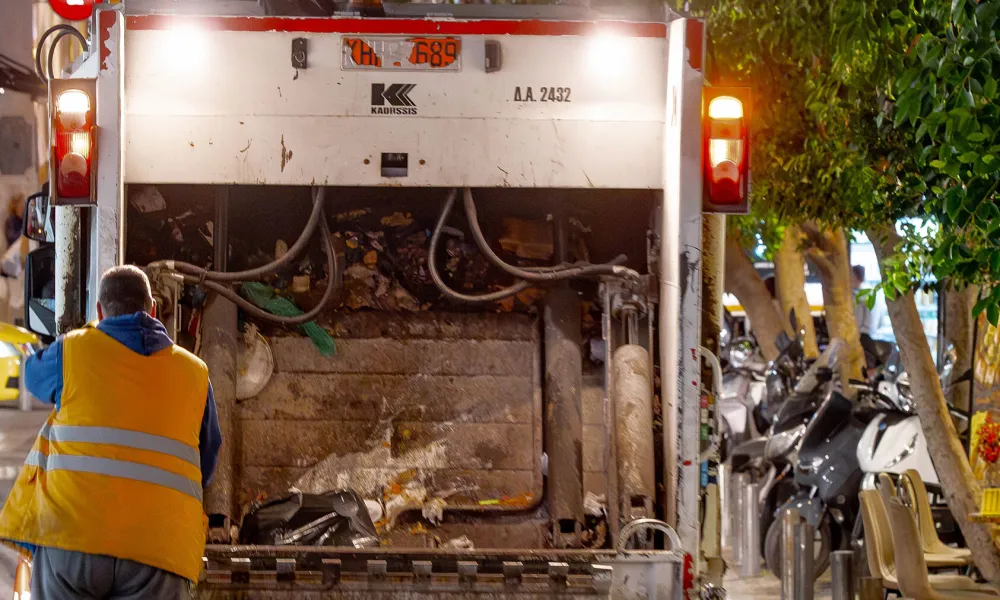
- Refuse trucks
Local authorities have been asked to prepare feasibility studies and action plans, although some municipal clusters are still behind schedule.
Areas such as Aradippou have made more progress and are already examining bin-based systems.
Organics to follow later
Constantinou acknowledged that separate collection of household organic waste cannot be implemented overnight.
"It is utopian to say we will have source separation of organics by 1 January 2027," he said.
He noted that infrastructure, funding, equipment and specialised collection vehicles are still required.
Even purchasing suitable collection vehicles takes months after orders are placed.
While there is no universal date yet for household organic waste collection, its rollout will depend on each municipality's readiness and the development of treatment infrastructure.
A major challenge
Organic waste is regarded as one of the most difficult waste streams to manage, particularly in a country where summer temperatures regularly exceed 40°C.
Food and other biodegradable waste cannot remain in bins for extended periods.
Frequent collection, specialised vehicles and rapid transport to treatment facilities are essential to avoid decomposition, odours and hygiene issues.
Large producers first
For these reasons, the government plans to begin with major generators of organic waste before expanding collection to households.
These will include:
- Hotels
- Restaurants
- Hospitals
- Military camps
- Other facilities producing large volumes of food waste
The goal is to start this phase during 2027.
Regulations will define who qualifies as a major producer and what obligations apply.
One issue still under discussion is whether municipalities will collect this waste themselves or whether businesses will be required to contract licensed transporters and treatment facilities directly.
Existing facilities but regional gaps
A key question is where collected organic waste will be processed.
Studies available to the Department of Environment indicate that some existing private facilities, currently focused primarily on livestock waste, have spare capacity.
According to current estimates, this capacity could initially serve major producers in:
- Nicosia
- Limassol
- Larnaca
- Paphos
The largest gap exists in free Famagusta district, where equivalent facilities are not available.
Officials believe that creating a stable market for organic waste could encourage private investment in new facilities.
€20 million for a new plant
Around €20 million has been earmarked from EU funds for the creation of an additional organic waste treatment facility.
Its location has not yet been decided.
The government wants to avoid a situation where too few private operators dominate the market, potentially creating oligopolistic conditions.
Maintaining public or reserve treatment capacity is therefore seen as a safeguard for municipalities and waste producers.
Lessons from Aglantzia
The Department of Environment describes the implementation of PAYT in Aglantzia as an important pilot project.
According to the department, the scheme demonstrated that PAYT can be an effective tool for:
- Reducing mixed waste
- Increasing recycling participation
- Lowering landfill disposal
Why residents reacted
The department argues that public complaints were not linked to environmental failure but rather to the challenges associated with changing established waste-disposal habits.
Key challenges identified included:
- Changing citizen behaviour.
- Better public information and guidance.
- Adapting to the use of prepaid PAYT bags.
- Practical difficulties in apartment buildings and shared spaces.
- Ensuring equal treatment when the system applies only in one area.
The department added that implementation in Aglantzia was also affected by local government reform and by the fact that PAYT is not yet applied nationwide, creating opportunities for waste to be transferred to neighbouring areas where the system does not exist.
Permanent incentives
The Department of Environment concludes that no effort to reduce waste should be considered a failure.
Instead, pilot schemes provide valuable experience and data that can be used to improve the system before nationwide implementation.
According to the department, the ultimate goal of PAYT is not simply a different charging mechanism but the creation of permanent incentives for citizens to reduce mixed waste, increase source separation and help Cyprus meet European recycling targets.