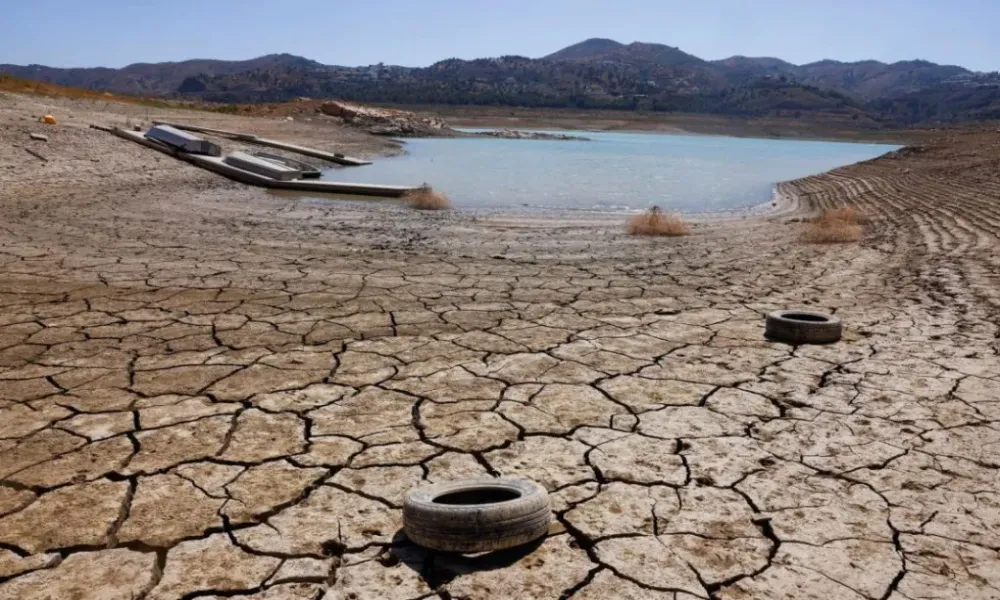

Drought is no longer solely an environmental threat but a structural risk to economies, production systems and livelihoods, the United Nations Convention to Combat Desertification (UNCCD) has warned. Its effects are already emerging in regions previously unaccustomed to severe water shortages.
Andrea Meza, Deputy Executive Secretary of the UNCCD, said drought had increased by 30% since 2000 and would become more frequent and intense.
Her comments came during a press conference at the UNCCD’s 17th Conference of the Parties (COP17) in Ulaanbaatar. Tuesday’s programme focused on water and included presentations on financing mechanisms and technical tools to strengthen drought resilience.
A structural risk for economies
Meza said drought threatens fundamental aspects of people’s lives and should not be treated solely as an environmental phenomenon.
“We will have more frequent and intense droughts. That is the reality,” she said.
She called on countries to strengthen early-warning systems and adopt national plans and policies to prepare for the growing threat.
Effects reaching new regions
Meza stressed that drought is not confined to Africa, where it is often associated with hunger. Its effects are now visible in parts of the Brazilian Amazon and in Panama.
A lack of rainfall in Panama has forced restrictions on ships passing through the Panama Canal, affecting international trade.
Meza also urged businesses to adapt their operations as the phenomenon is already causing financial losses.
“Just as no country is immune to drought, no economic sector is either,” she said.
Three in four people could be affected
The need for coordinated action was highlighted in the World Drought Atlas, published in 2024 during the previous UNCCD COP16 in Riyadh.
The report warned that three in four people could be affected by drought by 2050, while its cascading consequences could deepen inequalities and intensify conflicts.
Land degradation threatens more territory
COP17 is also addressing desertification and land degradation, which already affect 40% of the planet’s land and half of the global population.
If current trends continue, a further 11% of the Earth’s surface, an area equivalent to South America, could be degraded by 2050. This would have serious consequences for the climate, biodiversity and food production.
Source: CNA