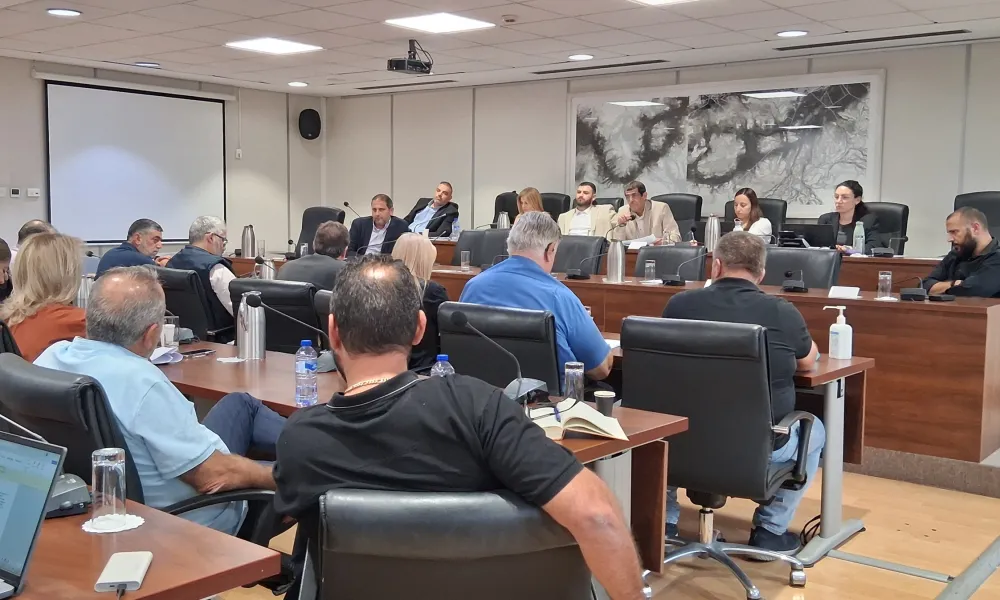

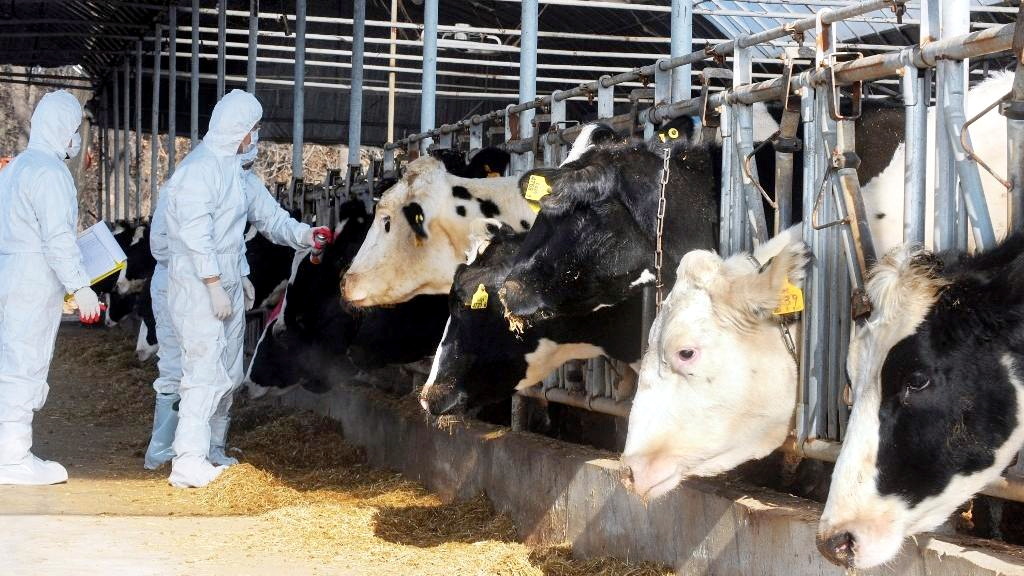
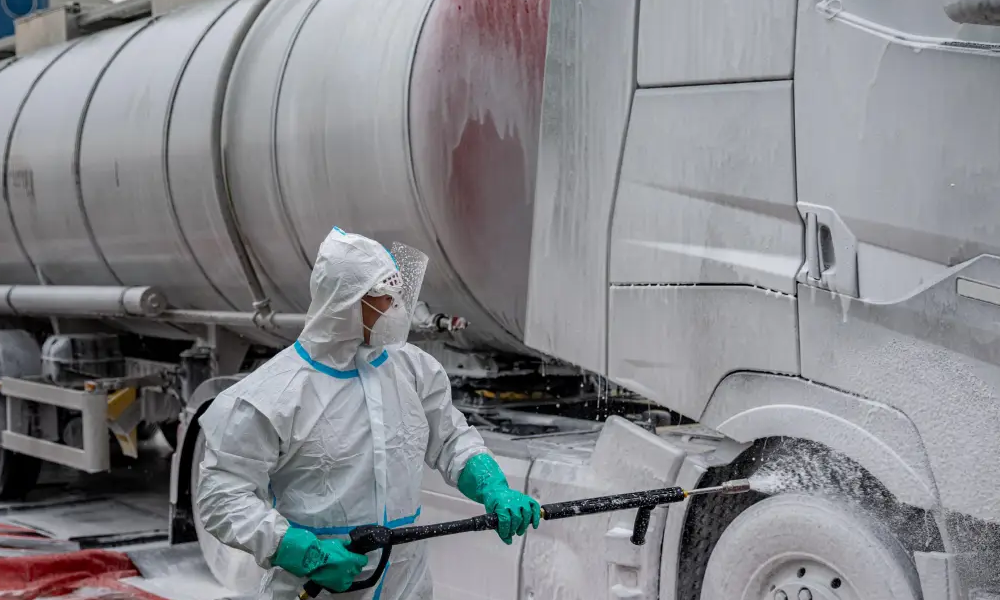
Amid the ashes and embers left behind by foot-and-mouth disease, with 126 infected farms and more than 80,000 animals culled, a new source of anger and frustration is emerging among livestock farmers. Signs of it surfaced at Tuesday’s session of the House Agriculture Committee. The issue is the delay in allowing affected farmers to resume operations. Several of them cleaned and disinfected their units eight to nine months ago and are still waiting for the green light from the Veterinary Services.
For his part, Veterinary Services Director Christodoulos Pipis cited a series of reasons for the delays affecting farmers who have complied with the protocols. These included neighbouring farmers who are indifferent to cleaning, and the failure of some municipalities to deliver on the commitment they gave parliament last September to launch a clean-up initiative. In one case, he said, it has been impossible for five months to find a site to move a flock of sheep of a rare Cypriot breed that tested positive for the virus but which it was decided not to cull. He was also unable to give any timeline for the resumption of operations.
All of this gradually led to open frustration among MPs, farmers’ representatives and agricultural organisations. Bit by bit, they formed the picture of a state mechanism unable to coordinate tasks that, in the eyes of the average citizen, are simple.
Heated criticism of Pipis
The last straw was Pipis’s response to criticism of the Veterinary Services’ effectiveness over actions they should have taken. He referred to his visit to Athens last weekend, where, at the invitation of colleagues at the Hellenic Veterinary Society, he presented how Cyprus had handled foot-and-mouth disease.
“Do you know what Greece’s Deputy Minister of Rural Development and Food said? ‘Tell us too, so we can learn how you did it’,” Pipis said, prompting reactions against him in the room. Committee chairman Yiannakis Gavriel and ELAM MP Linos Papayiannis both disagreed with the argument, with Papayiannis responding in a raised voice. “Greece is not a good example,” Gavriel said, while Papayiannis expressed surprise at the positive comments Pipis had received in Greece and asked him whether he wanted to be congratulated on how the crisis was handled in Cyprus.
The tension escalated when Pipis angrily asked Papayiannis to state what he would have wanted the Veterinary Services to do to manage the crisis. “Mr Chairman, it is easy to sit on the opposite side and say ‘what you did not do’,” he told Gavriel.
Gavriel then calmed tempers and repeated to Pipis that Greece is not a good example on this particular issue.
“They are paying off loans, they will go bankrupt before the units are cleared, we have caused them psychological problems”
“People want answers. And for them to have answers, all of us MPs are obliged to ask the various questions. Unfortunately, it has once again been shown that we have a problem with the resumption of operations and with compensation for loss of income. That is what we need to focus on. Compensation for the loss of livestock, animal feed and milk has been paid, but when it comes down to it, we have a problem with the restart. There is nothing wrong with admitting it and raising it so that we can solve it,” Gavriel said.
He then called for action so that farms can resume operations as quickly as possible, as the affected farmers are losing income and are suffering psychologically.

“There are people paying off loans who will go bankrupt before the units are cleared. We have caused them psychological problems; it has been nine months. The fact that you cannot give dates for the resumption of operations is a problem. And it is right for you to acknowledge it,” he said.
Ministry commits to briefing farmers in the coming days
Speaking at the session, the Director-General of the Ministry of Agriculture’s Directorate-General for Agriculture, Andreas Gregoriou, gave assurances that in the coming days the ministry will brief farmers and other stakeholders on the resumption of operations, with indicative dates and subject to certain conditions. He asked for patience until then.
Referring back to his opening remarks, he said that “our priority is a safe resumption of operations, which we are working towards.” According to Gregoriou, every Tuesday he coordinates an extended teleconference with the director and other officials of the Veterinary Services, together with members of the epidemiological team such as Dr Stavros Malas, to review the situation and take decisions.
“However, I would like to believe that, despite the difficulties, everyone recognises that we faced a very difficult situation. Most colleagues at the Veterinary Services have gone above and beyond in order to respond. We acknowledge the frustration and distress of farmers, which we share. But I believe that, under difficult conditions, both the ministry and the competent department moved ahead with compensation for the loss of animals, while on compensation for loss of income we are at the final stage. I believe the services and the state acted, bearing in mind the obstacles and difficulties, in a way that would bring this situation to an end and allow us to move towards a safe resumption of operations,” Gregoriou said.
According to Gavriel, next Tuesday the Agriculture Committee will hear from Agriculture Minister Christos Senekis, with foot-and-mouth disease among the topics for discussion. He asked that the minister give clear timelines on that day both for the resumption of operations and for the payment of loss-of-income compensation.
Loss-of-income compensation for at least 12 months for those who resume operations
Besides the resumption of operations, the other issue concerning farmers, which MPs raised with Gregoriou, is the payment of compensation for loss of income.
Gregoriou said the methodology has been drawn up following the last two meetings of the Special Advisory Committee on Compensation, which includes the farming organisations and livestock farmers’ representatives. He said it will be submitted to the Finance Ministry for approval in the coming days.
The loss-of-income methodology covers livestock holdings where all animals were culled and links financial support to their resumption of operations. Gregoriou explained that the compensation covers a period of at least 12 months and is calculated on the basis of financial or tax data from 2024 or 2025, while a simplified procedure is provided for small sheep and goat holdings.
A key condition is that at least 30% of productive livestock is restored within eight months. The compensation will be paid in two stages: 30% upon a documented order for the required animals and the remaining 70% once the Veterinary Services confirm that operations have resumed. In this way, Gregoriou said, support is directly linked to the actual restart of holdings and their return to production.
Voluntary exit schemes are also being promoted for farmers with small cattle, sheep and goat holdings in the affected areas. The aim is to reduce farm density in these areas, strengthen biosecurity and prevent the rapid spread of disease between holdings.
Answering questions from MPs, Gregoriou said that the state will not purchase the animals; private individuals will.
On the request by sheep and goat farmers to be compensated for the ban on free grazing, he said it is being examined, but it is not possible to determine how many animals were kept in sheds.
On the use of the study by Stavros Malas’s team for the restructuring of Cypriot livestock farming over 12 years, he said some measures will start being implemented, with others following in the coming years.
Compensation paid so far
According to the briefing given by Gregoriou, compensation and support totalling €20.26 million has been paid to date. Of this, €16.53 million relates to animal culls and €1.6 million to the destruction of animal feed. A further €778,243 has been paid in 64 cases of milk destruction, and additional support of 15%, amounting to €914,588, has been paid to 78 affected sheep and goat farmers.
Compensation has also been paid in full to the four affected farmers for whom legal assistance was sought from the Legal Service. Some cases remain outstanding. Four of them depend on completing the destruction of roughage, and in three the affected farmers must submit the documents needed for the compensation due to them, and they have been informed of this. The aim, he said, is to close these cases as soon as possible once the required conditions are met.
At the same time, the ministry is moving forward with covering labour costs and social insurance contributions for the affected holdings.
More than 80,000 animals culled
The consequences of the foot-and-mouth crisis have been particularly severe. To date, 126 infected farms have been recorded and more than 80,000 animals have been culled. The losses amount to 11.9% of adult sheep and goats, 3.5% of cattle and around 7.8% of pigs. Specifically, 53,403 sheep and goats, 3,061 cattle and 24,483 pigs have been culled.