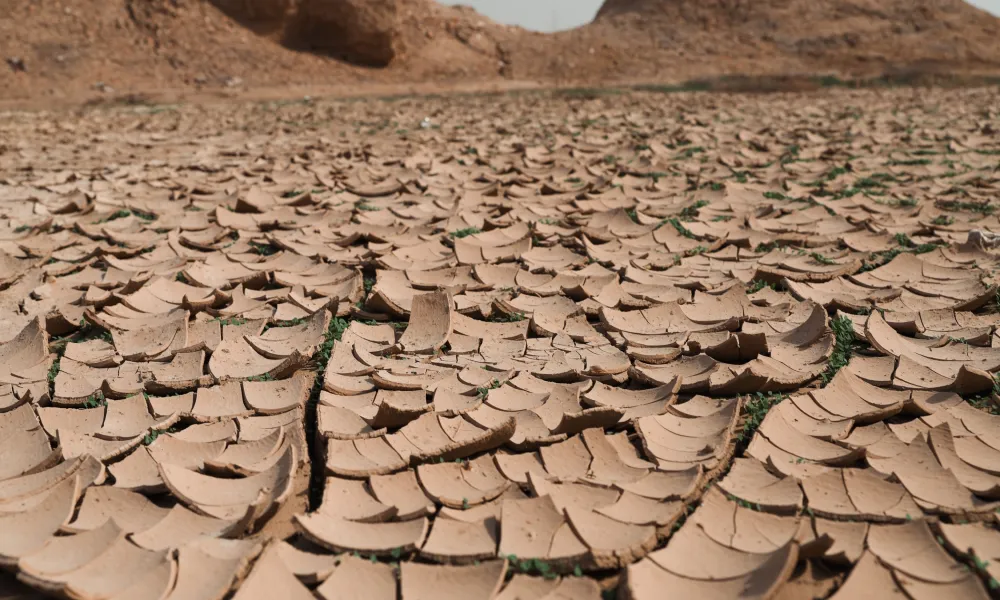

Climate change, water scarcity, food insecurity and the degradation of natural resources could intensify migration pressures across the Mediterranean in the coming decades unless governments take stronger action to adapt to climate change and curb greenhouse gas emissions, according to a new scientific report presented at the COP31 climate summit in Turkey.
The report, prepared by the Mediterranean Experts on Climate and Environmental Change (MedECC), warns that environmental pressures are likely to play an increasingly important role in shaping migration trends across the region, although economic, social and political factors are expected to remain the main drivers of cross-border migration.
The Mediterranean is already one of the world's busiest migration corridors. More than 2.5 million people have crossed the sea towards Europe over the past four decades, while more than 30,000 people were recorded as dead or missing between 2014 and 2024, the report says.
The assessment, presented by University of Salento climatologist Piero Lionello and Union for the Mediterranean Deputy Secretary-General for Stability and Resilience Joan Borrell, emphasises that the relationship between environmental change and migration is complex and strongly influenced by socioeconomic and geopolitical conditions.
While most environmentally driven migration currently takes place over shorter distances, the report says rising sea levels, extreme weather events, desertification and growing shortages of natural resources could become increasingly significant drivers of population movements in the coming decades.
Temperatures could rise by up to 6C
Particular concern is focused on climate projections for the Mediterranean, one of the regions most exposed to global warming.
According to the report, average temperatures across the region could rise by as much as 6 degrees Celsius above pre-industrial levels by 2100 under adverse scenarios, with serious consequences for living conditions.
By 2050, more than 20% of commercially exploited marine species in the Mediterranean could disappear, while agricultural yields could fall by 17%.
Such developments threaten key sectors including agriculture, tourism, fisheries and energy, potentially slowing economic growth and widening existing social and economic inequalities.
Countries in the southern and eastern Mediterranean are expected to face the greatest vulnerability because of limited water resources, heavy dependence on agriculture and growing pressures from sea-level rise and desertification.
Regional cooperation seen as crucial
"The Mediterranean is simultaneously facing the pressures of climate change, geopolitical instability and migration, and whatever affects one shore, in one way or another, affects the others as well," said Joan Borrell, deputy secretary-general of the Union for the Mediterranean.
He said the region was not destined to be defined by successive crises, arguing that stronger cooperation on climate action and sustainable development could transform shared vulnerabilities into shared solutions.
Lionello said environmental change, conflict and socioeconomic conditions interact differently across Mediterranean regions, influencing both people's decisions to migrate and their ability to remain where they are.
He also warned against simplistic interpretations, saying a deeper understanding of these processes was essential for designing effective policies that reduce human suffering.
Call for investment and better data
The report calls for policies that strengthen regional development and cooperation, with particular emphasis on investment in green infrastructure, climate-resilient agriculture and sustainable water management.
According to the authors, such measures could help reduce forced displacement by improving the ability of local communities to adapt to changing environmental conditions.
The report also highlights the need for stronger interdisciplinary research and improved data collection to allow more accurate monitoring and forecasting of migration trends linked to environmental degradation.
MedECC is currently preparing its second Mediterranean Assessment Report, which will further examine the impacts of climate change and their interaction with social and economic developments.
Source: AMNA, CNA