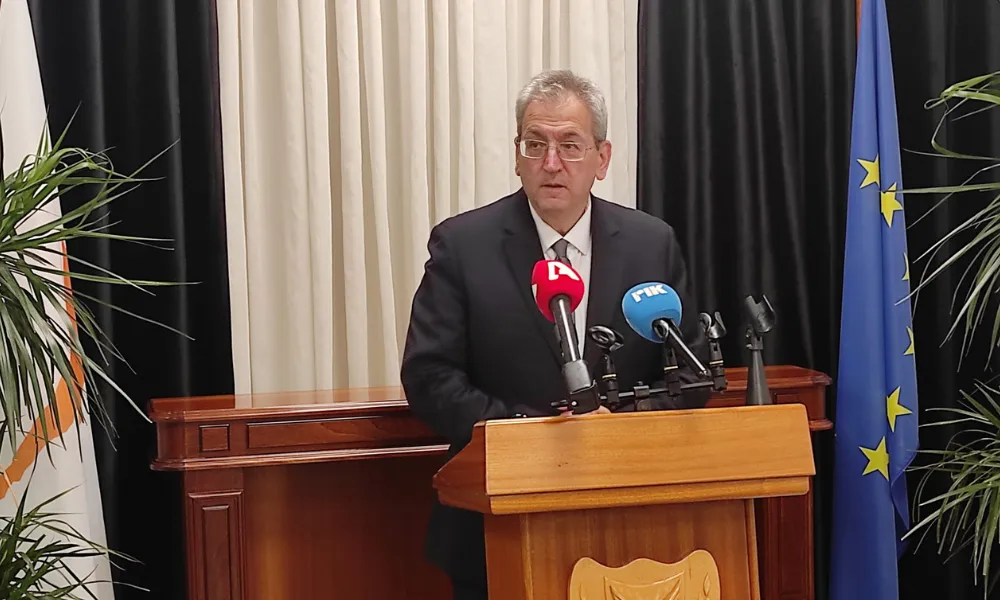

The bill seeks to provide operational flexibility to units, without definitively resolving the understaffing problem, which remains acute and requires permanent solutions.
A small relief for private hospitals, which for months have been warning that they are operating under suffocating pressure due to a shortage of nurses, is being attempted by the Ministry of Health through an amending bill concerning nurse‑to‑patient ratios. The aim is not the definitive resolution of the understaffing problem, but the creation of a more flexible framework that will allow hospitals to continue operating, despite the absence of hundreds of nurses from the clinical field.
What is changing?
Based on the bill, the responsible physician of the hospital will be able to adjust the minimum ratio of nurses to patients, depending on the severity of hospitalised cases. The provision αφορά specific units such as surgical, medical, geriatric, psychiatric, maternity and gynaecological units, as well as peritoneal dialysis and artificial kidney units.
Today, for a surgical or medical unit, the minimum ratio is one nurse per five patients in the morning, per six in the afternoon and per eight at night. With the proposed change, the ratio becomes one nurse per six patients in the morning, per seven in the afternoon and per nine at night. A similar adjustment is foreseen for geriatric, maternity and gynaecological units. For psychiatric centres, the current ratio of 1:6 in all shifts is proposed to become 1:7, while in artificial kidney and peritoneal dialysis units it is proposed that there be one nurse per three machines in operation, instead of one per two as applies today.
At the same time, the bill provides a counterbalance at the level of ward assistants. In the event of a reduction in the nurse‑to‑patient ratio, for up to six patients one ward assistant will be required, for seven to fifteen patients two assistants, while two additional assistants will be added for each additional fifteen patients.
Measure or half‑measure?
In practice, the proposed bill constitutes one of the measures that had been announced for managing the crisis that has been affecting the private health sector for months, with those involved speaking of a shortage of hundreds of nurses from the clinical field. In the previous period, private hospitals repeatedly raised the issue of sustainability, warning that the lack of nurses makes daily operation difficult and, in some cases, compliance with existing provisions.
The issue reached the table of a meeting at OEB last March, with private sector providers even considering the adoption of measures. Following the intervention of Health Minister Neofytos Charalambidis, decisions on measures were temporarily frozen, while both incentives to attract new nurses and bring back former staff, as well as changes to nurse‑to‑bed ratios, remained under discussion.
The amending bill does not solve the core problem, namely that Cyprus does not have a sufficient number of nurses to cover the needs of the health system. It does, however, attempt to give hospitals a margin of operational adjustment until more permanent solutions are implemented and begin to yield results, such as the recruitment of new staff and the return of nurses to the clinical field.
After the completion of consultations, the bill is expected to be sent first to the Legal Service for legal drafting review and subsequently to Parliament for discussion and possible approval. In Parliament, and more specifically in the drawer of the Health Committee, lies another bill related to the issue of nurse shortages, namely changes and facilitation in the recruitment of nurses from third countries, which in recent months has drawn reactions from trade unions representing nurses.