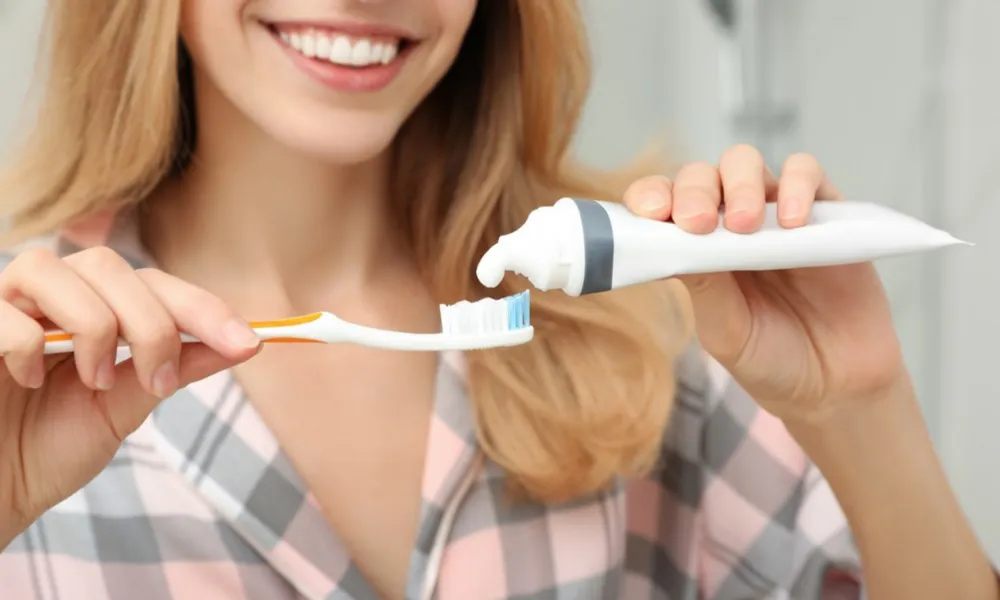

A simple daily habit may reduce the protection toothpaste offers, according to the UK's National Health Service (NHS). Most of us learned as children to brush our teeth and then rinse our mouths thoroughly with water to remove the leftover toothpaste. Yet this common step may be undoing one of the most important benefits of brushing.
What the NHS advises
In its official guidance on keeping teeth clean, the NHS advises people to "spit out any excess toothpaste" after brushing. It warns: "Don't rinse your mouth immediately after brushing, as it'll wash away the concentrated fluoride."
According to the NHS, rinsing dilutes the fluoride that remains on the teeth and reduces its preventive effects.
The guidance also recommends brushing twice a day for about two minutes each time, including last thing before bed, as night-time brushing is important. It advises against using mouthwash, even a fluoride one, straight after brushing.People should choose a different time, such as after lunch, and avoid eating or drinking for 30 minutes after using a fluoride mouthwash.
Why fluoride matters
Fluoride helps replenish and strengthen tooth enamel, protecting teeth against decay. For most people, toothpaste is the main source of fluoride.
The NHS states that adults should use a toothpaste containing at least 1,350 parts per million (ppm) fluoride. Children of all ages can use family toothpaste, as long as it contains 1,350 to 1,500ppm fluoride. Children aged three and under who do not have tooth decay can use a lower-strength children's toothpaste, provided it contains at least 1,000ppm fluoride.
What other experts say
The advice is widely shared by dental experts. In the UK, the Oral Health Foundation launched a campaign called "Spit, Don't Rinse" in 2016 to encourage the habit.
Speaking to The Washington Post, Margherita Fontana of the University of Michigan School of Dentistry said: "When you rinse, you are basically rinsing away the active ingredients of the toothpaste that you just put on your teeth."
Trisha Pasricha, a professor at Harvard Medical School who writes the "Ask a Doctor" column for The Washington Post, also explained the benefits in a video posted on social media in 2025. She acknowledged that the advice may sound strange and goes against what many people were taught. However, she said that letting fluoride sit on the teeth is better for them, as it helps replenish and strengthen enamel.
She added that toothpaste is probably people's main source of fluoride, especially if their tap water is not fluoridated, and that most toothpastes contain it. According to Pasricha, studies have shown that people who rinse with water immediately after brushing are more likely to need fillings than those who simply spit out the toothpaste. She admitted that leaving the toothpaste in the mouth may feel odd at first because of the strong mint taste, but said people get used to it.
With information from the NHS and The Washington Post