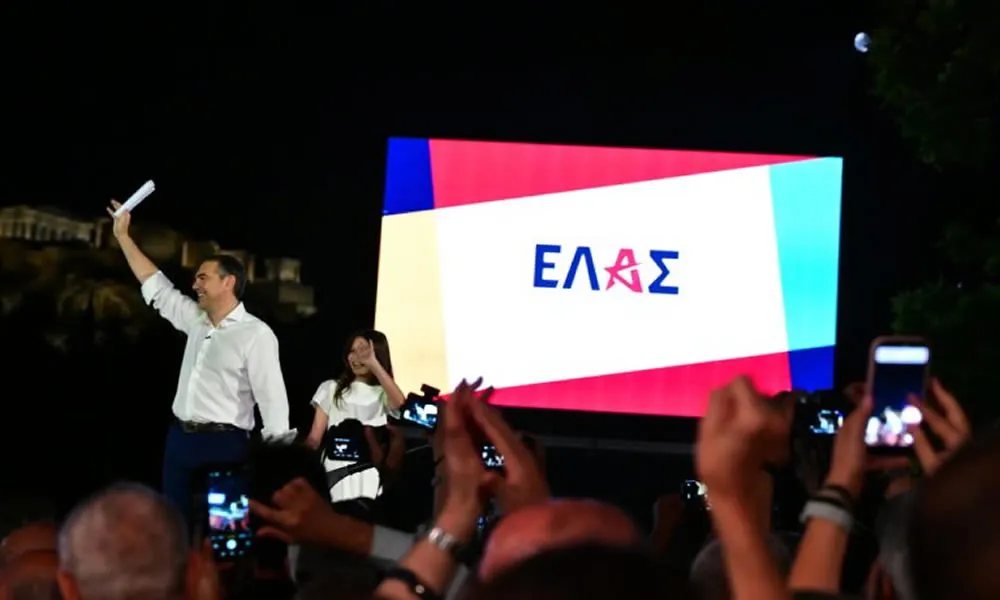



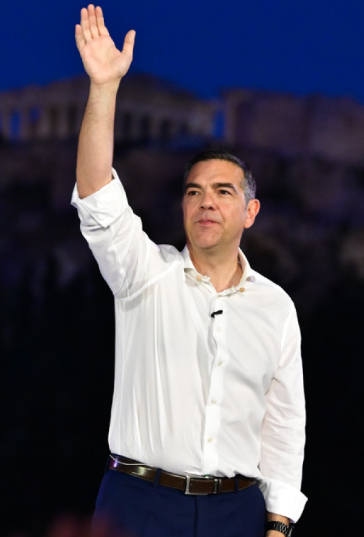
Alexis Tsipras has never lacked for theatre. On the evening of 26 May, the former prime minister stood in the Thiseio square in Athens, the Acropolis lit behind him, and unveiled his new party 'Ελληνική Αριστερή Συμπαράταξη', the Greek Left Alliance, known by its acronym ELAS. Tsipras has staged his return in Greek theatrical fashion.
The question Greece is now asking is what exactly he is returning to, and whether the political landscape he left behind in 2023 after two successive defeats to Prime Minister Kyriakos Mitsotakis still exists in any recognisable form. In the three years since, SYRIZA has fragmented, PASOK has reclaimed the role of main opposition, and the governing New Democracy has shed more than ten percentage points in the polls amid corruption scandals, a cost of living crisis, and the long, painful shadow of the 2023 Tempi train disaster that killed 57 people. Into this fractured landscape, Tsipras is stepping back with considerable ambition and, according to the first poll taken after his launch, considerable momentum.
Seven commitments and a new coalition
The founding declaration Tsipras presented in Thiseio contained seven commitments: dignified living standards, a stronger democracy free of impunity, fair economic development with a focus on agricultural production and manufacturing, a social welfare state that restores healthcare, education and housing as rights rather than privileges, resilience against climate and energy crises, digital sovereignty with national technological infrastructure, and an active, multidimensional foreign policy. The framing was deliberately broad, reaching beyond the traditional left to what Tsipras described as a convergence of three historical currents: radical left, social democracy and political ecology.
"This declaration is our compass for a new Greece," Tsipras told the crowd. "Towards an ethical revolution that the country needs. And a new patriotism inseparably linked to social justice."
He called on voters from across the progressive spectrum, including those who had never joined a party before, to sign the declaration and join what he is positioning as a broad progressive alliance rather than a successor party to SYRIZA.
No serving MPs from SYRIZA or the recently formed Nea Aristera appeared at the event, a deliberate effort to prevent the new formation being read as a continuation of the old one. Several mid-ranking figures from both parties were present. The crowd, by most accounts, skewed older, though younger faces were not absent.
The polls and the threat to PASOK
An opinion poll published this week showed New Democracy still leading at 26.1%, far below the 41% it secured in the last election in 2023, with Tsipras' new party ranking second at 12.8% and pushing PASOK into third place. For PASOK leader Nikos Androulakis, who has spent three years patiently rebuilding his party into the principal opposition force, the arrival of Tsipras is an unwelcome disruption to a strategy that had been working.
PASOK issued a 272-word statement describing ELAS as a "private party" built around one man, without programme or cadres, and accusing Tsipras of arriving this time not "arm in arm with populism and illusions" as before, but "arm in arm with interests and entanglement." Party sources, speaking privately, went further, questioning where Tsipras found the funding to launch a new party and naming specific business interests they claim are promoting his candidacy. In public, PASOK parliamentary spokesman Pavlos Christidis offered a cooler formulation; "Communication is fine, but politics is even better, and the truth of actions is better still", a pointed allusion to the gap between Tsipras' promises in government and his record in office, culminating in the third memorandum he signed after the 2015 referendum.
The line PASOK intends to hold is to differentiate sharply from New Democracy on one front, and remind voters of Tsipras' record whenever he encroaches on their territory. Senior party figures privately believe ELAS will consolidate rather than fragment the opposition, and that its presence ultimately helps New Democracy by splitting the progressive vote. "These conversations will last three or four days," Christidis said. "Then we'll get back to real politics."
Androulakis himself is expected to respond more directly at a local government event in Athens today, where he is scheduled to speak alongside Athens Mayor Haris Doukas, himself a significant PASOK figure.
The government fires back
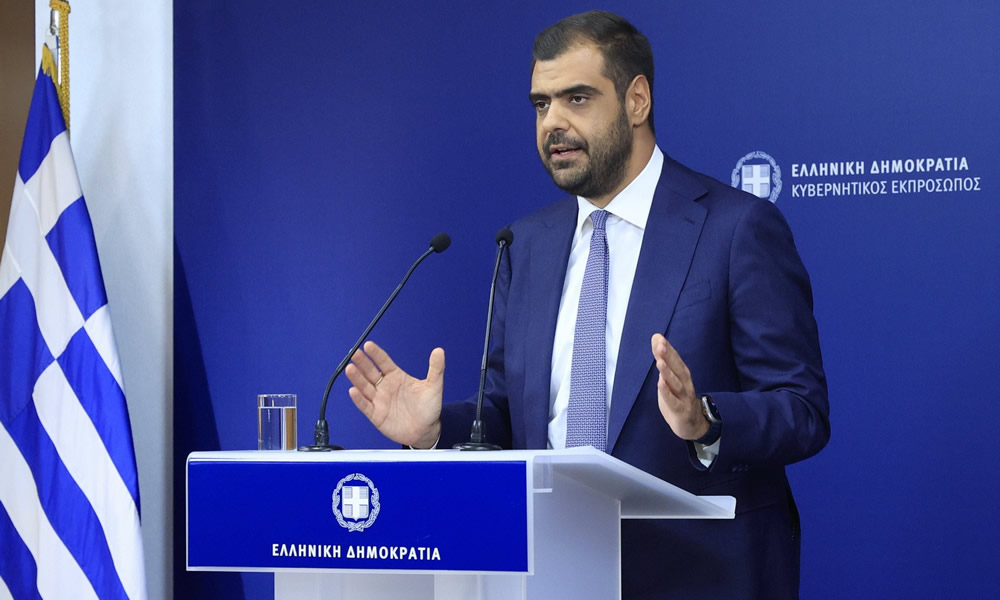
Government sources described the ELAS launch as "so much communication and advertising, only for Mr Tsipras to appear again just as unrepentant and unchanged, reminding voters of the reasons they voted against him." The official line was sharper still: Tsipras "wants to take Greece back many decades." Hours before the launch, Mitsotakis himself had dismissed the emerging opposition as a "political Babel" of parties old and new appearing solely to attack his government. Government spokesman Pavlos Marinakis called ELAS "SYRIZA with a new tax identification number."
The ferocity of the reaction from both flanks is itself revealing. Neither Mitsotakis nor Androulakis is treating this as a marginal development.
A landscape transformed
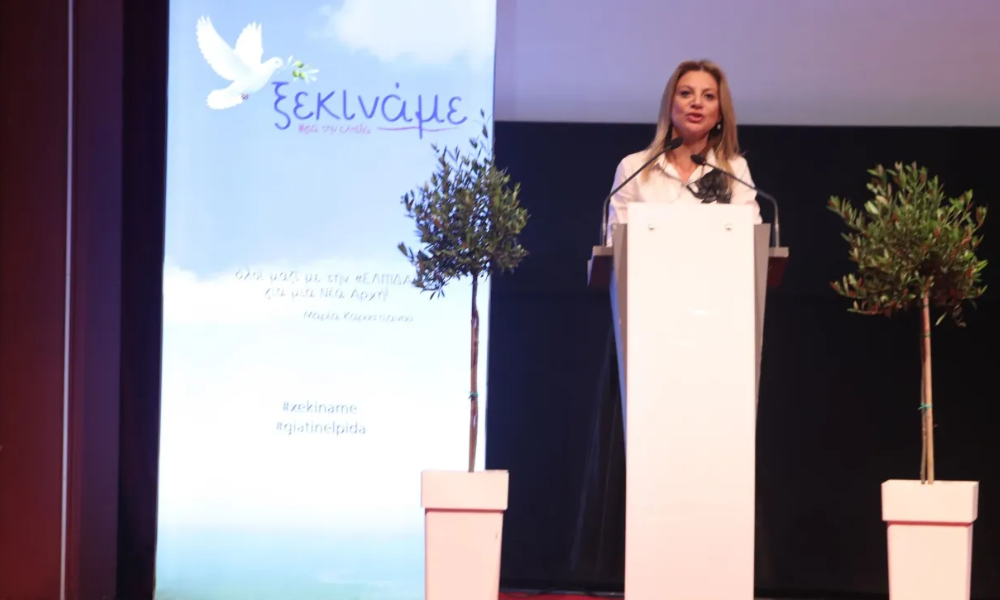
One week before Tsipras' Thiseio launch, Maria Karystianou, the mother of a 19-year-old killed in the Tempi disaster and the face of the nationwide accountability movement that followed it, launched her own party, Hope for Democracy, at the Olympion Theatre in Thessaloniki. While some analysts describe the party as potentially filling the gap for conservative voters disillusioned by New Democracy's scandals, its founding charter did not reveal a conventional ideological identity, with Karystianou deliberately targeting a cross-partisan audience far from traditional left-right dividing lines. Her party formally submitted its founding declaration to Greece's Supreme Court on 26 May. There is also persistent speculation about a potential party from former conservative prime minister Antonis Samaras, who was expelled from New Democracy in 2024 and has maintained a posture of open hostility toward Mitsotakis.
Current polling, which does not yet fully account for either Tsipras or Karystianou, shows New Democracy on approximately 30%, with PASOK on 14.4%, Greek Solution on 8.2%, the Communist Party on 6.9% and Plefsi Eleftherias on 6.7%. On those numbers, and under Greece's reinforced proportional representation system, New Democracy would fall well short of the 151 seats needed for an outright parliamentary majority, projected to win around 137 seats in the 300-seat Vouli.
The early election question
It is this arithmetic that is generating the most consequential speculation in Greek political circles. Mitsotakis stated publicly on 18 May, closing the New Democracy congress, that elections would take place in 2027. He has said so repeatedly. But the public commitment has not silenced the private calculations. There is open speculation in the Greek press that elections could be held as early as September, to enable Mitsotakis to catch opponents unprepared.
Sources have told Politis to the Point that an autumn election, potentially as early as late September or early October, is being discussed seriously within government circles. Tsipras and Karystianou are new, their organisations untested and their funding unclear. A snap election called now would find them without candidate lists, without regional infrastructure, and without the months of media exposure needed to consolidate the polling numbers their launches have generated. Waiting until 2027, by contrast, gives both parties time to recruit MPs, build campaign machinery and, crucially, shape their narratives through the ongoing Tempi criminal proceedings, which are expected to reach politically sensitive stages in the months ahead.
New Democracy has already shifted into what sources describe as full pre-election mode, with targeted regional and qualitative polling being commissioned and American political consulting firms that worked with the party in earlier campaigns returning to provide strategic guidance and weekly political assessments.
The coalition question sits alongside all of this. If New Democracy cannot secure a majority, a scenario emerges from the current polling landscape: a coalition arrangement on terms that would require meaningful concessions with PASOK. Androulakis has consistently resisted coalition language, insisting on his "until the end" commitment to an independent PASOK path. But political landscapes have a way of moving faster than the politicians navigating them.
Sources: To Vima, Neos Kosmos, Greek City Times, PolitPro, Associated Press