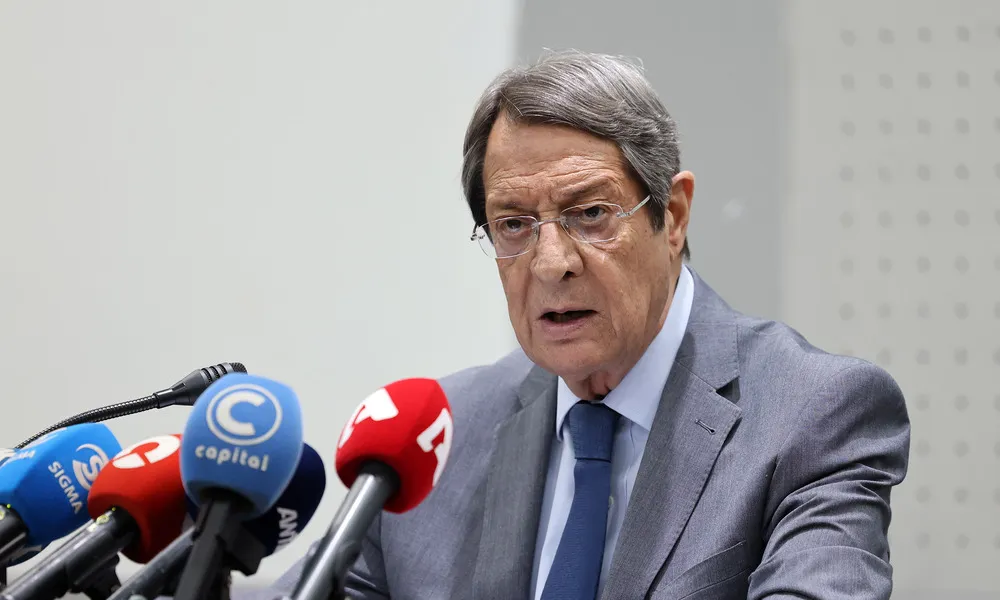

Former President Nicos Anastasiades has voiced concern about developments within the Democratic Rally (DISY), while reiterating his objections to the findings of the Independent Anti-Corruption Authority.
In an interview with state radio, Anastasiades also discussed prospects for the Cyprus issue and the need for reciprocity in confidence-building measures.
Concern over DISY
Anastasiades said he is following developments within DISY from a distance but with concern, noting that he had served the party for decades.
"How can you not feel pain when you see a governing party being troubled and going through what it is going through because of personal ambitions?" he said.
He stressed that DISY remains a strong political force, but argued that current and aspiring party leaders, as well as those considering a presidential bid, should place the interests of the party above personal goals.
"They must realise that above their personal ambitions there is another ambition that should prevail, that of love for the party and, by extension, the country," he said.
Asked whether he intended to take any initiative to bridge differences within DISY, the former president rejected suggestions that he is trying to influence internal party developments.
He said that whenever he had attempted to offer advice or assistance in the past, reports had portrayed him as seeking to guide party affairs, something he insisted is not his intention.
Anastasiades also made clear that he does not intend to return to active politics.
Renewed criticism of Anti-Corruption Authority findings
The former president again addressed the Anti-Corruption Authority's investigation into allegations featured in the book Mafia State, questioning both the substance of the findings and the procedure that was followed.
He argued that each allegation contained in the book should have been examined separately, with clear explanations as to which claims were supported by evidence and which were rejected.
Anastasiades said the outcome of the investigation was not adequately justified, particularly given that it concerned a former president of the republic.
He also maintained that he was not given an opportunity to respond to specific allegations before conclusions were reached and referred to individuals who, in his view, should have been called as witnesses.
"I do not attribute bad intentions," he said, while suggesting that the approach taken by investigators and the Authority may have been influenced by fears of public criticism.
He repeated his view that the process leading to the report's conclusions was flawed and that a more detailed explanation of its findings should have been provided.
Cyprus issue
On the Cyprus problem, Anastasiades said progress on confidence-building measures requires reciprocity and a willingness on both sides to offer corresponding concessions.
He referred to issues that have remained unresolved for years, arguing that the stance of the Turkish side illustrates the difficulties that continue to exist.
At the same time, he expressed hope for a change in attitude from Ankara that could create better conditions for the resumption of meaningful negotiations.