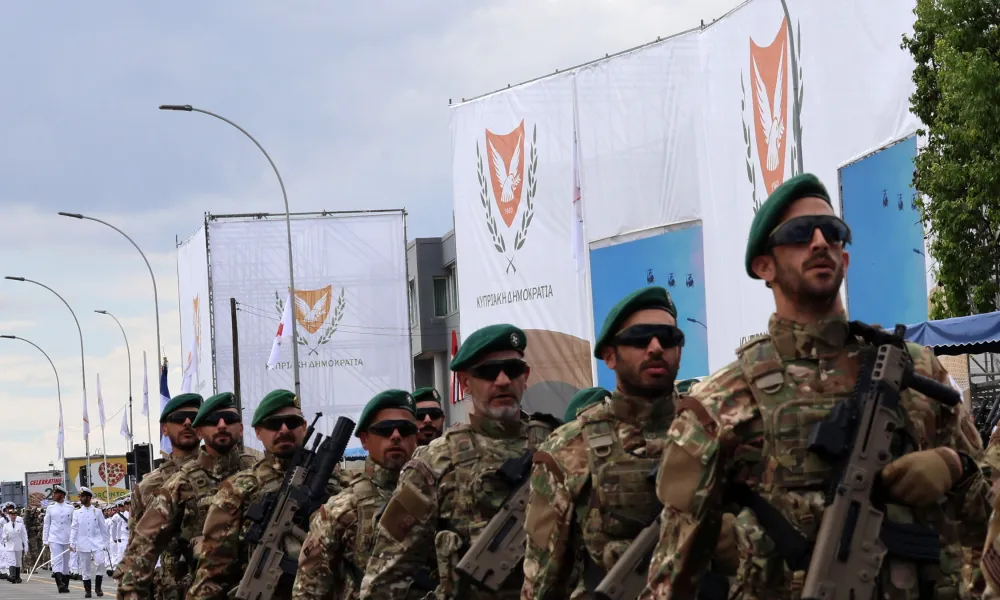

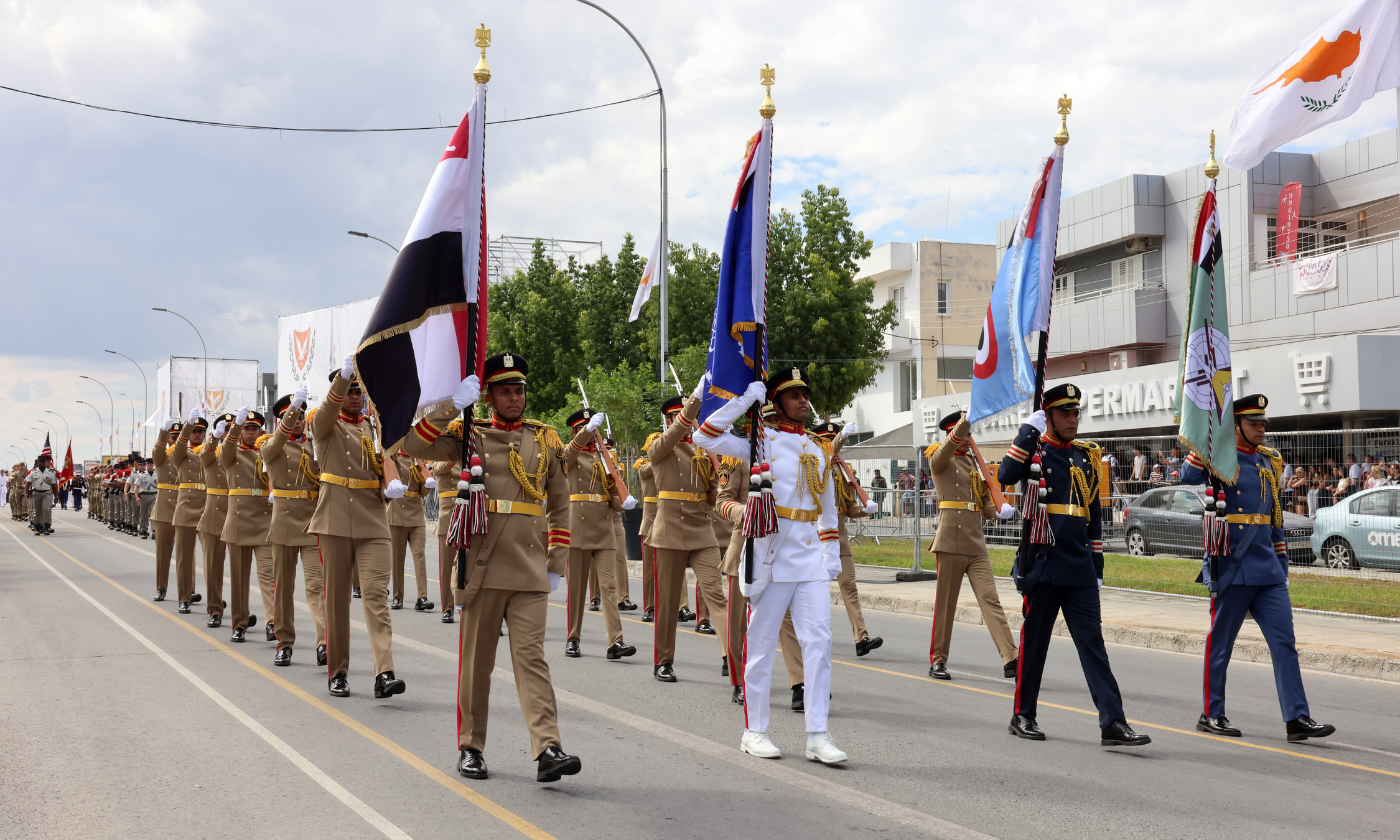
Cyprus celebrated 66 years of independence on Thursday, receiving congratulatory messages from leaders the world over, while hosting military contingents from five countries in its national day parade.
In his congratulatory message to Cyprus, UN chief António Guterres noted national days were a good time to reflect on a country’s journey and its aspirations for the future.
He highlighted the value of dialogue and solidarity in addressing global challenges such as wars, the climate emergency, inequality, and powerful technologies.
He did not mention the island’s ongoing division but he’s fully briefed.
Cyprus’ place in the world
As the region’s volatility is once again on display – with bombs, deaths and displacement, maritime chokeholds, and a capacity to pressure the global economy – Cyprus enjoys a period of heightened relations with third countries. Security collaboration with the US, Israel and to a lesser extent France is on the rise. Egypt is the energy partner of choice to export Cyprus’ first gas. Relations with Gulf partners have also taken an upward turn.
Cyprus is eager to play a role in the IMEC (India-Middle East-Europe Economic) Corridor, a proposed trade, transport, energy and digital connectivity network linking India with Europe through the Gulf and the Eastern Mediterranean, though Nicosia has some work to do before getting its foot in the door.
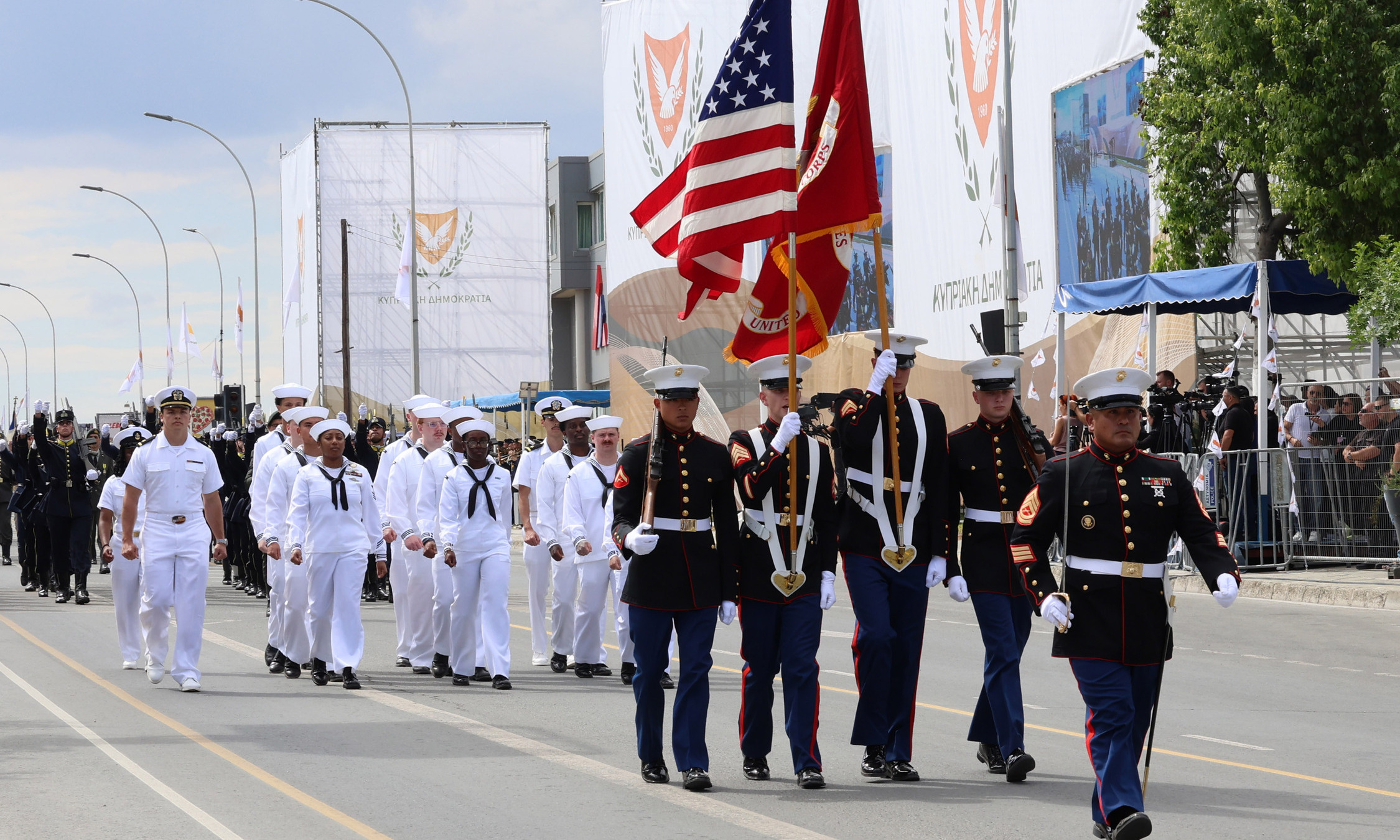
The country is trying to spread its wings. But how far can it go carrying the burden of division and occupation on its back? Improved relations, military parades with an international flavour, and even new energy corridors may prove beneficial but, in some cases, they also create dependencies. And they do not guarantee that when the chips are down, when everything unravels and chaos reigns, that Cyprus can stand on its own through the storm.
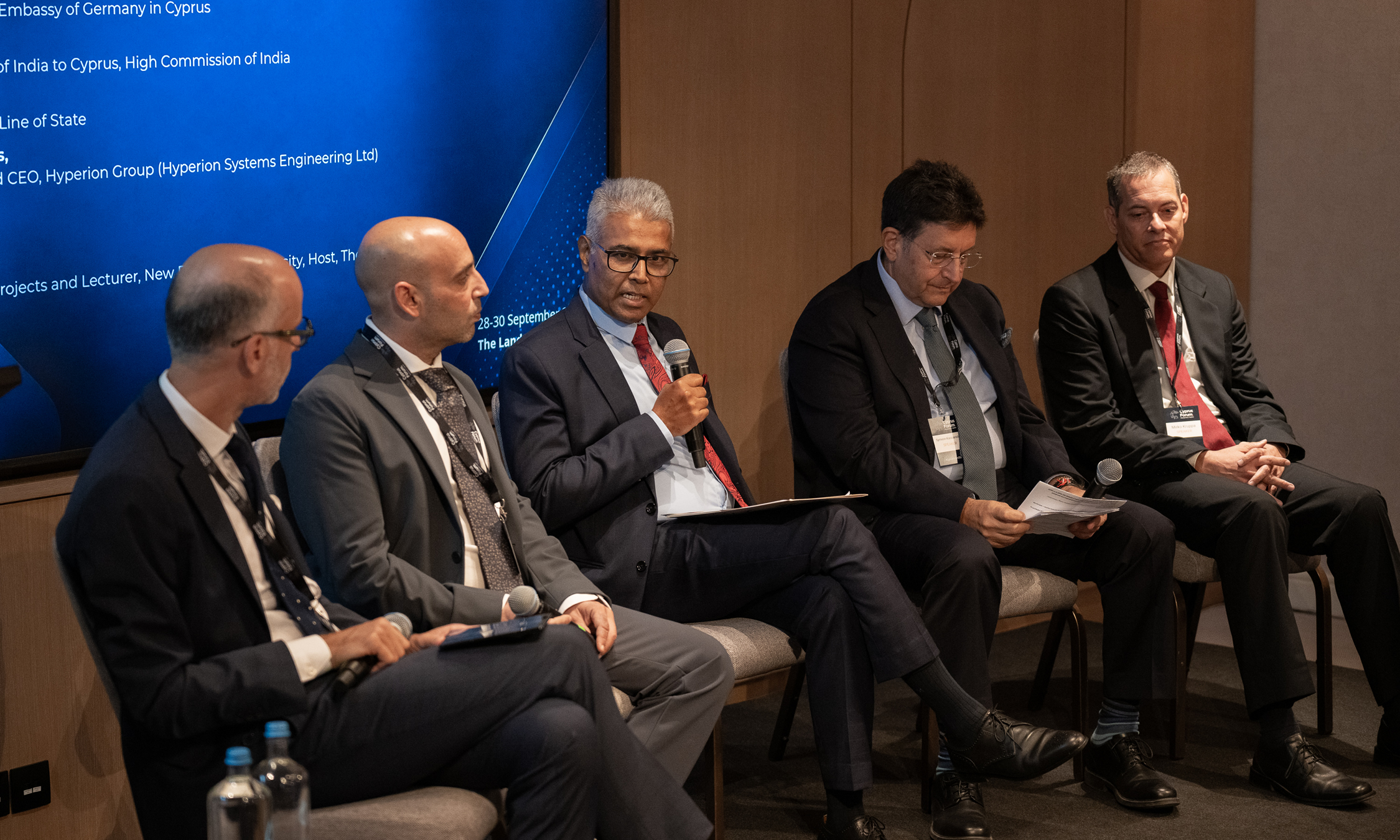
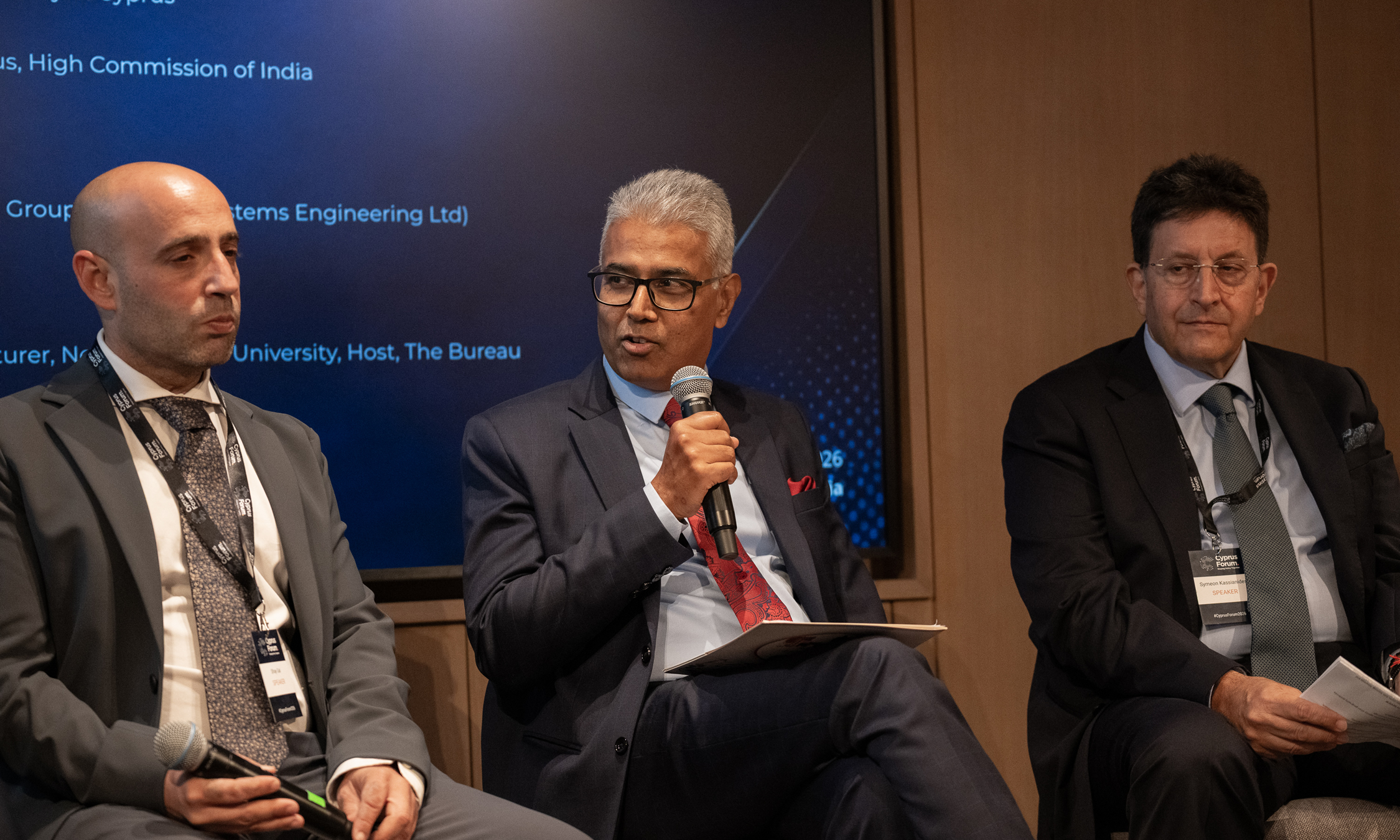
On Wednesday, a Cyprus Forum panel of experts from diplomacy, academia, industry and strategic affairs explored how much Cyprus, at 66, could be master of its own destiny. In more technical terms, they asked: does Cyprus have sovereign capacity?
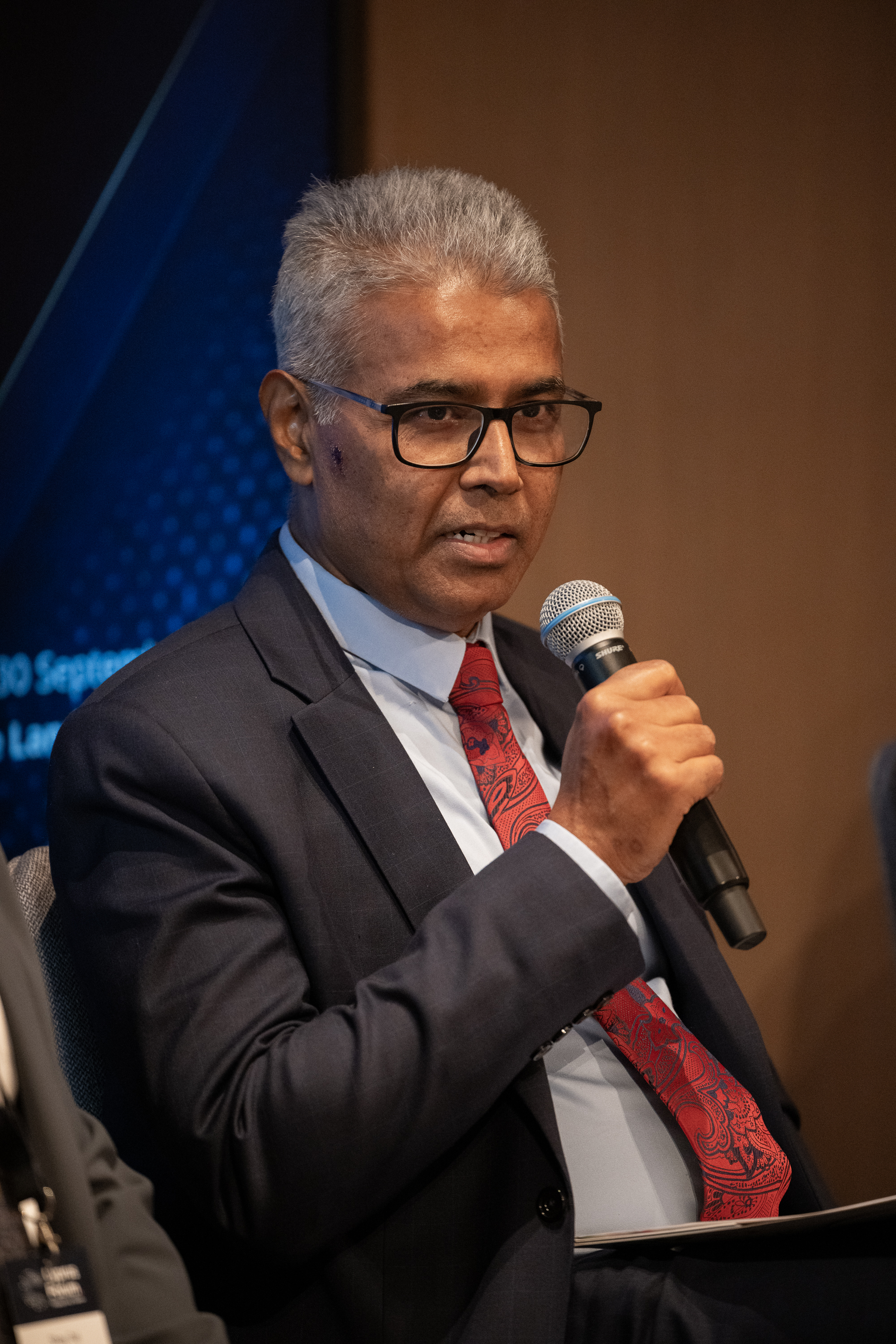
Indian High Commissioner to Cyprus Manish described relations with Cyprus as a strategic partnership but on the question of IMEC, he noted that discussions are ongoing. There is still a way to go before formally admitting new members as founders, he said.
It is also a question of agency and vulnerability. For Cyprus to become valuable to the project in terms of financial, energy or digital connectivity, it needs to take certain steps infrastructure-wise, said Manish.
The discussion inevitably turned to the Cyprus issue. Turkey remains a problem. One that impacts Cyprus’ range of options and movement.
The island’s division holds Cyprus back on many things it could be doing, noted Manish.
Symeon Kassianides, chair of Hyperion Group, said if a form of security and stability can be achieved with Turkey, Cyprus has an opportunity to act as a conduit in the region in a way that will benefit all.
The message from German diplomat Mirko Kruppa was blunter. Cyprus’ security situation prevents the country from maximising its strategic location across multiple fields, including energy.
Security risks will dissuade countries from taking advantage of Cyprus’ potential, even if alternative options are costlier, he argued.
Kruppa’s overall message appeared to be: if Cyprus wants to have strategic agency, to make choices and shape outcomes, it needs to tackle the problem at home first and not wait for Europe to come to its rescue.
The famous crossroads
Everyone knows (as everyone is repeatedly told) Cyprus enjoys a strategic position at the crossroads of Europe, Asia and Africa. But it’s what you do with that location that counts – the choices you make.
Moderator and academic Konstantin Valkov noted that Cyprus’ geography and partnerships have created strategic relevance, but questioned whether that can translate to strategic agency?
Does Cyprus have the capacity to act for itself when its partners are under pressure? Can it function, choose, repair, and sustain essential systems under pressure?
As the Eastern Mediterranean and Gulf become increasingly connected through infrastructure, energy, data and maritime routes, the question of “unmanaged” critical dependencies becomes a security issue, he argues.
What must Cyprus own? What can it rely on its partners for? What must it be able to substitute if challenged? These questions lie at the heart of the sovereign capacity test.
You can’t change geography
The Indian High Commissioner acknowledged Cyprus’ fortuitous spot at the intersection of three continents. But he also noted: “You are in a geography which is currently the hotspot of the world. And geopolitical shifts and alignments are constantly changing.”
The strategic value of Cyprus’ location will depend on “whether it can keep essential systems functioning under pressure, make informed and sovereign choices, reduce single point dependencies, rely on trusted partners without surrendering to decision making. And also, repair, replace, and adapt critical systems when circumstances change. These points are all in play in this small territory here,” he said.
Each country has a different outlook, but from India’s perspective, sovereignty is about the practical ability to remain connected while retaining choices, resilience and operations, said Manish.
Cyprus as a pistol
Mirko Kruppa, Chargé d’Affaires at the German Embassy in Cyprus, said the question of whether the island’s geography is considered an asset or a liability must be seen through a security lens.
Looking at a map of the island, with its protruding nose to the east, Kruppa said a diplomat (evidently Turkish) once told him this is seen as a pistol permanently pointed at their southern coast. It could also be seen as pointing towards the Levante or Suez Canal.
“So, whoever wants to control the security and stability of the Eastern Mediterranean has to work somehow… needs this island,” he said.
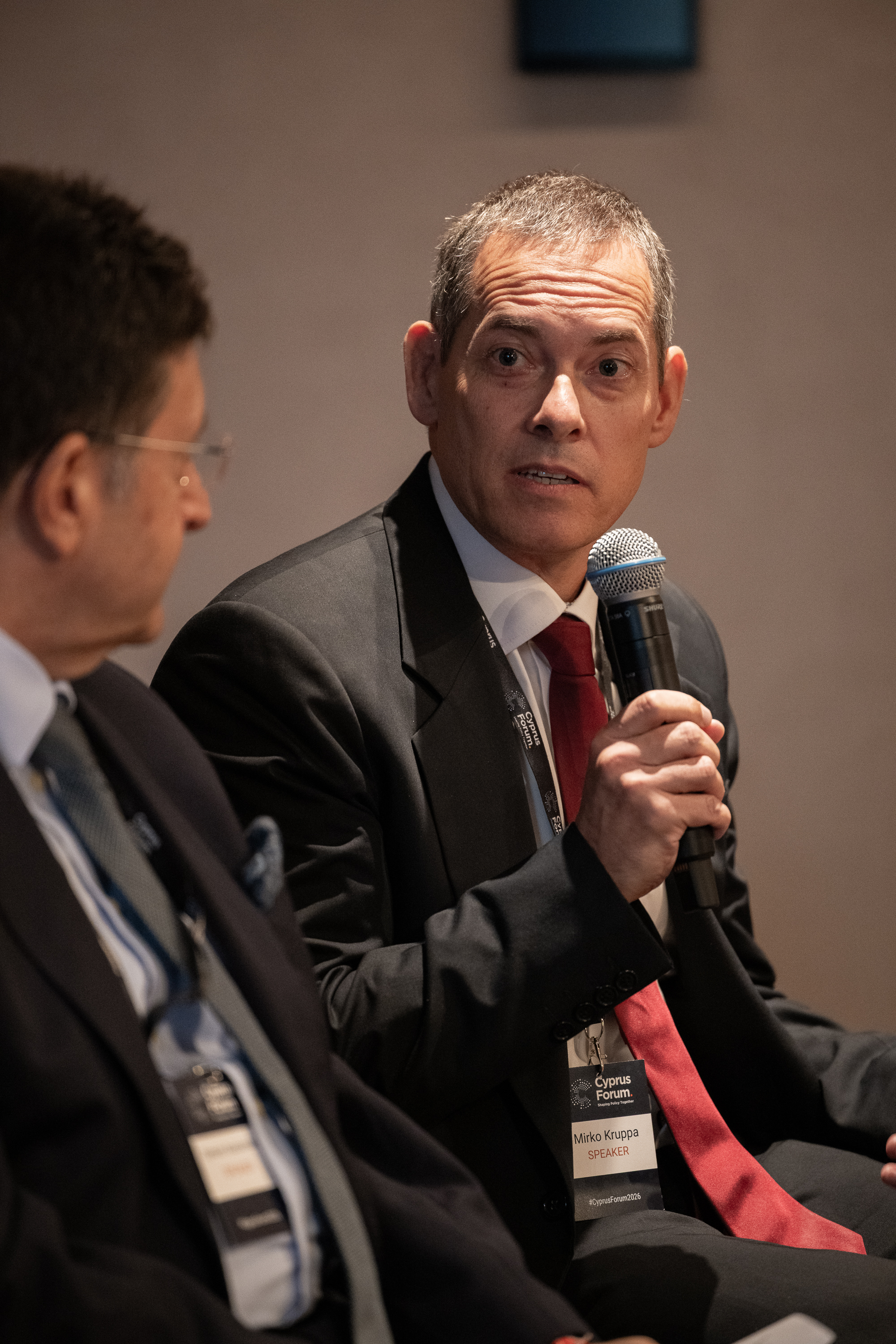
The German diplomat argued that the island’s people were given an opportunity to define ‘agency’ for themselves after independence.
“Unfortunately, they chose division. […] They didn't find one single vision of security for their future,” he said. The foundations of division were borne with the notions of ‘enosis’ (union with Greece) and ‘taksim’ (partition), which opened the space for an occupying Turkish force on the island, he argued.
The island’s division has since been operating under the ‘Pax Americana’, the broader security architecture in place for the last 80 years, which is now under challenge, said the diplomat.
“Particularly in the Middle East, we see how dramatically things are changing.”
Kruppa said people on the island need to ask themselves how much agency they are willing to pursue, to find their own language and ambition. What is their security policy vision? He links this with Turkey’s security perspective.
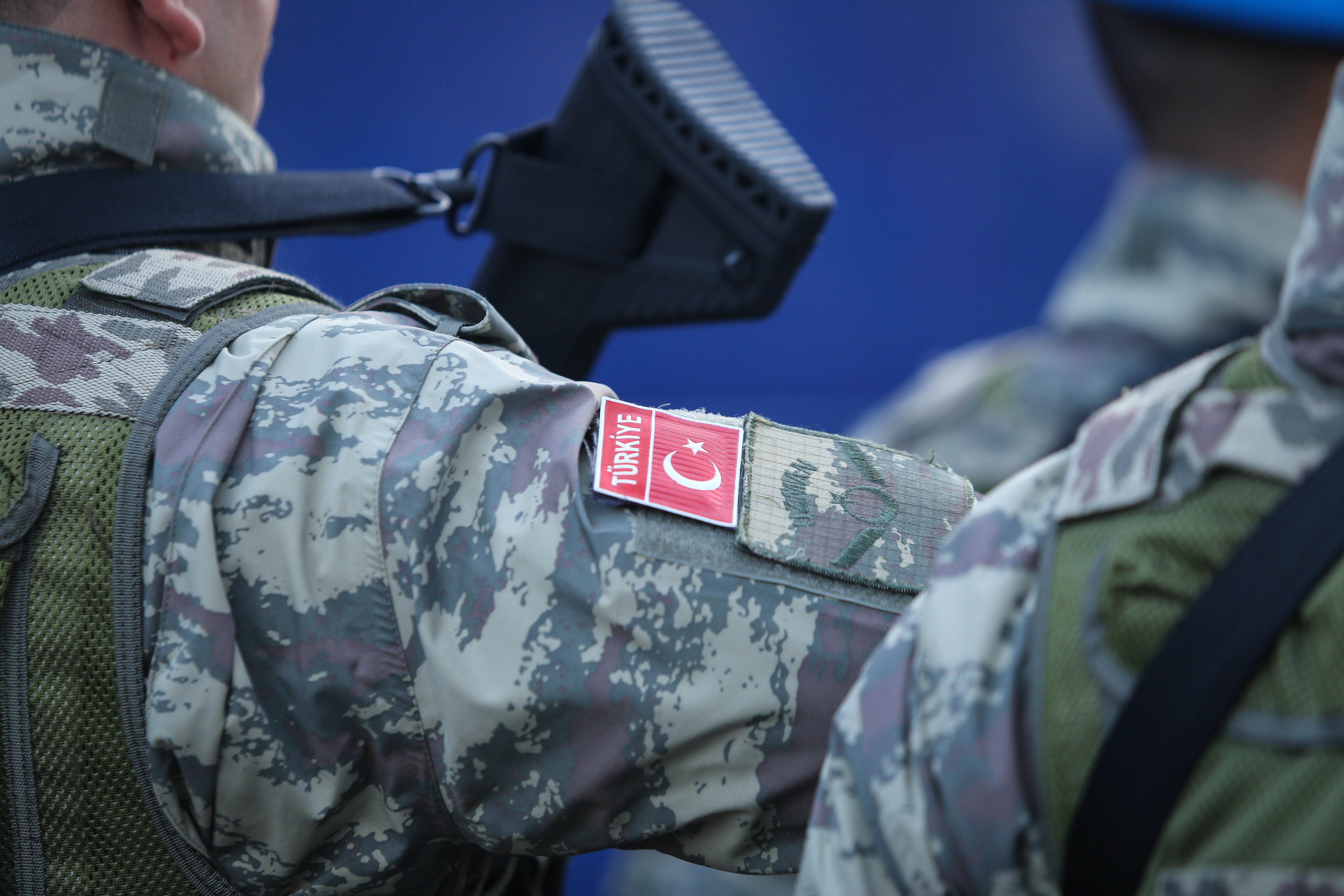
“Do you accept the existence of Turkish military on this island? And do you work with it, let's say, in a collective security framework like NATO?
“Or is the division remaining and this island will be part of the Middle East and the unpredictabilities of all the actors involved?”
Kruppa argued that Pakistan-India, Iran-Israel, or Israel-Turkey frictions could all have some impact on Cyprus.
Europe could do more
Shay Gal, founder of Line of State, an international strategic consultancy, argued that Europe could do more vis-à-vis Turkey by creating a price for its policy over Cyprus. Instead, Europe’s involvement in Turkish military procurement weakens Cyprus’ ability to act in some ways.
Europe needs to understand that from 2004 onwards, Cyprus became a European problem and was no longer the sole concern of the guarantor powers, he said.
Don’t rely on Europe
Asked what Europe can credibly assure Cyprus of in terms of energy security, cyber resilience and crisis response, the German diplomat gave a frank reply.
“To be honest, at this current situation, I'm afraid not much.”
This will likely be the situation for the coming decades and should be considered when looking at security policy, Kruppa argued.
He noted that when Cyprus brought up the issue of the EU’s mutual defence clause, Article 42(7), during its EU Presidency, it showed “there are no procedures in place and no capabilities and capacities to implement it”.
It will take at least until 2030 to develop these, he warned.
“I don't think that, from the current dynamics in the Middle East, Cyprus has the time for this to wait.”
Division blocks energy projects
Kruppa added: “I think also that all the energy projects that are being discussed for many years here around the island have all been impeded and stopped because of the division of the island.”
Regarding Cyprus advancing bilateral security cooperation with third countries, the German diplomat noted these could change at a moment’s notice. In terms of collective security, if the two communities wanted a joint security policy, they could agree to join NATO, in exchange for accepting a Turkish presence on the island, he repeated.
“I think just closing the eyes and hoping for a third party to help you will not work,” he said.
Is Europe secure?
In response, Hyperion’s Kassianides pushed back against the notion that Cypriots are in a position to decide their own future without help. He noted that the Cypriot government has already declared its desire to join NATO. What Cypriots on both sides of the dividing line need are partners who will be constructive in helping them move forward.
If the rules governing Article 42(7) take some time to prepare, Kassianides noted, after more than half a century of division, a few years is not very long.
However, he questioned whether that would be enough? Developments in Ukraine and elsewhere have shown that “Europe needs a collective defence policy”.
Size is not a limitation
For his part, Manish argued that despite the historical challenges, “Cyprus is punching above its weight.”
“It is one of the fastest growing economies in the European Union. We should not forget that. And bilaterally speaking, what I can say is that no country is big and small for a partnership.”
The Indian diplomat highlighted that from EU countries, Cyprus was the second biggest foreign direct investor in India, after the Netherlands.
The Cypriot government has taken specific policies to diversify engagements, looking to the east and to areas such as defence, finance, technology, innovation, shipping, he said.
Without external support, stalemate remains
Despite the potential for synergies, there remains the historical problem of the island’s division. To move forward, Manish said the guarantor powers need to do more heavy lifting.
The EU must also get more involved to “find some kind of a solution”. Without both taking on more weight, the stalemate will continue, he argued.
Cyprus can “leapfrog” forward if it resolves its problem, said the Indian diplomat. “A lot of things which they can do are not happening because of this 60-year-old problem, and I hope some kind of solution will happen pretty soon,” he added.
Progress starts at home
Concluding, the German diplomat said the guarantors and EU have an obligation to create favourable conditions for the island to flourish once it is reunified but the key and the starting point lies with the people on the island.
If Cyprus’ geographical advantages are to be an asset, and not a liability, “it will need to come together as an island, as a society, be emphatic, overcome the traumata, the deep divisions after so many decades of violence”.
In the meantime, regarding its potential to be an asset, Kruppa said: “Everybody sees ‘use’ potential, but it's a question of cost calculation. The more there are risks remaining, the more you start looking at other possibilities,” even if more expensive.
In other words, the more the security situation of Cyprus is addressed, the more it is seen as an asset and cheaper to use. “The more there are liabilities, the more there will be workarounds that are more costly but then will be chosen,” he said.
*The relevant panel discussion starts at 3h47m until 4h30m.