
The Ministry of Agriculture, Rural Development and Environment says it will study and make use of the findings and recommendations of the Audit Office regarding works in Akamas, with the aim of improving environmental protection and management procedures.
The ministry's response follows the publication of the Audit Office's Special Report entitled Akamas: Do the Planning and Implementation of Projects Safeguard the Protection of the Area?
The ministry said it attaches particular importance to the work of the Audit Office and that the report's findings, conclusions and recommendations will be examined with a view to continuously improving environmental protection, management and governance procedures.
At the same time, it stressed that before the report was finalised, it had submitted a detailed 36-page letter to the Auditor-General setting out the views, clarifications and comments of the ministry and the relevant departments on the findings and conclusions contained in the draft report.
The letter was included in full as an appendix to the final report, making the ministry's positions publicly available in their entirety.
The ministry reiterated that it recognises the need for continuous improvement in environmental assessment, documentation, monitoring and administrative coordination.
It also argued that any assessment of the Akamas projects should take into account the full history of the decisions taken, the institutional and legal framework that applied at the time, the responsibilities of the authorities involved and the corrective and improvement measures subsequently introduced.
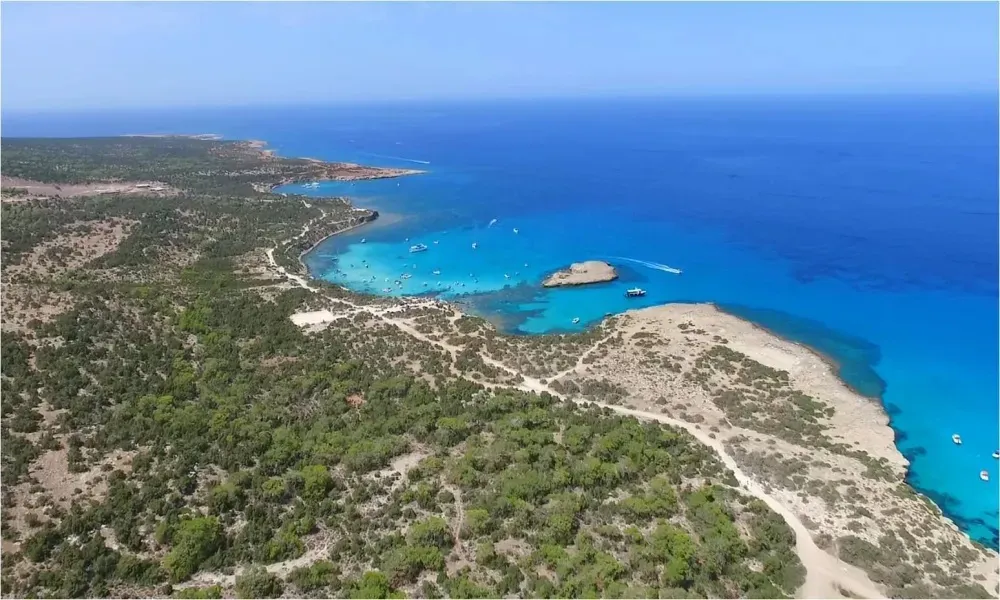
The statement also referred to the Sustainable Development Plan for the Akamas National Forest Park, which the ministry described as the first comprehensive attempt to establish a unified framework for the protection, management and organisation of the area.
Among the plan's objectives were reducing existing pressures, managing visitor numbers, controlling uncontrolled vehicle movement, closing illegal roads and strengthening the protection of habitats and biodiversity.
Visitor facilities cut from 14 to eight
The ministry said that further measures have been introduced in recent years, particularly following relevant decisions by the Council of Ministers, to reduce the environmental footprint of the projects.
These include the reassessment of technical interventions, stronger environmental conditions, a review of hydraulic works and additional compliance measures for Natura 2000 areas in Akamas.
As part of these changes, the number of proposed visitor service facilities was reduced from 14 to eight.
The ministry said additional changes were also promoted in an effort to further reduce potential environmental impacts.
Taking into account recent developments in the case law of the Court of Justice of the European Union and guidance from the Law Office of the Republic, the ministry is also moving ahead with a decree establishing specific conservation objectives for Natura 2000 areas, including the Akamas Peninsula.
The ministry concluded by saying that it remains committed to the effective protection and management of Akamas through the enforcement of environmental legislation, the implementation of corrective measures and cooperation with the relevant institutions and authorities.