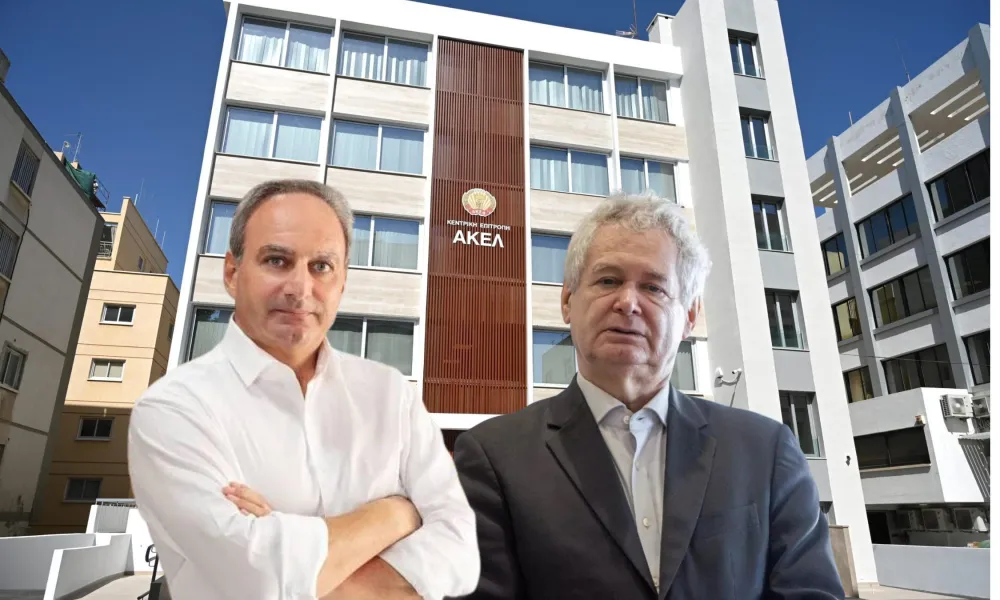



Disy became the first party to open its process for the presidential nomination, with candidacies due on 26 October and an internal election set for 28 November. Annita Demetriou's withdrawal on Thursday, following her meeting with Averof Neophytou and George Pamborides, then set the pre-election debate in motion almost 16 months before voters go to the polls. At Ezekia Papaioannou, the Nicosia street that houses Akel's headquarters, the party insists that developments at Disy's Pindarou headquarters do not change its plans. Akel's new spokesman, Haris Polycarpou, told Politis that the party has its own road map and will follow it, regardless of when Disy settles on a candidate. "Presidential elections are not a sprint," he said.
The road map
Akel's planning rests on three pillars: the choice of candidate, the political framework and programme that will accompany that choice, and alliances with other parties. The party will shortly open a dialogue with the forces that say they want a change of government, in order to establish which of them remain committed to their existing policies and which are willing to look for a progressive option, with Disy and Elam already ruled out. The first round of consultations is aimed at the party's grassroots, where members of local party branches will put forward their own proposals. The candidate is expected to be chosen in the first quarter of 2027 and will be ratified by an extraordinary pancyprian conference of the party.
According to sources inside Akel, however each school of thought within the party interprets it, the messages from the base converge on a winning choice: a candidate capable of returning Akel to power for the first time since 2008, even if that requires agreements and consultations with other parties. At Ezekia Papaioannou, a second round is considered highly likely. After securing 23.9% in the parliamentary elections, a result that halted the decline of recent years, the party appears more united than it was in 2023, and it wants neither to disappoint its voters nor to give the impression that it is moving without a strategy.
Lessons of 2023
Political analyst Nasios Orinos considers Akel's decision in 2023 to run with a candidate acceptable to parts of the Right a smart and effective move. The aim was clearly a second round against Nikos Christodoulides, in order to draw votes from disaffected right-wing voters after the split in Disy. Orinos recalls that Christodoulides took roughly a quarter of Disy's votes at the time, and that Andreas Mavroyiannis ultimately reached 48.03% in the runoff, coming very close to victory. In his view, Akel remains heavily stigmatised by its time in government between 2008 and 2013, which is why a purely party candidacy would not lead to victory. The difficulty, as he sees it, is that voters are unlikely to change that perception unless they see Akel governing again.
Party candidate or broad alliance
There is also a school of thought within Akel that favours contesting the election "with heads held high", meaning with the party's own candidate, such as General Secretary Stefanos Stefanou, who is credited with the party's recovery in the parliamentary elections. Such a scenario would free the party from negotiations and give it full control of its political project. Earlier polls, however, suggest that a party candidate would struggle to win a second round, as the Right could rally against him. For Orinos, such a choice would be self-defeating, since without votes from other parties' pools of support, victory in the second round is unlikely.
The party is not divided into just two camps. Some prefer a clear voice to a heterogeneous coalition, others want a party that is both left-wing and patriotic, and some look favourably on cooperation with Diko. In such an alliance, with a candidate such as Diko leader Nikolas Papadopoulos, Orinos considers it quite likely that Akel would secure a role in government. Papadopoulos has toned down his rhetoric on the Cyprus problem, leaving the more hardline positions to Elam and Edek, although his electability remains an open question and he has not ruled out running independently. Polycarpou, for his part, says the party does not rule out any candidate who meets its criteria. Orinos believes Disy finds itself at a disadvantage, as efforts to weaken Christodoulides have not paid off, and that if Akel makes good use of this moment, its fortunes could change.
The names in play
Andreas Mavroyiannis, the former negotiator on the Cyprus problem, is back in the frame. He has remained active, maintained a good relationship with Akel and has said he would like to be its choice again. For Orinos, his is a tested candidacy that has the backing of the base. The criticism centres on two points. The first is that the formula of a non-party candidate has already been used in three contests, with Stavros Malas in 2013 and 2018 and Mavroyiannis in 2023. The second concerns moves and statements by Mavroyiannis, mainly on the Cyprus problem and around 2017, that irritated the party's voters. He is considered capable of reaching the second round, but it remains unclear where Disy voters would turn, and Odysseas Michaelides' Alma has already said it will not support his candidacy.
According to press reports, the name of Christos Stylianides has also been put on the table, with meetings held with the party leadership and a group promoting his candidacy. His supporters argue that he could attract votes from the Right, that he has raised social policy issues that could serve the party's political goals, that his positions on the Cyprus problem are not far from Akel's, and that he brings a European profile as a former European commissioner. On the other hand, he served as government spokesman under Nicos Anastasiades and as a minister in the Mitsotakis government in Greece, did not return to Cypriot public debate early enough, and remains almost unknown to voters under 40.
The name of economist Tasos Yiasemides is also being mentioned. His economic expertise would fill a gap often attributed to Akel without unsettling the business community, and his articles showcase both his positions and his social sensitivities. He is, however, unknown to the wider public and, like other similar options, would require a strong and lengthy campaign. Another option that has entered recent discussions is negotiator Menelaos Menelaou, a technocratic diplomat with knowledge of the Cyprus problem. Finally, party officials have proposed a strong candidacy from the trade union world: a figure who comes from the Right but has fought for key labour issues and demands. The idea is promoted mainly by centre-left figures but is also considered acceptable in union circles, particularly after the recent negotiations on the cost-of-living allowance (Cola) and pension reform.
The search for new faces
Voters' turn towards younger figures is also part of the equation, as shown by the rise of Fidias Panayiotou, the prominence of Annita Demetriou and Sofia Christodoulou Makri, and the election of Nikos Christodoulides. The next presidential elections will also be the first in which 17-year-olds can vote, with registration on the electoral roll no longer required.