
The release of Simon Aykut has triggered strong political reactions. A Cypriot court had sentenced him to five years in prison for the usurpation of Greek Cypriot properties in the north. The government now faces a difficult political and communications challenge.
Nicosia was not informed in advance of the Israeli authorities' decision, according to information made public. A source close to Israeli President Isaac Herzog conveyed his apology for the failure to notify Cyprus. The source said the omission did not reflect any lack of respect for the Republic of Cyprus or its judiciary.
Israeli side cites medical grounds
According to the same source from President Herzog's close circle, cited by CNA, the decision was taken on the basis of clear medical opinions from Aykut's treating doctors.
The source said earlier requests for release on humanitarian grounds had been rejected, even when Aykut was facing serious health problems. It added that the decision falls under Israeli procedures for prisoners with particularly serious health conditions and does not call into question the Cypriot conviction.
Government insists the conviction stands
The government is trying to contain the political fallout. It stresses that the release does not annul the conviction, does not overturn the court's judgment and does not signal any change in the Republic of Cyprus' policy towards those involved in the illegal development and exploitation of Greek Cypriot properties.
However, images circulated on social media showing Aykut apparently celebrating after his release weaken the government's argument.
Christodoulides says policy remains unchanged
Responding to the criticism, President of the Republic Nikos Christodoulides sought on Sunday to highlight the significance of Aykut's conviction. He also tried to separate the release from Nicosia's policy on protecting properties in the north.
He first argued that if Aykut had been in Cyprus, he could have been released from August 2026 because of his state of health. In his view, the release in Israel was therefore not something that could have been ruled out had Aykut remained under Cypriot jurisdiction.
His second point was that Israel recognised the grounds on which Aykut was convicted, namely the illegal acts relating to the usurpation of Greek Cypriot properties. The government argues that this recognition by the Israeli authorities is an important element of the case, regardless of the later decision to release him.
The President also cited what he described as a dramatic decrease in illegal property purchases in the north by Israeli nationals since Aykut's conviction. In other words, he said, the case put a brake on property transactions in the north.
He also pointed to the Republic of Cyprus' international obligations. He noted that Cyprus is an internationally recognised state and a member of the United Nations, with treaty and international obligations it must honour. According to him, agreeing to the request to transfer Aykut to Israel falls within that framework.
"We are not a pseudo-state, we are an internationally recognised state," he said.
Finally, the President linked the case to the Republic's long-standing policy. He noted that legislation on the consequences of the illegal usurpation of properties in the north has existed for many years.
"I am glad, I am proud that only our government dared to bring such cases before the courts, and we will continue to do so," he said.
Criticism from political parties
The government's explanations did not halt the political reactions. Instead, the release revived the objections raised in February 2026, when it was decided that Aykut would be transferred to Israel to serve the remainder of his sentence there.
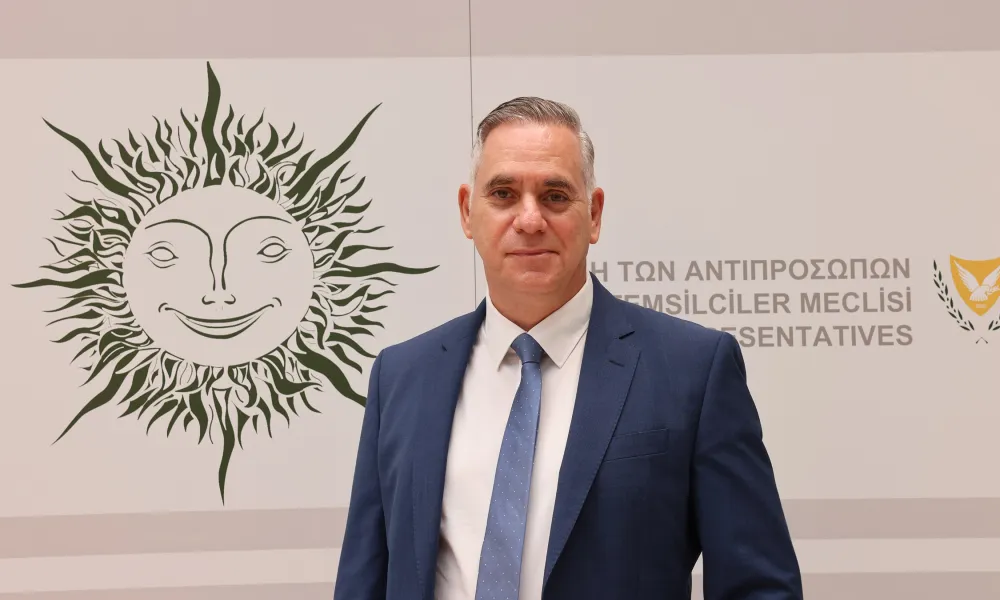
For DISY, Famagusta MP Nikos Georgiou argued that the government had been warned of the risks of moving Aykut outside Cypriot jurisdiction. His written statement was titled "We warned. The government did not listen." In it, he accused the executive of failing to secure the necessary guarantees and safeguards to ensure the sentence would continue to be served.
Georgiou recalled that he had publicly asked what would happen if Aykut were outside Cypriot jurisdiction, and had warned that he might reappear as a free man. He went further and raised the risk that work could resume on Greek Cypriot properties in the north. Property owners, he said, are entitled to determination and to effective defence of their rights, not after-the-fact assurances.
AKEL responded even more sharply and described the government as irreparably exposed. The party said the developments confirmed the concerns it had raised about a possible fiasco following the decision to transfer Aykut to Israel. It recalled that it had asked for clarification on whether there were guarantees that the five-year sentence would be served.
AKEL also brought back the questions raised over the so-called videogate. These concern media reports that linked audiovisual material to pressure on the government to grant Aykut's request. The party maintains that sufficient answers were not given and that the latest development deepens suspicion over the handling of the case. These are political claims and questions, not proven facts.
The ALMA Movement spoke of yet another government fiasco. It asked what guarantees had been secured from Israel and why the Republic of Cyprus had not been informed before the release. It also requested an update on the investigation into issues that arose from videogate.
The Ecologists took the same line. They described Aykut's transfer to Israel as a failed handling of the case and said the government and the Law Office remain exposed. Among other issues, they raised the withdrawal of a large number of charges before the case went to trial, including charges of money laundering and corruption.
Video raises questions over health grounds
Social media posts accompanying the announcement of Aykut's release drew particular attention. Aykut's family released a video, which Turkish Cypriot media then reproduced. It shows him returning to his home in Israel, in scenes presented as a celebratory welcome for his release.
The footage alone cannot establish the true state of his health or contradict the medical opinions cited by the Israeli authorities.
Even so, the images raise reasonable questions, because the Israeli authorities justified the release by citing his extremely serious state of health. His family announced that it will now focus on his medical treatment for cancer.
From conviction to release
Aykut was arrested in June 2024 while attempting to cross from the north into the government-controlled areas. On 24 October 2025, the Assize Court sentenced him to five years in prison, after he admitted some of the charges he faced over the development and commercial exploitation of properties on Greek Cypriot land in the north.
In April 2026, he was transferred to Israel at the request of the Israeli authorities, under the agreement on the transfer of convicted persons to their country of origin. The decision drew reactions at the time, amid concerns over whether his continued imprisonment would be ensured.
In the end, Aykut spent about 29 months in custody in total: 22 in Cyprus and seven in Israel. That is almost half of his five-year sentence.