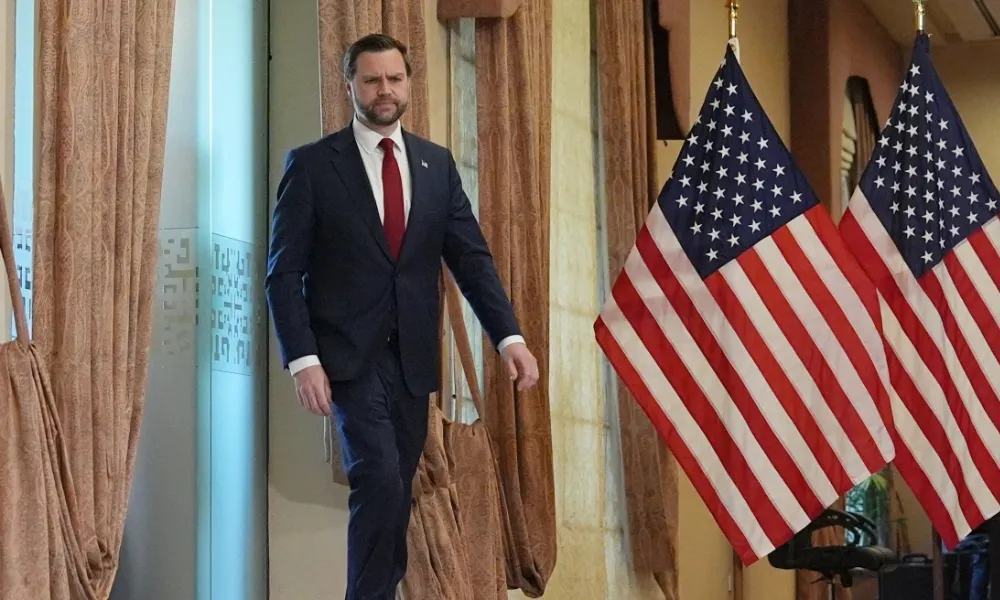



Donald Trump has made little secret, at least in private, of his uncertainty about JD Vance. In conversations with aides and allies, the president regularly poses a pointed question about his vice president: does he have what it takes to go all the way? More often than not, Trump answers his own question with doubt.
This is not, according to people familiar with the dynamic, a case of Trump abandoning Vance. He involves the vice president in major decisions, has given him high-profile assignments and trusts him to wage partisan warfare on behalf of the administration. At a cabinet meeting this week, Trump compared Vance to Eliot Ness, the mob-busting federal agent, for his work on anti-fraud efforts. But Trump's persistent, semi-public questioning of Vance's future has become one of the most closely watched indicators of how power in the Republican Party might eventually pass to the next generation.
The president's reservations are pointed and personal. He has told allies that Vance has never won a tough race without his help, a reference to Trump's endorsement proving decisive in Vance's narrow Ohio Senate victory. He has raised the number of holidays Vance has taken as vice president, a contrast with his own habits. He has repeatedly brought up Vance's initial opposition to going to war with Iran, sometimes in front of the vice president himself. "I'm more of a peace person than you are, but I had to do it," Trump has told him. He has also zeroed in on a moment last spring when Vance fumbled Ohio State's national football championship trophy on the White House South Lawn, saying he is glad it was not him.
The Rubio factor
Trump's private polling of people on whether they prefer Vance or Secretary of State Marco Rubio has become a recurring feature of conversations in the president's inner circle. At a Rose Garden dinner earlier this month, Trump quizzed his guests directly: "Who likes JD Vance? Who likes Marco Rubio?" He made clear he was not endorsing either man. In an interview with Fortune in the Oval Office, asked who was best positioned to carry on his legacy, Trump said only: "Whoever gets this is going to be very important. And if you get the wrong person: disaster." Vance was watching from the back of the room as Trump spoke.
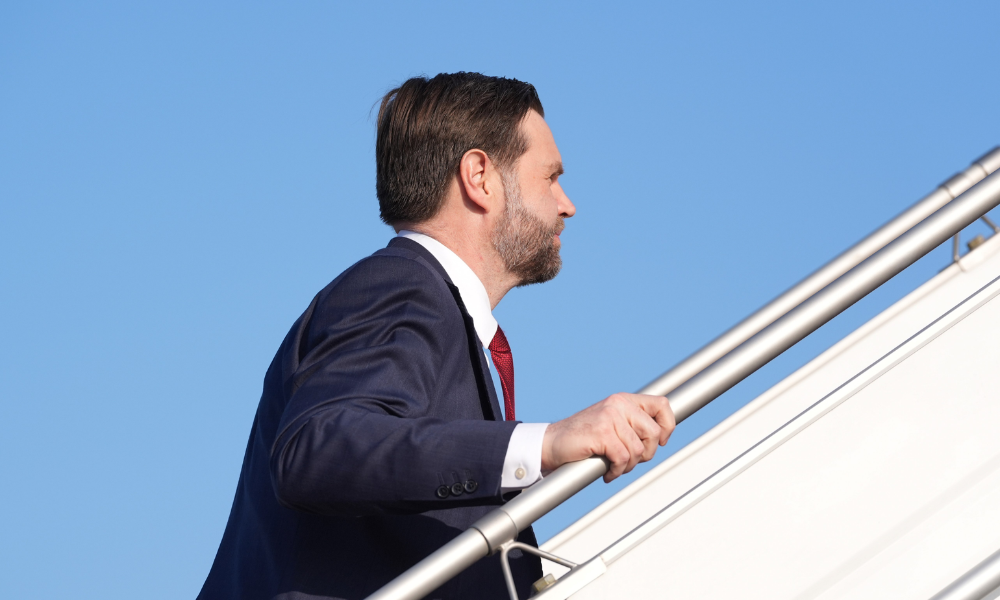
Rubio, by the nature of his role, spends more time with Trump than Vance does. He travels frequently on Air Force One and has bonded with the president over weekends in Florida. Trump has told people close to him how impressed he is with Rubio's performance.
The loyalty calculation
Through the friction, Vance has displayed the quality Trump prizes most: loyalty. Despite his reservations about the Iran war, he has publicly defended the president's decision to launch it and has carried out the traditional vice-presidential role of attacking Trump's critics, including, controversially, Pope Leo XIV. Vance, who converted to Catholicism in 2019, advised the leader of the world's 1.4 billion Catholics to stick to religion, drawing widespread criticism.
Trump's base remains broadly supportive of Vance. A Pew poll from February showed 75% of Republican voters view him favourably, and Trump's own pollster, Tony Fabrizio, said the president chose Vance as his running mate precisely because he appeals to the MAGA base, seeing him as "a MAGA warrior who would go out every day and fight for the things the president wanted."
But Vance's overall numbers are weak. A Quinnipiac poll published last week put his approval rating among all voters at 39%. Trump's own overall approval has sunk to a second-term low, though 73% of Republican voters still approve of his performance.
Two recent political tests have exposed the limits of Vance's independent influence. When he campaigned for Hungarian Prime Minister Viktor Orbán, Orbán lost. When he travelled to the Indiana Statehouse to pressure Republican lawmakers to redraw the state's electoral maps, they declined. "He came up empty in Indiana the same way that he came up empty in Hungary," said Ed Clere, a nine-term Republican state representative from southern Indiana who voted against redistricting. Clere added that the episode "should be a wake-up call for anyone who thinks Trump will be able to pass the MAGA torch to Vance, or anyone else."
Vance also led a delegation to Pakistan for Iran peace talks last month. The talks failed.
The Iran problem and the path ahead
The Iran war has left Vance in a particularly uncomfortable position. His political rise rested partly on criticism of excessive American intervention abroad, and his support for the conflict has put him at odds with a significant part of his own base. Tucker Carlson, a close ally who recommended Vance to Trump for the running mate position, recently said the war had put Vance in a "tough spot." Marjorie Taylor Greene, who also backed Vance for the ticket and has since fallen out of favour with Trump, was more blunt. "He is no longer in a place where he can hang on to his former reputation," she said. "There's nothing that can protect him anymore."
On the Democratic side, Kentucky Governor Andy Beshear, widely seen as a likely 2028 presidential candidate, has made Vance a recurring target, accusing him of overstating his blue-collar roots and of governing in ways that harm the communities he claims to represent.
For now, Vance retains structural advantages. As finance chair of the Republican National Committee, he has direct access to donors. His allies insist he remains best positioned to be Trump's successor and is focused on doing the work rather than accumulating political wins. Whether Trump comes to agree is, for the moment, an open question, and one the president seems in no hurry to settle.
Source: The New York Times