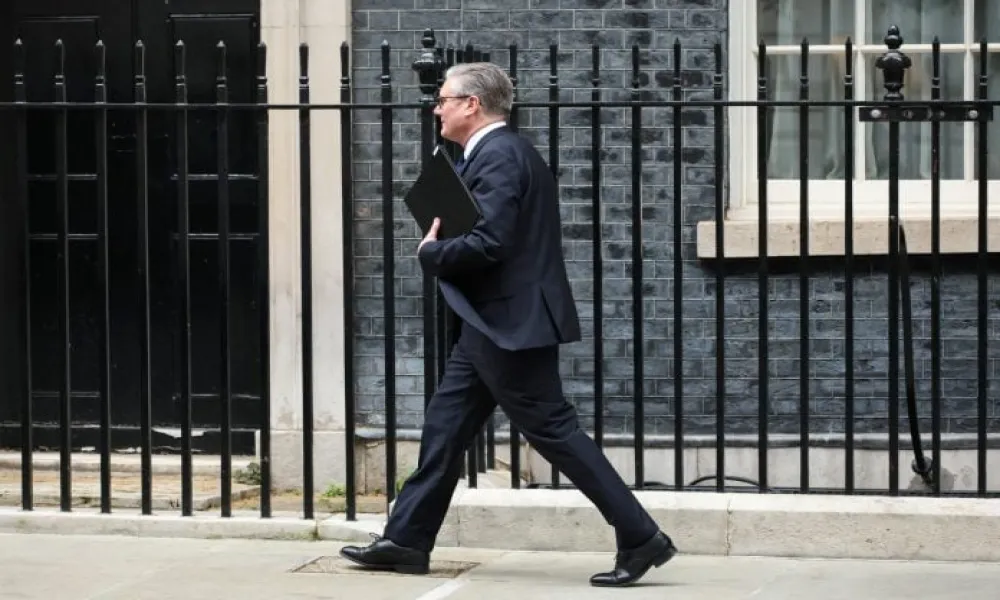

UK Prime Minister Keir Starmer may present a timetable for stepping down today, Monday June 22, 2026, according to Reuters, as pressure within the Labour Party intensifies and Andy Burnham appears ready to contest his succession.
Starmer could outline a structured departure plan, opening the way for an organised transition of power to his internal party rival, Burnham. Such a development could see Britain appoint its seventh prime minister within a decade, Reuters reports.
Less than two years after his landslide election victory, which had been presented as a promise to end political instability in Britain, a source told Reuters that Starmer spent the weekend considering whether to step down or to fight a potential leadership challenge within Labour.
“Keir likes to think things through,” the source said, speaking on condition of anonymity.
The threat to Starmer’s leadership, which had been building for months, intensified sharply on Friday when Burnham, mayor of Greater Manchester, won a parliamentary contest and returned to Westminster. He defeated a candidate from Nigel Farage’s Reform UK, a party that has led national opinion polls for over a year.
His victory has given hope to Labour MPs that Burnham, a seasoned politician with strong communication skills, could reverse the party’s declining fortunes. Support for Labour has fallen under Starmer, while the prime minister’s approval ratings have dropped to very low levels.
However, a leadership change is not seen as risk-free. Beyond general references to the need for fundamental change in the country and reducing the cost of living, Burnham has yet to fully clarify his positions on foreign policy, the economy and defence.
Like Starmer, he may find room for manoeuvre limited. The country faces pressure from bond market investors cautious about additional borrowing, alongside an increasingly frustrated electorate that believes Britain is not functioning as it should.
Britain already has the highest borrowing costs among G7 nations, due to high debt levels, rising interest payments, years of weak growth, difficulties in cutting spending and the need for investment in areas such as defence.
Investors interviewed by Reuters appeared divided on whether Burnham would reassure markets. Last September, he said Britain needed to move beyond the idea that it was “held hostage” by bond markets, although he later suggested his comments had been misinterpreted.
“In our view, a Burnham premiership would inherit a fragile fiscal situation, with limited tools to deliver meaningful change,” Citibank economists said on Friday.
Starmer said on Friday he would contest any formal leadership challenge within the Labour Party. Former health secretary Wes Streeting has also indicated he has the backing of the 81 MPs required to enter the leadership race. However, a senior party figure suggested Streeting could reach an agreement with Burnham, securing a senior role if he does not run.
Starmer’s team argues that his decisive 2024 election victory gives him a mandate to remain in office until 2029. Nevertheless, Business Secretary Peter Kyle said on Sunday that the prime minister is reflecting on “the political challenges he currently faces”.
If Starmer announces a departure timetable from Downing Street, he will become the latest in a series of British leaders effectively forced from office. If Burnham succeeds him, he would be the seventh UK prime minister since the Brexit referendum held ten years ago.
This level of political turnover, the highest in Britain in nearly two centuries, highlights the difficulty of maintaining voter support, with the public increasingly frustrated by repeated failures to improve living standards, public services and to address irregular migration.
Political consultancy Eurasia suggests the best scenario could see Starmer announce a September departure, allowing him to attend a UK–EU reset summit in July and giving Burnham time to prepare for taking over government.
Source: Reuters