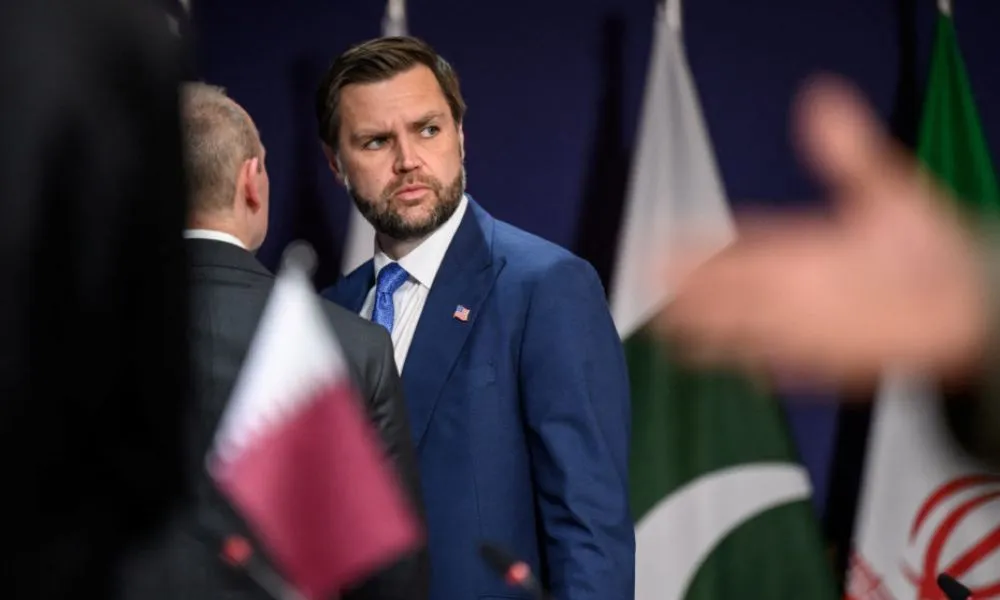
Symbols, gestures and what did not happen in front of cameras revealed the deep lack of trust between Washington and Tehran.
With no handshakes, no joint photos and US Vice President J.D. Vance left waiting alone in the room, the first direct US–Iran meeting in Switzerland was marked by a series of symbolic moments reflecting the deep trust deficit between the two sides.
Although the talks at the Bürgenstock resort overlooking Lake Lucerne were described as an important step toward launching a new round of negotiations, the images preceding the meeting suggested that political distance between Washington and Tehran remains significant.
No joint photo
One of the most discussed incidents was the absence of the customary group photograph. According to reports, the Iranian delegation refused to take part in a photo opportunity with US officials, while both sides publicly disagreed over who was responsible for its cancellation. Tehran claimed the US rejected a proposal, while American sources said Iran had initially agreed.
In diplomatic practice, joint photos are not mere formalities. They signal political intent and mutual recognition. Their absence typically indicates a desire to avoid any image that could be interpreted as rapprochement or normalisation.
Vance waited, Iranians delayed
Particular attention was also drawn to images of Vice President J.D. Vance waiting in the meeting room before the Iranian delegation arrived. Reports suggest Iranian negotiators avoided entering while journalists and photographers were present, choosing instead to enter later to avoid being filmed alongside US officials.
Analysts interpret this as an effort by Tehran to maintain an image of parity and to avoid appearing to negotiate under US terms or pressure.
No handshakes, no public courtesies
Equally telling was the absence of handshakes between the heads of the two delegations. At a time when even the most difficult negotiations are often accompanied by symbolic gestures of goodwill, the decision to avoid any public display of cordiality suggests the talks remain strictly technical rather than politically reconciliatory.
Message to domestic audiences
For Iran, avoiding images and handshakes also carries a domestic dimension. The leadership aims to demonstrate to its public that it is entering negotiations without making symbolic concessions to a longstanding adversary. Likewise, the US side seeks to frame the talks as a process aimed at achieving concrete outcomes rather than restoring political ties.
Substance behind the symbolism
Despite the cold atmosphere and carefully managed optics, both sides agreed to continue talks under a 60-day roadmap covering Iran’s nuclear programme and regional stability in the Middle East.
However, the scenes from Switzerland served as a reminder that diplomacy unfolds not only at the negotiating table, but also through what participants choose to show, or not show, in front of the cameras.
With information from Axios, The Times of India, New York Post