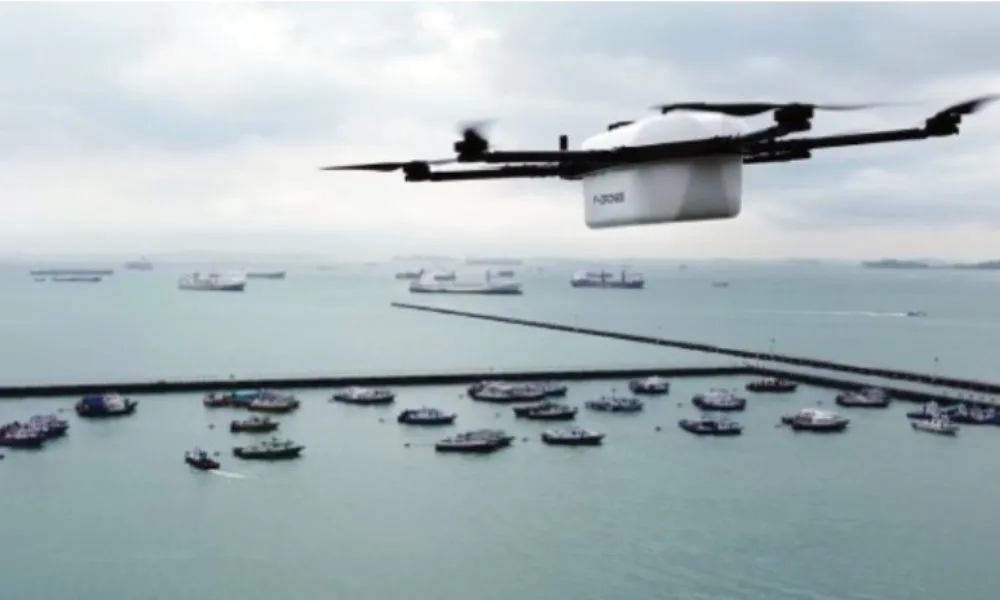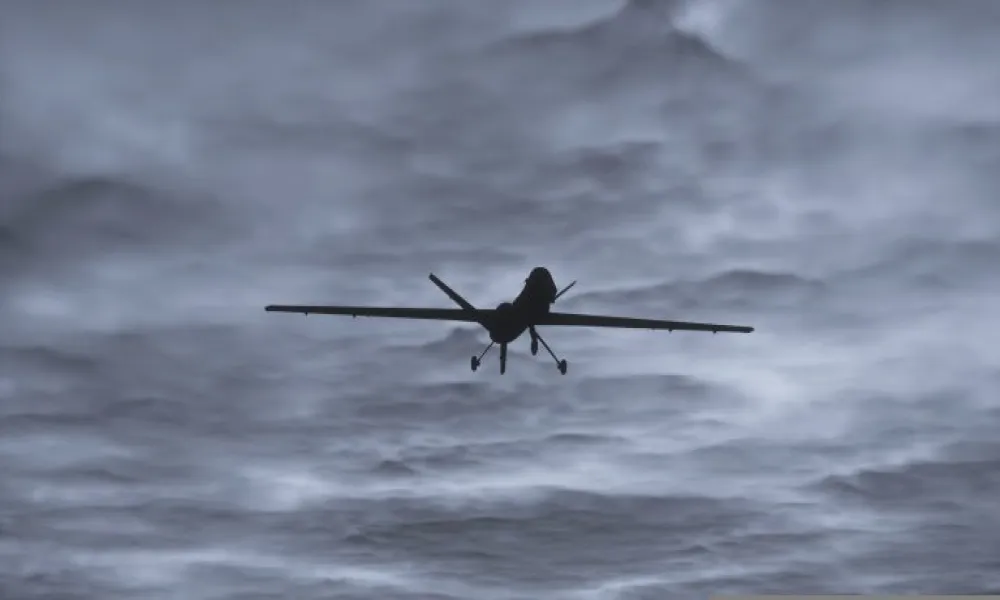


President Vladimir Putin faced renewed pressure on Tuesday after Ukraine launched another wave of drone strikes on Moscow, continuing a campaign that has disrupted Russian fuel supplies and sought to isolate Crimea, the peninsula Russia annexed from Ukraine in 2014. Moscow's mayor, Sergei Sobyanin, said on Telegram that air defences had shot down more than 60 drones approaching the capital across several waves beginning Monday night, with emergency crews working at crash sites. He did not report any injuries in the city itself.
The governor of the Moscow region, Andrei Vorobyov, said the attack had killed a six-month-old child in Yegoryevsk, a town roughly 60 miles southeast of the capital, after a drone struck a house that caught fire. Rescuers managed to pull residents from the building, but the child died on the way to hospital. Kremlin spokesman Dmitri Peskov said in a statement to journalists that the deaths and suffering of civilians were the result of actions by what he called the "Kyiv regime." Across the country, including Moscow and Crimea, Russia's Defence Ministry said a total of 419 drones had been shot down. Ukrainian authorities had made no immediate public comment on the strike as of Tuesday.
The attack came as Ukraine has increasingly turned to large-scale drone assaults of its own, after years of being on the receiving end of similar Russian barrages. President Volodymyr Zelensky has described the strategy as a form of "long-range sanctions," aimed at pressuring Putin to end the war by bringing its costs home to ordinary Russians. In an overnight address on Monday, before the strike on Moscow, Zelensky pointed to long queues at Russian petrol stations as evidence that strikes on refineries, pumping stations and export terminals were eroding the country's oil industry. He said Ukraine intended to ensure the war could not be kept, in his words, somewhere over there for Russia's population.
Putin, in an interview with Russian state television, struck a defiant tone, saying Ukrainian attacks would not deter Russia from what he described as the full liberation of Donbas and Novorossiya, a term revived by the Kremlin in 2014 to support territorial claims over eastern and southern Ukraine. He acknowledged the toll of Ukrainian strikes on fuel supplies, saying the country was experiencing shortages, though he characterised them as not critical, while arguing that Russian strikes on Ukraine were inflicting greater damage in return.
Tuesday's attack followed a similar one on 18 June, which injured at least 17 people in the Moscow region, struck a major oil refinery and forced temporary closures at all four of the capital's airports. Russia's Defence Ministry said at the time that it had downed nearly 1,000 drones nationwide during that assault. Zelensky said the June attack had been a response to a strike on a religious complex in Kyiv, which Russia said had instead been hit by an errant Ukrainian interceptor missile. Russia's aviation regulator, Rosaviatsiya, said on Telegram that three of Moscow's four international airports briefly suspended operations overnight during Tuesday's attack, a measure the city has had to resort to with increasing regularity.
On the ground, Russian forces have struggled to advance significantly in eastern Ukraine despite the Kremlin's stated aim of capturing the remainder of the Donetsk region. After a difficult May, Russian troops have begun making slow gains again and are intensifying bombardment of remaining Ukrainian strongholds in the area. Separately, the United Nations Human Rights Monitoring Mission in Ukraine reported on Monday that Russian forces had killed 1,272 civilians and wounded a further 6,871 in government-controlled areas of Ukraine over the six-month period ending 31 May.
Source: The New York Times