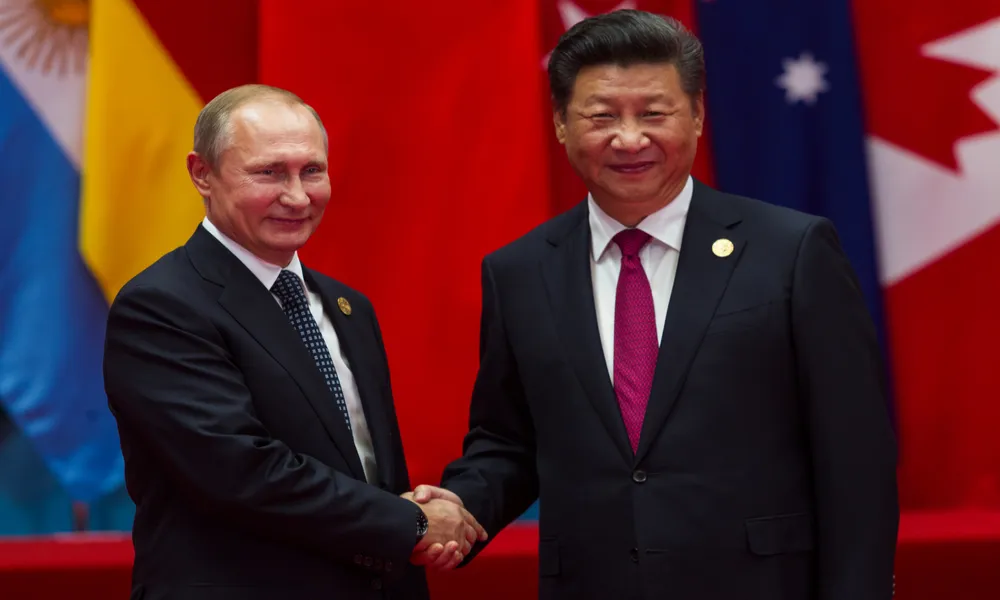

Germany has summoned China’s ambassador in Berlin for urgent talks following reports that Russian troops received military training in China, describing the allegations as “deeply disturbing”, according to the Guardian.
The German Foreign Ministry said the reports appeared to indicate direct support for Moscow by Chinese state institutions, particularly the People’s Liberation Army.
“Anything that enables Russia to continue its war of aggression against Ukraine also represents a threat to our security,” the ministry said.
The German newspaper Die Welt first reported on 20 May that the Chinese military had secretly trained several hundred Russian soldiers at facilities in China, citing classified documents produced by European intelligence services. Some of the troops were subsequently deployed in Ukraine, the newspaper reported.
Reuters later reported that the training involved about 200 Russian troops and had been approved at senior levels of the Russian government. China and Russia have rejected allegations that Beijing is directly supporting Moscow’s war effort.
Ukraine Rejects Russian Claim Over Kostiantynivka
Russia’s Defence Ministry claimed on Friday that its forces had taken full control of Kostiantynivka, a strategically important city in eastern Ukraine that Moscow has been trying to capture as part of its offensive in the Donetsk region.
The city, which had a pre-war population of about 78,000, forms part of Ukraine’s heavily fortified defensive line in Donetsk. Fighting around Kostiantynivka has intensified since late 2025.
Kremlin spokesman Dmitry Peskov said the city was “entirely under our control”. Russian President Vladimir Putin described its alleged capture as a significant strategic achievement.
Ukraine rejected the claim on Saturday. President Volodymyr Zelenskyy and the Ukrainian General Staff said Kyiv’s forces continued to control the city and accused Moscow of spreading false information.
The Russian claim has not been independently verified.
Child Among Those Killed in Sumy
At least four people, including a five-year-old child and her mother, were killed when Russian guided bombs struck the centre of the northern Ukrainian city of Sumy, Reuters reported, citing regional governor Oleh Hryhorov.
Another 27 people were injured, including a 13-year-old who was reported to be in serious condition. The strike hit an apartment building, a shop and a busy street.
Russian attacks were also reported elsewhere in the Sumy region and in southeastern Ukraine, bringing the overall death toll from the latest wave of strikes to at least six.
Following the attack, Zelenskyy called on Ukraine’s allies to increase pressure on Moscow “so that Russian terror can be stopped”.
Poland and Ukraine Seek to Ease Tensions
Polish Prime Minister Donald Tusk said Ukraine was seeking to reduce tensions with Warsaw but warned that Kyiv must confront disputes over its historical past as part of its path towards European Union membership, Reuters reported.
Relations deteriorated after Polish President Karol Nawrocki stripped Zelenskyy of the Order of the White Eagle, Poland’s highest state honour.
Nawrocki acted after a Ukrainian military unit was named after the Ukrainian Insurgent Army, a nationalist organisation associated with the wartime massacres of Polish civilians in Volhynia and Eastern Galicia.
Tusk said he had received encouraging signals following talks between the Polish and Ukrainian foreign ministers in Warsaw. The two sides are considering initiatives involving historians and religious leaders in an effort to promote dialogue and reconciliation.
Lithuania Moves to Lift Nuclear Weapons Ban
Lithuanian President Gitanas Nausėda said the country wanted to participate fully in Western nuclear deterrence against Russia as political parties moved to remove a constitutional ban on nuclear weapons and foreign military bases.
Nausėda said Lithuania’s security environment had fundamentally changed and described the existing prohibition, introduced after the country regained independence from the Soviet Union, as outdated.
A group of lawmakers has submitted a proposed constitutional amendment. It would require approval by a two-thirds majority in two separate parliamentary votes held at least three months apart.
Lithuania, a NATO member bordering Belarus and the Russian exclave of Kaliningrad, has not announced any immediate plan to host nuclear weapons. Removing the ban would, however, allow the country to consider such deployments as part of NATO’s deterrence strategy, Reuters reported.
Athletics Ban on Russia and Belarus Remains
World Athletics has confirmed that Russian and Belarusian athletes will remain barred from international competitions, maintaining sanctions imposed following Russia’s full-scale invasion of Ukraine in 2022.
The governing body lifted the separate eight-year suspension of the Russian Athletics Federation over doping violations in 2023. The exclusion connected to the war, however, remains in force.
World Athletics president Sebastian Coe said the organisation had considered alternative options but concluded that the sanctions should remain because there had been no tangible progress towards peace negotiations.
The decision is intended to protect the integrity and fairness of international competitions, World Athletics said, according to Reuters.