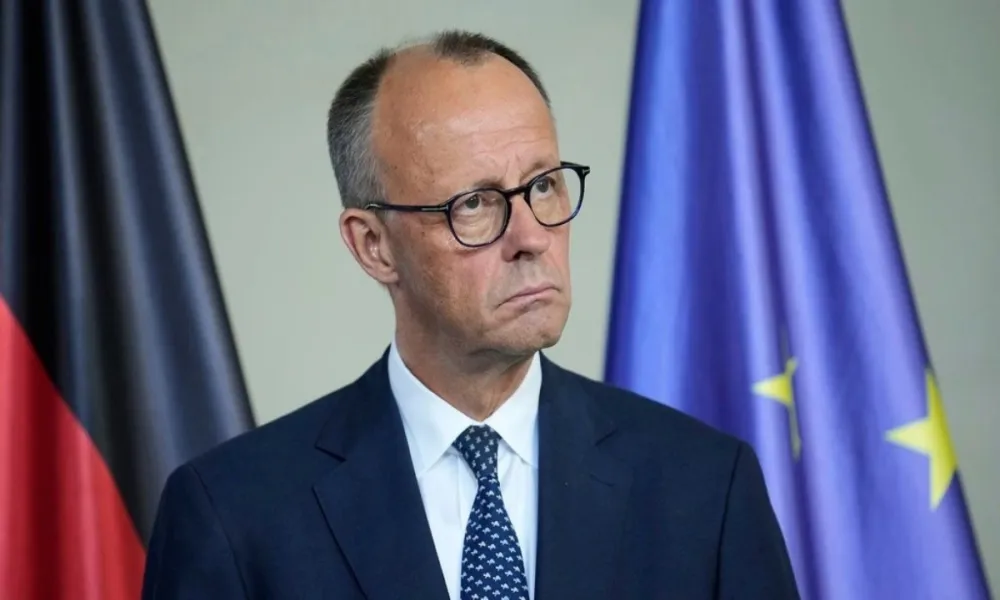

German Chancellor Friedrich Merz announced a limited reshuffle of his government on Friday, while signalling that further changes to the federal cabinet's composition will follow. The changes were triggered by the resignation of Jens Spahn as leader of the Christian Democratic Union and Christian Social Union's (CDU/CSU) parliamentary group, after backlash over his having a child via a surrogate mother in the United States, a practice banned in Germany that Spahn himself had repeatedly criticised in public.
Merz, together with CSU leader Markus Söder, has proposed Thorsten Frei, currently head of the Chancellery, for the parliamentary group leadership, with the vote due to take place on 29 July. Frei's post at the Chancellery will be taken over by Nina Warken, until now health minister, credited with the recent reform of Germany's healthcare system. Presenting her, Merz described Warken as his "most important pillar." Warken will be succeeded at the health ministry by Carsten Linnemann, the CDU's outgoing secretary-general. Philipp Amthor, currently a junior digital policy minister, will also move to the Chancellery as junior minister for federal-state relations.
According to German media reports, Transport Minister Patrick Schnieder (CDU) is also expected to be replaced, by CDU budget policy lawmaker Fritz Güntzler, though Merz did not confirm this change on Friday, saying only that "further personnel changes" to the government would follow. Bild had previously reported that Merz was unhappy with Schnieder's performance, particularly over a lack of progress on infrastructure projects in his portfolio. The same report said Merz had also expressed dissatisfaction with Economy Minister Katherina Reiche, who is said to have already received an informal warning from the Chancellery.
Source: AMNA, Reuters