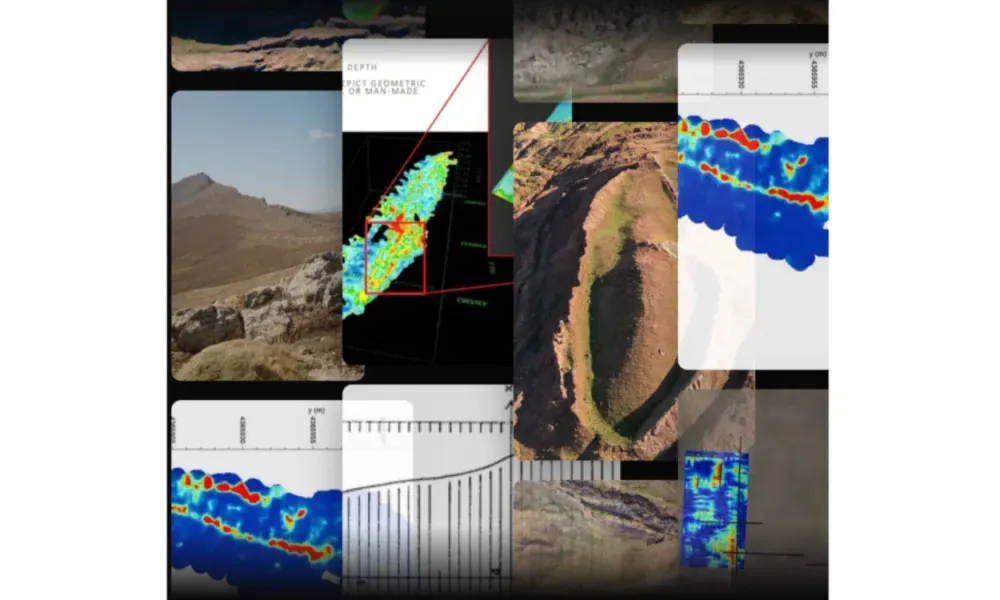

A new multidisciplinary research project has been launched to examine whether the Durupınar formation in eastern Turkey could be linked to Noah's Ark.
According to Turkish media reports, the project is being coordinated by Cenker Atilla, a professor of archaeology at Sivas Cumhuriyet University, and involves around 20 researchers and students from five countries.
The team includes Andrew Mark Jones of the US-based organisation Noah's Ark Scans and researcher Evrensel Barış Berkant.
Advanced technology to be used
Fieldwork is scheduled to run from 29 June to 11 September 2026 and will employ a range of technologies, including:
- Ground-penetrating radar (GPR);
- High-precision GPS measurements;
- Two-dimensional and three-dimensional digital imaging; and
- Core drilling and soil sampling.
Researchers say the aim is to determine scientifically whether the geological formation has any connection to the biblical account of Noah's Ark.
According to Atilla, previous investigations in the area were limited to surface surveys and basic soil analyses, with no comprehensive archaeological or geological study having been conducted.
Long-standing theory
The Durupınar formation was identified in 1959 by Turkish army captain İlhan Durupınar.
Its ship-like shape, together with dimensions that supporters say resemble those described in religious texts, has fuelled speculation for decades that it could be associated with Noah's Ark.
As part of the new project, researchers will also look for possible wooden or bone remains through soil analysis and drilling.
Findings expected in 2027
Laboratory analysis is expected to continue through the winter, with preliminary scientific assessments anticipated in spring 2027.
The results will be published in a dedicated volume and presented through three international scientific papers.
No scientific consensus
Researchers stress that there is currently no scientific consensus that the Durupınar formation is Noah's Ark.
The purpose of the new expedition is to gather additional geological and archaeological evidence that may help evaluate the theory using scientific methods.
Source: CNA