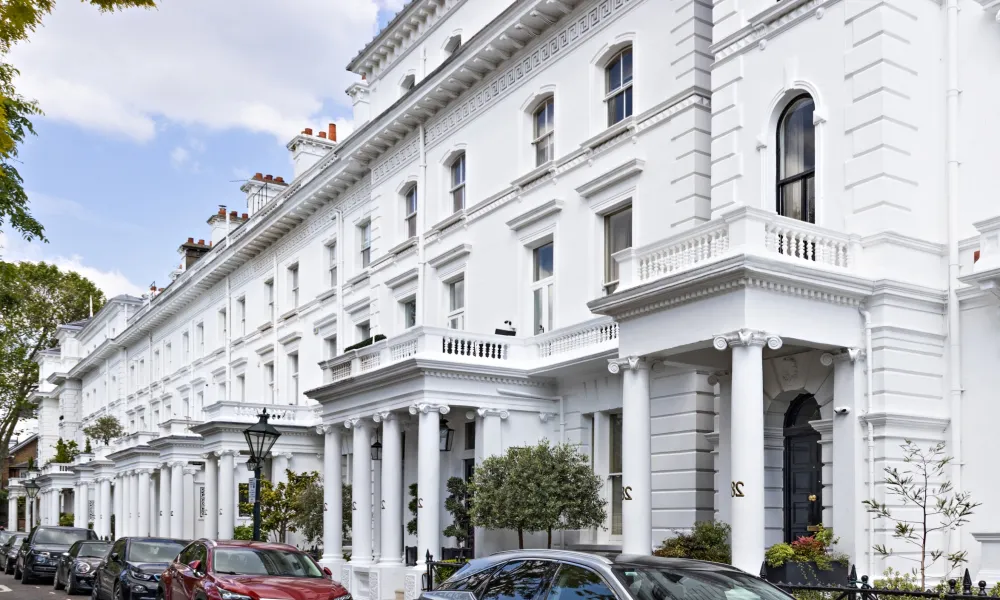

House prices are falling across some of London's wealthiest districts, according to the latest figures from the UK's Office for National Statistics, extending a downturn that has now lasted 10 consecutive months in the capital.
The sharpest decline was recorded in Westminster, where the average house price fell by £291,000 in a year, dropping from £1.145 million in June 2025 to £854,000 in June 2026, a decline of 25.4%.
The fall comes as the Labour government considers changes to the taxation of high-value property. Among the measures under discussion is a so-called mansion tax on homes worth £2 million or more, a move expected to affect mainly London and south-east England.
Prime Minister Andy Burnham has also left open the possibility of higher taxes on top earners as part of efforts to ease the cost-of-living burden on households and fund policies aimed at creating more balanced economic growth.
UK prices still rising overall
Despite the weakness in London, house prices across the UK continue to rise.
Annual growth slowed to 2% in June, down from 3% in May, with the average UK house price reaching £272,000.
Ten months of decline
The latest figures show London house prices have now fallen for ten straight months, with the biggest drops concentrated in central boroughs.
In Westminster, the decline has accelerated throughout the year:
- March: -9.9%
- April: -17.5%
- May: -21.9%
- June: -25.4%
For mortgage-financed purchases, the average price in June was £837,000, down 25.2% year-on-year.
First-time buyers paid an average of £766,000, a fall of 25.3% from a year earlier.
Terraced houses declined by 23.4%, while flats and maisonettes fell by 25.7%.
Average Westminster prices stood at:
- £3.687 million for detached houses
- £2.581 million for semi-detached houses
- £1.548 million for terraced homes
- £758,000 for flats and maisonettes
Pressure across prime boroughs
The decline is not limited to Westminster.
In Kensington and Chelsea, prices fell 14.7%, from £1.466 million to £1.25 million.
Other notable declines included:
- Hammersmith and Fulham: -13.3%
- Tower Hamlets: -13.1%
- Islington: -8.1%
- Camden: -7.1%
- Wandsworth: -5.2%
Why prices are falling
Tom Bill, head of UK residential research at Knight Frank, told The Standard that prices for prime central London properties have fallen by around 25% over the past decade.
He attributed the trend to:
- Higher stamp duty costs
- The abolition of tax advantages for so-called non-doms
- Reduced attractiveness of buy-to-let property investment
At the same time, rents have continued to move higher.
Average rents in London rose 3% annually to July, adding further pressure on households.
National market remains positive
While London's prime market is facing significant headwinds, the broader UK housing market remains in positive territory.
National house prices are still increasing, albeit more slowly, with annual growth easing to 2% and the average property value reaching £272,000.